
Ania Lian Highlights Emotion-Driven AI Pedagogy as a Keynote Speaker at the Pre-Conference Workshop of AsiaCALL 2025
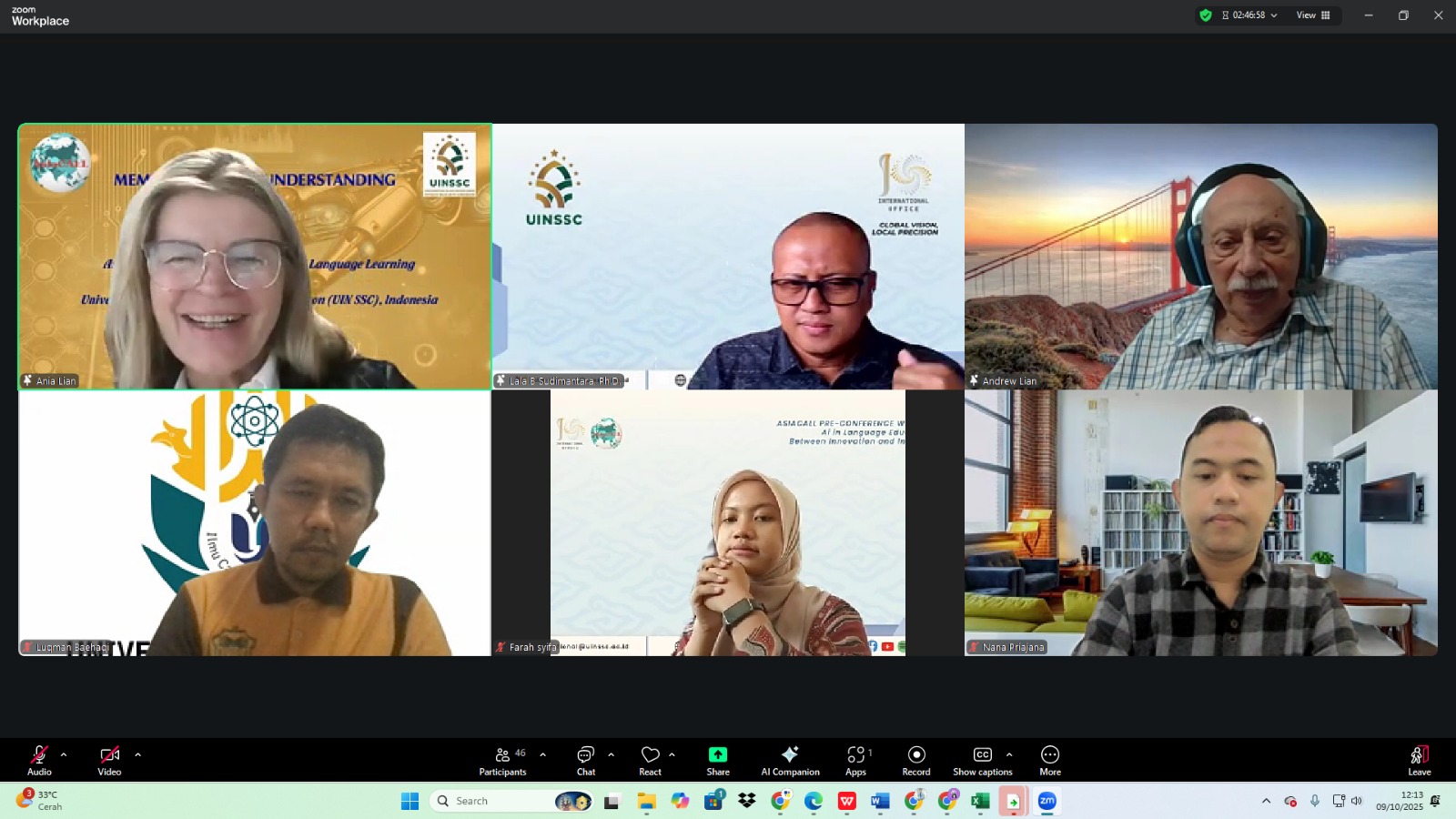
Cirebon, October 9th, 2025 — The AsiaCALL 2025 Pre-Conference, held online with international participation, successfully brought together educators, researchers, and undergraduate and postgraduate students from countries including Indonesia, China, Vietnam, Nigeria, Thailand, and Australia. The workshop was hosted by the International Office and Partnership of UIN Siber Syekh Nurjati Cirebon. Lala Bumela, Ph.D., Director of the International Office at UIN SSC, invited teachers, lecturers, and students, particularly those studying English language education, to participate in the session titled “AI in Language Education: Between Innovation and Integrity.” “Our goal is to equip educators and students with tools that enhance both understanding and empathy in global classrooms,” said Lala Bumela, Ph.D. The workshop was attended by 55 participants, including Luqman Baehaqi, Ph.D., from UIN Palangka Raya, who will serve as the keynote speaker at AsiaCALL 2025 and is known for actively sharing educational insights. Prof. Andrew Lian, President of AsiaCALL 2025, and Ania Lian, Ph.D., Vice President of AsiaCALL 2025, served as the keynote speakers.
Ania Lian, Ph.D., opened the session with a strong statement: “Tools alone do not create innovation; only strong conceptual frameworks do.” She illustrated how her students navigate the complex literature on dyslexia by first constructing a multidisciplinary framework covering linguistics, literacy studies, neuroscience, semiotics, and education policy. Once the framework is established, AI tools such as ChatGPT are used to generate comparative tables, refine prose, or extract thematic insights. Without this conceptual structure, she warned, AI output often becomes a disorganized collage of half-digested information—a phenomenon she calls “un-theorised AI use,” commonly observed in hastily written TESOL papers across Southeast Asia. The statement sparked lively discussions among participants from Vietnam, Indonesia, and China, including both undergraduate and postgraduate students.
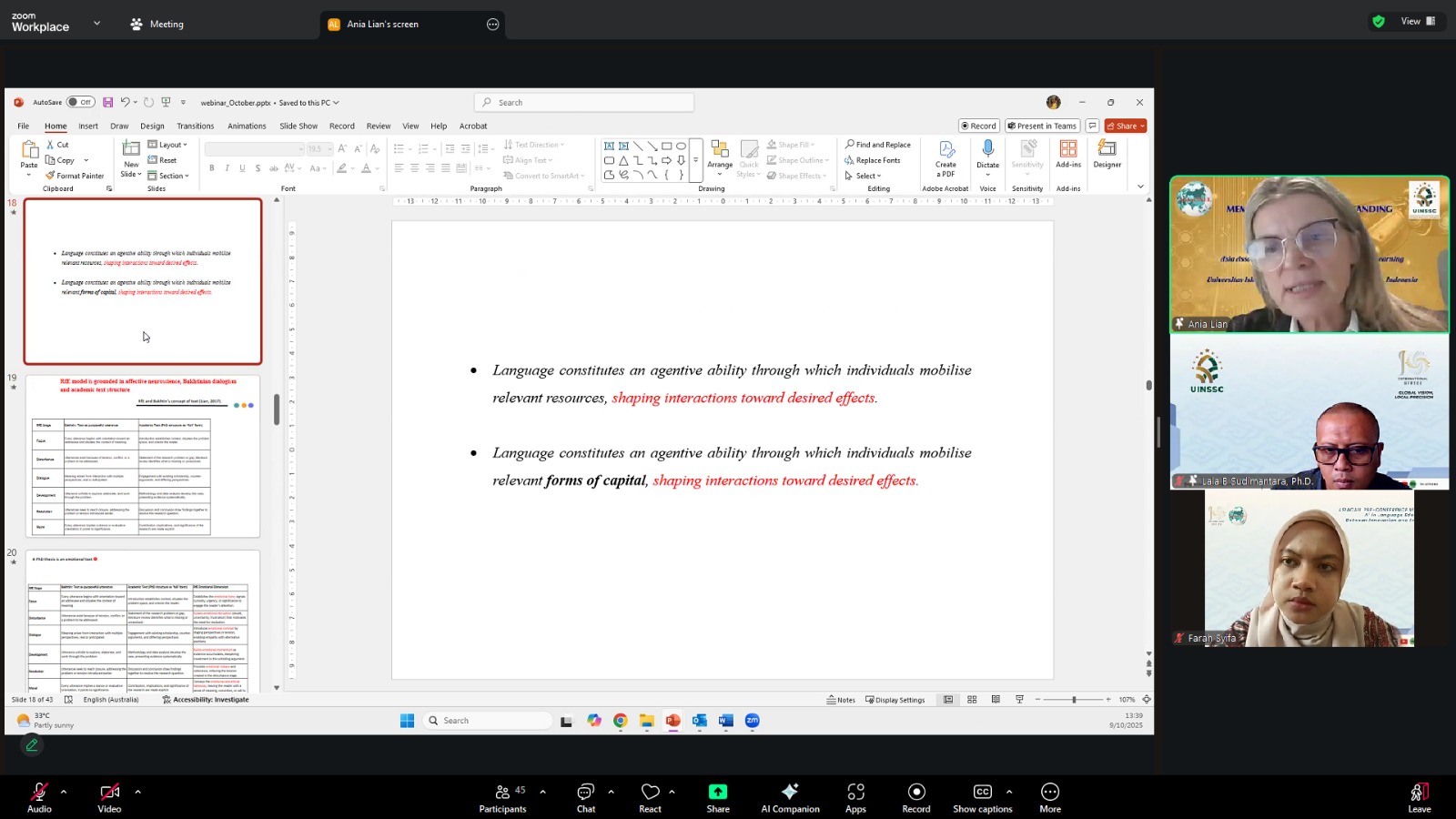
The session developed into an engaging dialogue on emotion-driven pedagogy. Ania Lian, Ph.D., introduced her Reading-for-Emotion approach, demonstrating how texts, from fairy tales to academic articles—can be mapped into emotional arcs that enhance comprehension and persuasive writing. Participants experimented with exercises in which ChatGPT retold Van Gogh’s Café Terrace at Night as a short story guided by aesthetic principles rather than simple description. Lala Bumela, Ph.D., emphasized, “AI can provide the raw material, but educators and students shape the emotional journey of learning.” Participants shared experiences from their own classrooms, highlighting how emotional engagement enriches understanding and writing.
Throughout the workshop, participants collaborated to design lesson plans integrating AI tools with emotion-focused pedagogical strategies. They explored practical applications for dyslexic learners, using AI to support decoding while emphasizing the emotional dimension of texts. Teachers, lecturers, and students discussed balancing AI assistance with human guidance, noting that culturally contextual examples from China, Vietnam, and Indonesia increased engagement. Ania Lian, Ph.D., stressed the importance of teaching AI how to think through frameworks and constraints rather than merely providing content. Many participants recognized the potential to transform traditional classrooms into emotionally responsive learning environments.
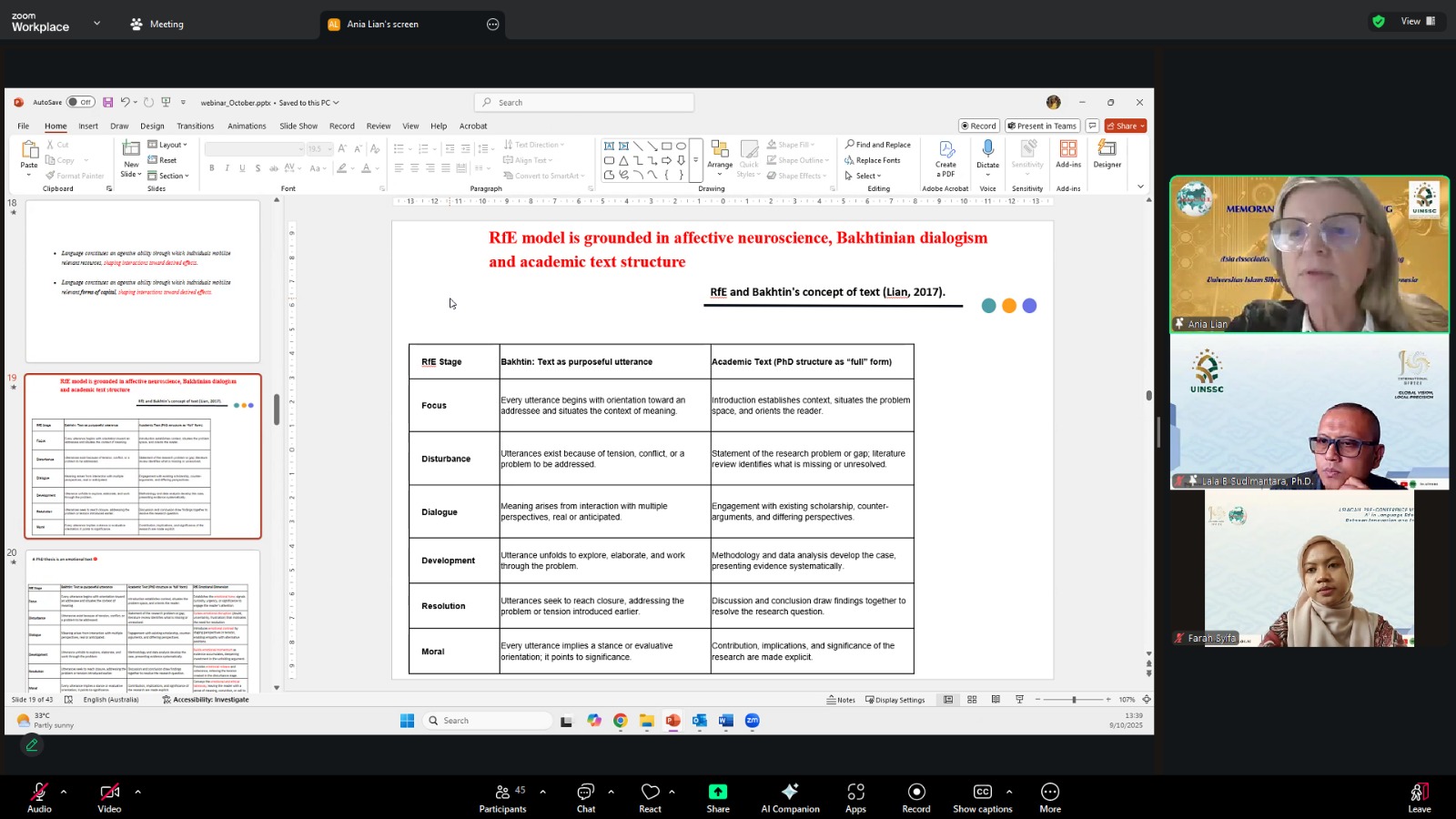
By the end of the session, participants acknowledged that cognition and emotion are inseparable in education. Memory, speakers noted, is often “glued” by affect, whether through literary experiences, childhood memories, or sensory cues. Participants from different countries discussed ways to integrate emotion-driven pedagogy into local contexts. The consensus was that AI, when paired with empathetic teaching, can enhance both comprehension and inclusivity. Attendees left with a renewed commitment to creating learning experiences that are emotionally and intellectually engaging.
The workshop’s key message resonated with all participants: AI is not a replacement for human emotion but a facilitator that amplifies it. Lala Bumela, Ph.D., reinforced, “Our mission at the International Office is to ensure that technology empowers educators and students to connect with both the hearts and minds of learners.” Educators and students reflected on how the Reading-for-Emotion methodology can transform classrooms, from helping dyslexic children decode picture books to crafting persuasive essays. The event also strengthened regional networks, encouraging collaboration among institutions in China, Vietnam, Indonesia, and other countries.
As AsiaCALL 2025 approaches, the International Office continues to promote initiatives that integrate global perspectives, AI, and emotion-driven pedagogy. The success of this workshop highlights the importance of cross-cultural exchange and professional development for both students and educators. Lala Bumela, Ph.D., concluded, “Innovation in education begins when we teach AI to think alongside human values, rather than in isolation.” Participants left inspired, equipped with actionable strategies to enhance both comprehension and emotional resonance in classrooms worldwide.
Author: Cindi Aulia