
Ania Lian, Ph.D.’s “Reading for Emotion” Marks the Affective Turn in Language Education: UIN Siber Syekh Nurjati Cirebon Hosts the AsiaCALL International Conference 2025’s Defining Moment Where AI Learns to Feel What It Reads
Cirebon, November 16, 2025 – The AsiaCALL International Conference 2025 at UIN Siber Syekh Nurjati Cirebon entered a profound intellectual phase with Ania Lian, Ph.D.’s keynote address on “Transforming How We Read and Write with Machines Through Humanistic Principles.” As Vice President of AsiaCALL and Charles Darwin University scholar, Ania Lian, Ph.D. challenged delegates to reframe AI adoption beyond efficiency metrics toward preserving humanity’s core educational values. Her session in Cyber Building’s auditorium drew sustained engagement from global academics. The Cyber Building’s auditorium hosted a globally diverse assembly: Lala Bumela Sudimantara, Ph.D. (Director of International Office and Conference President, UIN SSC, Indonesia), Prof. Dr. Andrew Lian, Ph.D. (President of AsiaCALL, Suranaree University of Technology, Thailand/University of Canberra, Australia – online), Prof. Dr. Jeremy White (Vice President for International Relations, AsiaCALL/Ritsumeikan University, Japan), Assoc. Prof. Dr. Pham Vu Phi Ho (Vice President for Administrative Affairs and Publication, AsiaCALL/Industrial University of Ho Chi Minh City, Vietnam), Luqman Baehaqi, Ph.D. (UIN Palangka Raya, Indonesia - online), Ivo Dinasta Yanuar, S.S., M.Appling (Secretary of International Office, UIN SSC), Ghina Amaliyah Sholihah, S.Sos (International Office Staff, UIN SSC), Wulan Rahmatunnisa, M.Pd. (Universitas Kuningan, Indonesia), Aries Endri Susanto, S.T., M.E., Eka Destarada Sesunan, S.E., and Nur’aeni, S.E., M.E. (Hakim Ventura International delegates), Wakhid Nashruddin, Ph.D. and Listiani Ekawati, M.Hum (UINSSC) alongside presenters from Saudi Arabia, Malaysia, the Netherlands, the Philippines, and Vietnam.
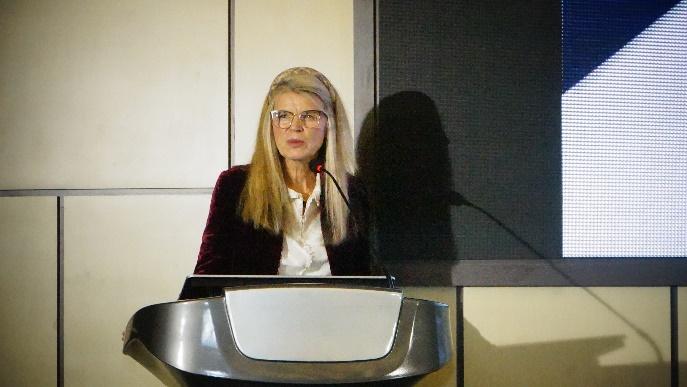
Ania Lian, Ph.D. positioned AI within broader pedagogical evolution, noting how conference themes have shifted from technical experimentation to conceptual depth since AsiaCALL’s early years. She emphasized that digital tools must serve humanistic goals, not merely automate tasks to avoid eroding critical thinking. This perspective resonated deeply with Indonesian educators navigating rapid technological transitions in resource-constrained settings. Her presentation underscored UINSSC’s strategic alignment with AsiaCALL’s mission to fuse innovation with intellectual integrity. The International Office team, led by Director Lala Bumela Sudimantara, Ph.D., facilitated seamless hybrid participation for remote scholars across fourteen nations.
Ania Lian, Ph.D. positioned digital humanities as the essential bridge between classical scholarship and AI-driven education, rejecting reductionist views of technology as mere data processors. She argued that AI’s true educational value lies in its capacity to interpret human emotions, cultural contexts, and ethical dimensions when guided by robust theoretical frameworks. “Without such grounding,” she warned, “AI outputs become superficial reflections of poorly structured inputs rather than meaningful knowledge generators. Her critique targeted “under-thought” AI integration where educators deploy tools without examining underlying assumptions or pedagogical implications.
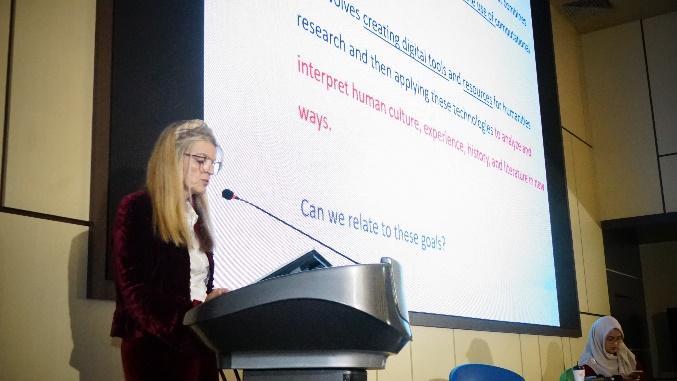
Ania Lian, Ph.D. demonstrated how theoretically informed prompts—rooted in philosophy, literature, and neuroscience—enable AI to simulate sophisticated analysis rather than defaulting to generic responses. This approach transforms AI from a passive tool into an active collaborator in meaning-making processes. Attendees from Vietnamese and Malaysian universities documented her methodology for adapting it to Southeast Asian curricula. Her arguments crystallized why UIN SSC’s Multisensory CALL philosophy prioritizes embodied cognition over mechanical skill acquisition.
Central to her address was her pioneering “Reading for Emotion” model, developed through interdisciplinary research spanning literary theory, affective neuroscience, and neuroaesthetics. Unlike conventional language pedagogy focusing on grammar or vocabulary, this framework systematically integrates readers’ and writers’ emotional experiences into textual analysis and academic writing. Ania Lian, Ph.D. explained how emotions function not as supplementary elements but as foundational lenses for interpreting meaning, building authentic motivation, and enhancing critical reflection. She shared case studies where students using her model produced deeper textual analyses and more coherent academic arguments by connecting cognitive and affective dimensions of learning.
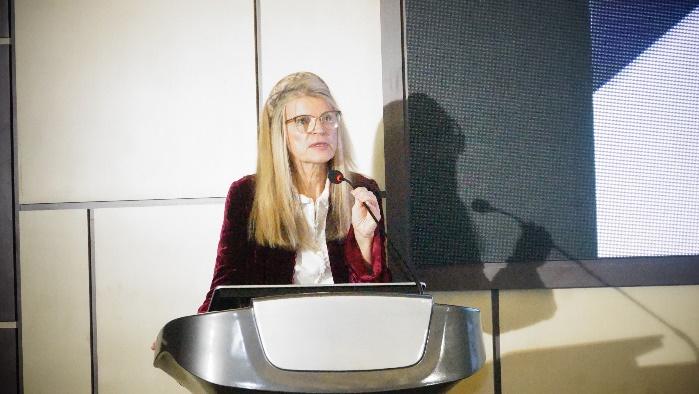
When applied to AI, the model requires meticulously crafted prompts embedding emotional and theoretical variables to generate meaningful outputs. Ania Lian, Ph.D. contrasted this with common academic practices where AI receives shallow instructions like “improve grammar,” yielding fragmented results lacking intellectual depth. Her demonstration revealed how AI mirrors educators’ conceptual clarity or confusion, when evaluating student work. Indonesian language teachers noted immediate applications for revitalizing writing pedagogy in faith-based institutions.
A striking segment featured Ania Lian’s critical evaluation of recent academic publications using her framework, exposing mechanistic flaws in conventional assessment methods. She dissected two scholarly articles where AI-generated feedback focused narrowly on referencing formats and syntax while ignoring arguments’ emotional resonance and societal relevance. Ania Lian, Ph.D. argued that authentic evaluation must return to fundamental questions: What values does this text uphold? What human experiences does it illuminate? How does it contribute to collective understanding? Her analysis highlighted how “Reading for Emotion” transforms AI from a surface-level editor into a catalyst for deeper scholarly dialogue when guided by humanistic principles. She cautioned against outsourcing academic judgment to machines without theoretical guardrails, citing instances where AI perpetuated biases due to poorly contextualized prompts. This segment sparked vigorous discussion among UIN SSC faculty about redesigning rubrics to prioritize meaning over mechanics. Ania Lian’s work affirmed that AI amplifies both the strengths and weaknesses of human intellectual frameworks.
Ania Lian, Ph.D. concluded with an urgent ethical appeal: in the AI era, theoretical depth and reflective practice are non-negotiable for educators. She stressed that technology magnifies existing educational philosophies, deepening meaningful learning when grounded in humanistic principles but amplifying emptiness when applied mechanically. “Reading for Emotion” exemplifies how structured frameworks enable AI to support rather than supplant human creativity, preserving educators’ irreplaceable role as meaning-makers. She urged scholars to fearlessly develop theory-driven models that center affective dimensions of learning, rejecting the false dichotomy between technological advancement and humanistic values.
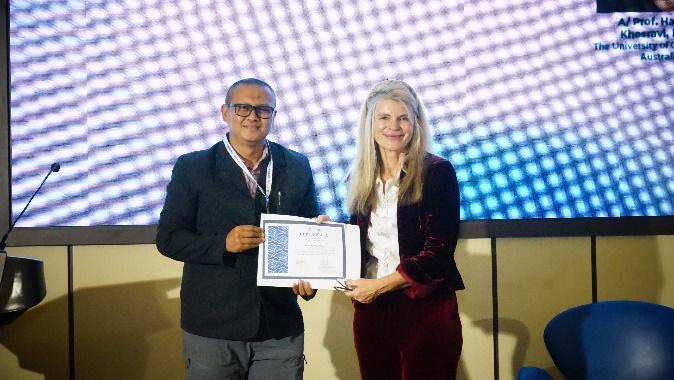
Her closing remarks resonated with Indonesian delegates grappling with balancing national curriculum requirements and innovative pedagogy. Student volunteers from UINSSC’s Global Engagement Team facilitated small-group discussions where participants shared adaptation strategies for diverse classroom contexts. The session’s intellectual rigor reinforced AsiaCALL 2025’s reputation as a catalyst for paradigm-shifting discourse rather than technical showcases. This alignment with UIN SSC’s vision of “Unggul Mendunia” through principled innovation underscored the university’s maturing global scholarly identity.
The International Office’s meticulous coordination, evident in seamless tech support, multilingual moderation, and inclusive networking spaces, solidified UINSSC’s reputation as a trusted convener of high-stakes academic dialogue. Today’s session proved that hosting world-class conferences requires more than infrastructure; it demands moral clarity and intellectual generosity. UIN Siber Syekh Nurjati Cirebon has positioned itself not merely as AsiaCALL’s host but as a co-architect of its humanistic future, where Indonesian scholarship shapes global conversations on technology and meaning.
Author: Resa Diah Gayatri