
AsiaCALL 2025 Opens with a Groundbreaking Keynote by Prof. Dr. Andrew Lian, President of AsiaCALL, Illuminating the Transformative Power of Artificial Intelligence in Language Education, Championing Human-AI Collaboration, and Charting a Bold Vision for the Future of Global Reserach, Innovation, and Knowledge
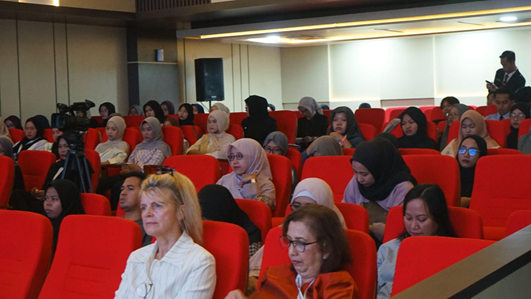
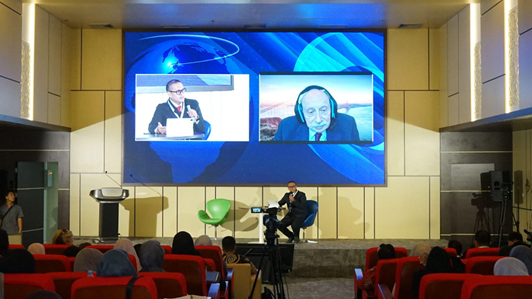
Cirebon, November, 15th 2025 — The 22nd AsiaCALL International Conference 2025, held at UIN Siber Syekh Nurjati Cirebon under the visionary leadership of Lala Bumela, Ph.D., Director of the International Office and President of the conference, served as a landmark event in advancing global collaboration in language education. The keynote session, delivered online by Prof. Dr. Andrew Lian, President of AsiaCALL, presented his groundbreaking lecture, When Machines Understand: The Convergence of Human and Artificial Comprehension – Toward a Post-CALL Epistemology, which explored the transformative role of Artificial Intelligence in reshaping language learning, research methodologies, and human comprehension in the post-CALL era. Prof. Lian emphasized that AI is not a replacement for human intelligence but a collaborative partner capable of enhancing teaching, learning, and knowledge creation, with the potential to bridge gaps between technological advancement and human cognitive capacity. His lecture highlighted how modern AI systems, particularly large language models, can understand context, infer meaning, and sustain coherent communication, thus redefining the possibilities for interactive, human-AI integrated learning. Attendees were also addressed by Prof. Dr. Hj. Ria Yulia Gloria, M.Pd., Head of the Quality Assurance Institute, representing Rector Prof. Dr. H. Aan Jaelani, M.Ag., while distinguished AsiaCALL leaders including Ania Lian, Ph.D., Prof. Dr. Jeremy White, Assoc. Prof. Hassan Khosravi, Ph.D., Prof. Shameem Rafik-Galea, Ph.D., and Assoc. Prof. Dr. Pham Vu Phi Ho, Ph.D. joined the event, highlighting the conference’s international prestige. The session further included insightful contributions from Indonesian scholars such as Made Hery Santosa, Ph.D., Luqman Baehaqi, Ph.D., Sirniawati, M.A., Wulan Rahmatunnisa, M.Pd., and the English Education faculty—Dra. Amroh Umaemah, M.Pd., Hendi Hidayat, M.Pd., and Wakhid Nashruddin, Ph.D.—whose participation underscored UIN SSC’s commitment to academic excellence. Moderated by Lala Bumela, Ph.D., the keynote not only provided a comprehensive vision of AI’s convergence with human cognition and pedagogy but also framed the conference as a catalyst for innovation, ethical leadership, and a forward-looking approach to global knowledge creation. The dynamic engagement of hundreds of UIN SSC English Education students, alongside presenters from Japan, Saudi Arabia, Malaysia, Vietnam, the Netherlands, the Philippines, and other countries, added vibrant energy to the discussion, reinforcing the conference’s role as a hub for cross-cultural dialogue and collaborative exploration of the future of language education in an AI-enhanced world, while positioning Prof. Lian’s vision at the forefront of post-CALL scholarship and global educational transformation.
As the 22nd AsiaCALL International Conference 2025 commenced at UIN Siber Syekh Nurjati Cirebon, a profound question hung over the assembly of language educators, researchers, and scholars: how will the accelerating advance of Artificial Intelligence reshape the very foundations of teaching, learning, and knowledge creation? The pervasive integration of AI into daily life and professional environments posed both opportunities and uncertainties—its rapid progress, particularly in the form of large language models, threatened traditional pedagogical practices, challenged established research methods, and demanded that educators reconsider their role in guiding learners in an era dominated by machines capable of “understanding” context and producing knowledge. The looming question was not simply whether AI could perform certain tasks better or faster than humans, but whether humans could strategically collaborate with AI to elevate education, maintain ethical standards, and ensure equitable access for all learners in a rapidly evolving technological landscape.
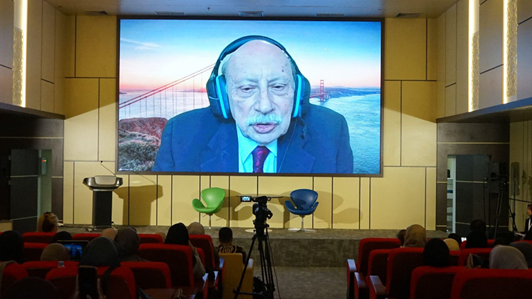
Addressing this pressing concern, Prof. Dr. Andrew Lian, President of AsiaCALL, delivered his keynote lecture, When Machines Understand: The Convergence of Human and Artificial Comprehension – Toward a Post-CALL Epistemology, via an online session. With clarity and authority, he emphasized: “Artificial Intelligence is not a threat to our profession; it is an unprecedented opportunity to expand human potential, enhance collaborative thinking, and redefine what it means to teach and learn in the 21st century.” Through his narration, Prof. Lian illustrated concrete examples of AI’s functional comprehension, highlighting how modern systems maintain conversational continuity, interpret nuanced context, and produce meaningful outputs that mirror aspects of human understanding. He insisted that the future of education does not involve humans versus machines, but humans working with machines—co-creating knowledge, amplifying creativity, and exploring new intellectual territories.
Prof. Lian’s keynote traced the evolution of AI from early rule-based systems, such as ELIZA, to today’s large language models capable of nuanced comprehension and decision-making support. He described how AI’s integration into research and pedagogy challenges conventional divides between qualitative and quantitative methodologies, enabling more fluid, interconnected, and innovative approaches to scholarly inquiry. By providing an in-depth analysis of AI’s implications for language learning, he argued that curricula must shift focus from rote memorization to fostering critical thinking, ethical reasoning, and problem-solving skills that prepare learners for a world where AI is an essential collaborator. Moreover, he addressed the ethical dimensions of AI adoption, emphasizing that equitable access and inclusivity are central to preventing technological disparities from exacerbating existing educational inequalities. Throughout, Prof. Lian highlighted how AI should be leveraged as an extension of human intelligence, enabling educators and students alike to engage with knowledge dynamically, creatively, and responsibly.
By the end of his keynote, Prof. Lian had reframed the narrative surrounding AI in education, transforming a source of uncertainty into a vision of collaborative possibility. He outlined practical approaches for integrating AI into teaching and research without undermining human agency, and he inspired educators to embrace AI as a tool for pedagogical innovation, ethical leadership, and transformative learning experiences. His insights offered a roadmap for the post-CALL era, demonstrating that the convergence of human and artificial comprehension could not only enhance academic practice but also position institutions like UIN Siber Syekh Nurjati Cirebon at the forefront of global educational innovation.
The central lesson of Prof. Lian’s keynote was both clear and profound: the future belongs to those who cultivate humans-with-AI, individuals capable of harnessing machine intelligence not as a substitute, but as a partner in creativity, problem-solving, and knowledge creation. He stated, “AI will never replace the human mind—it amplifies it, challenges it, and expands its horizons. Our responsibility as educators is to guide learners in co-creating the future alongside AI, ensuring that innovation, ethics, and equity remain at the heart of every educational endeavor.” In essence, the moral distilled from his address called for a proactive, human-centered embrace of AI, positioning ethical collaboration and equitable access as the guiding principles for global research, teaching, and learning in the transformative post-CALL era.
Author: Muhammad Azkiya Bahtsulkhoir