
AsiaCALL 2025 Pre-Conference Workshop Unpacks the Role of AI n Enhancing Creativity, Efficiency, and Pedagogy for ESL Teachers
Cirebon, November 14, 2025 — The second session of the pre-conference workshop of the 22nd AsiaCALL International Conference 2025 continued with an engaging presentation titled “AI in Action: Empowering ESL Teachers to Thrive in the Intelligent Age” delivered by Sirniawati, S.Pd.I., M.A., from Universitas Muhammadiyah Cirebon. She opened the session by expressing her hope that participants would gain new perspectives and discuss fresh ideas grounded in practical teaching experience. Sirniawati S.Pd.I., M.A., emphasized that educators must adapt to technological developments that increasingly shape modern classrooms. She explained AI as a simulation of human intelligence programmed to think and learn like humans. According to her, teachers must master the new skill of communicating effectively with machines. The session was attended by English Language Teaching students who were enthusiastic about understanding AI’s role in their future careers.
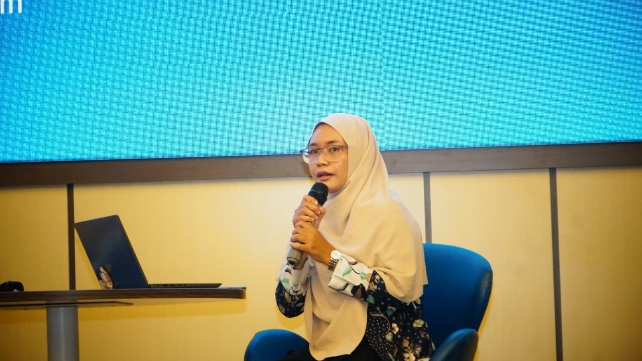
Sirniawati S.Pd.I., M.A. highlighted how teachers can integrate human creativity with AI capabilities to maximize teaching outcomes. She demonstrated how AI can support educators in generating ideas, preparing lesson plans, checking assignments, and facilitating teacher training. To explain why ESL teachers are turning to AI, she outlined a structured framework: Situation, Problem, Resolution, and Evaluation. She then connected AI adoption to Indonesia’s national goals, including the Golden Indonesia 2045 vision. The nation’s expanding digital infrastructure further accelerates AI use in classrooms. Growing interest in AI is fueled by the need for personalized learning and more effective school management. This overview helped participants see AI within the broader context of national educational development.
She also addressed key challenges faced by ESL teachers in Indonesia. Many educators, she explained, lack sufficient AI training and confidence, which leads to difficulties in personalizing instruction for students with diverse learning styles and proficiency levels. Teachers frequently struggle with administrative tasks and heavy lesson planning requirements that limit their time for meaningful teaching. She stressed that technological skills must be supported by strong pedagogical strategies to ensure effective integration. As a solution, she encouraged redefining the teacher’s role toward being a facilitator and mentor. With AI automating routine work, teachers can focus more on human interaction and student growth. This shift positions educators to lead learning with both wisdom and innovation.
The workshop then transitioned into an interactive hands-on session. Participants experimented with AI tools directly, applying them to classroom tasks. The collaborative discussion allowed them to exchange insights and best practices, strengthening their confidence in practical AI use. Sirniawati S.Pd.I., M.A. emphasized the importance of balancing AI opportunities with responsible implementation, especially regarding student data privacy and ethical considerations. She explained how AI can boost efficiency while still preserving the essential human connection between teachers and students. The activities encouraged participants to reflect critically on both the benefits and challenges of AI. This interactive environment created a strong sense of engagement and curiosity among the attendees.
A key focus of the workshop was AI-driven personalized learning through adaptive platforms, automated feedback, and differentiated instruction. Sirniawati S.Pd.I., M.A. introduced the use of ChatGPT in ESL teaching, demonstrating functions such as interactive language practice, cultural insights, writing improvement, and instructional support. She showed how AI can generate lesson plans, quizzes, and learning materials aligned with curriculum needs. Participants also learned the importance of crafting effective prompts, as high-quality input shapes AI’s responses. She presented structured prompting patterns involving role, action, context, example, and output format. These strategies offered a clear method for making AI outputs accurate and pedagogically useful. Her demonstrations sparked excitement and deeper interest in AI-assisted teaching.
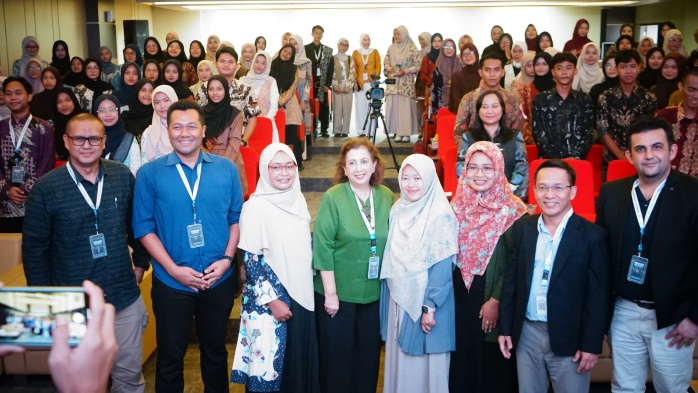
The session concluded with an empowering message on transforming teacher overwhelm into confidence and growth. Sirniawati S.Pd.I., M.A. encouraged educators to reclaim control of their classrooms by using AI to reduce workload and support professional development. She emphasized that AI should help teachers thrive rather than add pressure. Ethical challenges such as privacy, equity, and human connection must remain central in AI integration. She reminded participants that educators play an irreplaceable role in shaping student experiences. Throughout the session, participants actively engaged in discussion, and at one point, she stepped off the stage to interact more directly with the audience. As part of the pre-conference program, the workshop served as an essential foundation for the 22nd AsiaCALL International Conference, preparing participants with shared insights and practical knowledge before the main sessions began. The workshop successfully strengthened participants’ readiness to navigate AI-enhanced language teaching.
Author: Salsabilla