
AsiaCALL 2025 Symposium Celebrates Lala Bumela, Ph.D.’s Profound Critique of AI’s Linguistic Biases and His Visionary Roadmap for Human-Centered, Culturally Equitable, and Multilingual Innovation in Global Education
Cirebon, November, 16th 2025 — As part of the academic exchange platform facilitated through the AsiaCALL International Conference 2025—a leading global forum dedicated to research and innovation in computer-assisted language learning—Lala Bumela, Ph.D. of UIN Siber Syekh Nurjati Cirebon delivered a compelling reflection during the symposium session titled “AI in Language Education: Opportunities, Challenges, and Future Directions,” a focal segment within the conference designed to generate high-level scholarly debate and forward-looking insights on AI-enhanced pedagogy. Addressing an audience that included distinguished figures such as Prof. Andrew Lian, Ph.D. (Suranaree University of Technology, Thailand & The University of Canberra, Australia), Ania Lian, Ph.D. (Charles Darwin University, Australia), Assoc. Prof. Dr. Pham Vu Phi Ho, Ph.D. (Industrial University of Ho Chi Minh City, Vietnam), Prof. Jeremy White, Ph.D. (Ritsumeikan University, Japan), , along with diverse international participants, Lala Bumela spotlighted the complex realities faced by educators in multilingual and multicultural learning environments. Rather than framing the challenges of AI integration as purely technical or operational, he emphasized that the most pressing barriers are fundamentally pedagogical, linguistic, and epistemological, shaping how teachers and learners negotiate identity and meaning in increasingly hybrid educational spaces. He underscored that many current AI systems are monolingual and monocultural—primarily trained on dominant Western language norms—thus risking the marginalization of local linguistic identities and reinforcing global hierarchies under the guise of modernization. Calling for a paradigm shift, Dr. Bumela urged institutions to pursue co-designed, culturally sustaining AI frameworks, supported by open infrastructure, multilingual data ecosystems, and regional collaborations across Asia to ensure that educational technology empowers rather than erases. He concluded by asserting that true equity in AI-integrated education requires honoring linguistic dignity and safeguarding human creativity at the center of learning.
He highlighted that most AI-based learning systems remain structurally monolingual and monocultural, developed around dominant linguistic norms such as British and American English. As a result, local variations in pronunciation, accent, and linguistic expression are often categorized as deviations rather than legitimate forms of communication. “When AI corrects students by erasing their soundscape,” he noted, “it does not enhance learning; it diminishes the humanity embedded in language.” This dynamic, he warned, risks reinforcing linguistic hierarchies and discouraging confident participation.
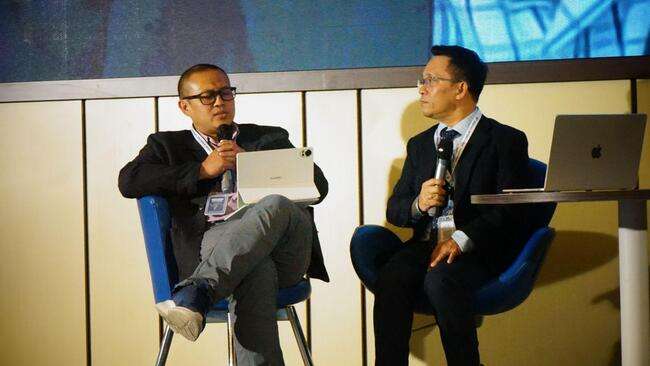
Beyond language representation, Lala Bumela, Ph.D. argued that contemporary AI tools frequently prioritize memorization, efficiency, and quantifiable performance over imagination, sensory engagement, and creativity—elements central to transformative learning. Such orientations, he contended, risk reducing education to mechanical consumption rather than cultivating reflective, innovative thinkers capable of navigating complex global realities.
He cautioned that without careful ethical design and social responsibility, AI could worsen the digital divide while appearing to solve it. “Innovation that is not human-centered simply widens gaps that already exist,” he asserted, urging institutions to resist technological determinism and instead ground AI adoption in values of justice, inclusion, and cultural respect.
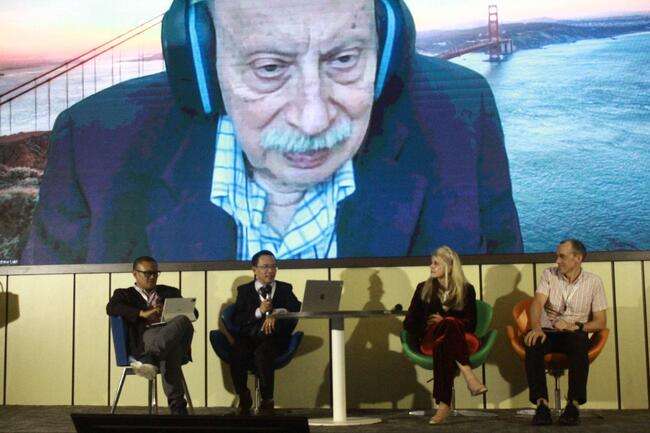
As a constructive pathway, he called for the development of open, adaptable AI infrastructures built through collaborative co-design with teachers and communities in multilingual regions. He pointed to possibilities such as open-source recording platforms and filtered audio tools designed to support regional languages and dialects—technologies that transform local linguistic resources into bridges rather than barriers and empower teachers to tailor learning accordingly.
Closing his remarks, Lala Bumela, Ph.D. advocated for regional partnerships, including Asia-wide or Asia–Australia consortia, to build shared multilingual datasets, open educational repositories, and ethical policy frameworks. Such alliances, he affirmed, would prevent the Global South from remaining passive consumers of Northern technologies and position educators as co-creators shaping the future of AI with integrity and cultural dignity. “Real equity,” he concluded, “means ensuring every teacher and student has not only access to technology, but also the agency to define its direction.”
Author: Muhammad Azkiya Bahtsulkhoir