
AsiaCALL International Conference 2025 Reclaims Language as Sacred Inheritance: Lala Bumela Sudimantara, Ph.D. Calls for a Pedagogy Rooted in Ancestral Wisdom, Emotional Truth, and the Courage to Imagine Beyond Colonial Scripts
Cirebon, November 16, 2025 – The AsiaCALL International Conference 2025 reached its intellectual zenith with Lala Bumela Sudimantara, Ph.D.’s keynote “Beyond Syntax, Beyond the SDGs: Decolonizing Language Education through Emotion, Myth, and Regenerative Design in the AI Era,” delivered to a packed Cyber Building Auditorium. The session united distinguished global scholars including Ania Lian, Ph.D. (Vice President of AsiaCALL/Charles Darwin University, Australia), Prof. Dr. Jeremy White (Vice President for International Relations, AsiaCALL/Ritsumeikan University, Japan), Assoc. Prof. Dr. Pham Vu Phi Ho (Vice President for Administrative Affairs and Publication, AsiaCALL/Industrial University of Ho Chi Minh City, Vietnam), Sirniawati, M.A. (Universitas Muhammadiyah Cirebon), Wulan Rahmatunnisa, M.Pd. (Universitas Kuningan), Wakhid Nashruddin, Ph.D., Listiani Ekawati, M.Hum (UINSSC), and Hakim Ventura International delegates Aries Endri Susanto, S.T., M.E., Eka Destarada Sesunan, S.E., and Nur’aeni, S.E., M.E. International Office staff Ghina Amaliyah Sholihah, S.Sos, Ivo Dinasta Yanuar, S.S., M.Appling, and Global Engagement Team (IO’s student staff) facilitated hybrid participation for Prof. Dr. Andrew Lian, Ph.D. (President of AsiaCALL/Suranaree University of Technology, Thailand) and Luqman Baehaqi, Ph.D. (UIN Palangka Raya, Indonesia). Lala Bumela Sudimantara, Ph.D., Director of the International Office and Conference President, opened with visceral honesty about rejecting rote grammar drills in his Cirebon childhood, igniting a transformative argument for human-centered pedagogy. This gathering crystallized UINSSC’s emergence as a global thought leader where Indonesian epistemologies reshape language education. His critique of transactional learning resonated across continents, positioning Cirebon as the birthplace of educational renaissance.
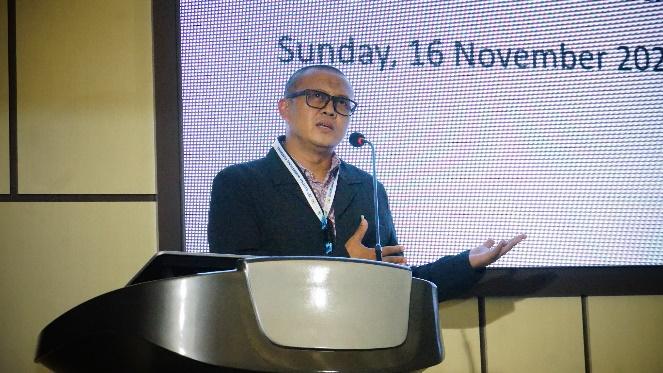
Lala Bumela Sudimantara, Ph.D. delivered a surgical dismantling of the colonial “Input-Comprehend-Reproduce” paradigm that dominates global curricula, a system reducing learners to passive vessels awaiting data transfer. He contrasted this with his revolutionary “Question-Feel-Imagine-Transform” framework, forged from Sundanese wisdom and neuroaesthetic research. This four-stage pedagogy replaces mechanical compliance with embodied agency, beginning with critical inquiry into power structures within texts, progressing to emotional engagement with narratives, then imaginative reconstruction of alternatives, and finally transformative action in communities. He emphasized that true decolonization requires honoring learners’ emotional landscapes as legitimate knowledge territories rather than treating them as obstacles to efficiency. The framework rejects linear progression, embracing chaotic, recursive cycles where grief and wonder fuel intellectual growth. This paradigm shift positions education not as knowledge transfer but as sacred covenant between past, present, and future. Lala Bumela Sudimantara, Ph.D. positioned UINSSC’s cyber-native identity as a philosophical commitment to regenerative learning ecosystems.
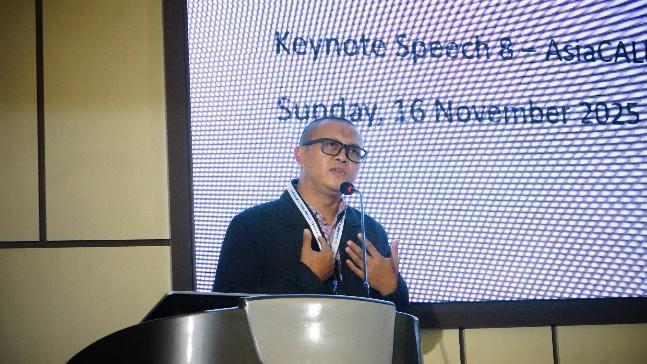
Central to the transformation was the “Reading for Emotion” methodology, which operationalizes the “Question-Feel-Imagine-Transform” cycle through textual engagement. Lala Bumela Sudimantara, Ph.D. demonstrated its application to “Lutung Kasarung,” where learners first interrogate silenced voices in romanticized adaptations, then feel the earth’s grief in agricultural metaphors, imagine contemporary water guardians for flood resilience, and transform insights into community partnerships. Unlike colonial pedagogy that mines texts for extractable data, this approach treats literature as living conversation between humans and their ecological context. He revealed how this method excavates spiritual subtexts erased by Western interpretations, showing how the original myth functions as ecological liturgy encoding rice planting rituals, ancestor veneration, and cosmic balance. The framework demands educators confront their own emotional barriers to authentically guide students through effective dimensions of learning. This isn’t supplementary pedagogy; it’s the core architecture for humanizing education in the AI era.
Lala Bumela Sudimantara, Ph.D. introduced the BIMA framework (Bridging Intelligence, Mindfulness, and Awareness) as the institutional embodiment of his pedagogy. BIMA replaces performative SDG compliance with relational metrics: classrooms become living laboratories where mountain-based sessions integrate rice planting with climate narrative analysis. Assessment portfolios evaluate emotional intelligence alongside linguistic accuracy, measuring how students’ relationships with land and community transform through learning. Neuroaesthetic principles revolutionize writing evaluation, prioritizing narrative symmetry, perceptual problem-solving, and emotional resonance over grammatical precision. He described students co-designing flood-resilient villages inspired by mythic water guardians, then implementing prototypes with Cirebon farmers. This model treats technology as servant to human flourishing: AI documents soil changes during fieldwork but never replaces hands touching earth. BIMA’s power lies in refusing to separate cognition from emotion, technology from tradition, or individual growth from collective healing.
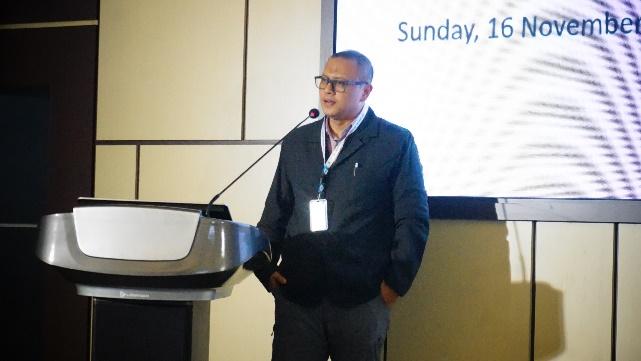
Addressing AI integration, Lala Bumela Sudimantara, Ph.D. rejected superficial “AI-as-grader” applications, demonstrating how technology scaffolds the four-stage framework when ethically guided. AI chatbots trained on Sundanese oral histories prompt critical questioning; emotion-mapping algorithms help learners navigate narrative textures; generative tools co-create counter-myths; collaborative platforms transform insights into community projects. He positioned AI as a mirror: fed shallow inputs, it replicates oppression; guided by humanistic frameworks like BIMA, it amplifies liberation. Crucially, he warned against machines’ seductive mimicry of human creativity: “AI can replicate a parent’s voice but never the trembling hope behind a lullaby. It cannot weep over a failed draft or feel ancestral pride in reclaimed stories.” This necessitates fierce cultivation of human agency, the capacity to imagine, mourn, and rebuild meaning. Technology’s role isn’t to accelerate colonial pedagogy but to decelerate learning, creating sacred space for slow thinking and emotional depth. True innovation lies in designing AI that honors human limitations as strengths.
Concluding with urgent clarity, Lala Bumela Sudimantara, Ph.D. framed education as regenerative design rather than transactional exchange. He called for abandoning systems that measure success through standardized outputs, urging educators to build infrastructures where every learner’s imagination becomes a force for ecological and social healing. His vision positions Cirebon not as a conference venue but as birthplace of global educational renaissance where Indonesian wisdom reconsecrates language as vessel for justice. As delegates departed Cyber Building, the auditorium echoed with transformed perspectives on pedagogy’s purpose. UIN Siber Syekh Nurjati Cirebon had not merely hosted a keynote; it had planted seeds for dismantling colonial knowledge hierarchies. Today’s decolonial vision had already rewritten language education’s DNA, proving that true excellence emerges when technology serves tears, triumphs, and the trembling hope in every lullaby.
Author: Resa Diah Gayatri