
Assoc. Prof. Lala Bumela Sudimantara, Ph.D. Partners with Mr. Sukad (Ciremai Elder) to Reshape International English Language Teaching Based on Sundanese Ecotheology
Kuningan, May 23rd, 2026 — In a profound demonstration of place-based epistemology, Lead Researcher and Lecturer in the English Language Teaching Department and the Director of International Office at UIN Siber Syekh Nurjati Cirebon, Assoc. Prof. Lala Bumela Sudimantara, Ph.D. convened a focused group discussion titled “From Erasure to Emplacement: Reclaiming Sundanese Ecotheology in Digital English Language Teaching” at Pasir Batang, Kuningan. Central to the gathering was Mr. Sukad, Spiritual Elder and Guardian of Sagarahiang, whose teachings on ancestral ecotheology offered a radical reorientation for contemporary education, particularly English Language Teaching (ELT).
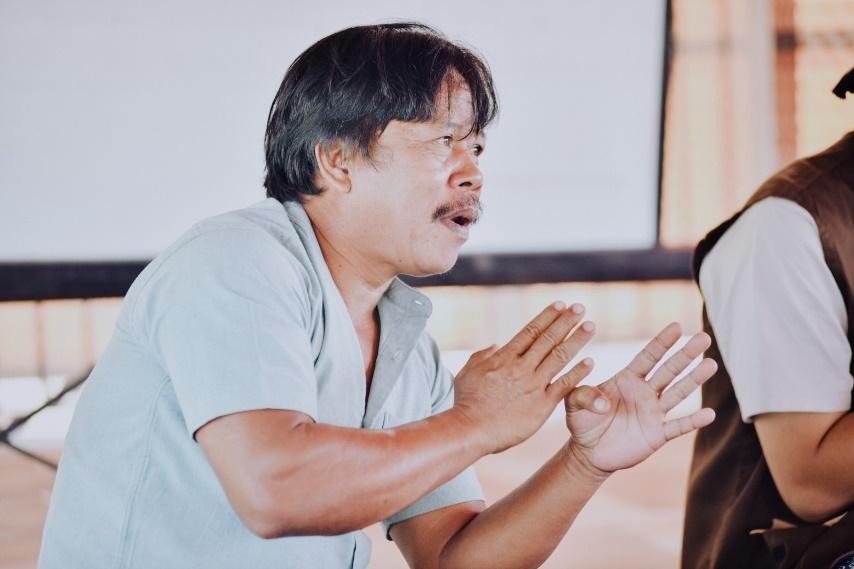
In his presentation, Mr. Sukad thoroughly dissected the ecological structure of Mount Ciremai using an analogy closely tied to human inner existence. He explained that just as humans have the concepts of Pikir (mind/reason), Sir (to process/refine), and Nir (to return to the heart), the mountain also possesses three sacred spatial zones. These zones include the Larangan (Forbidden Zone), comprising 14% of the area stretching from the Ibu Pertiwi spring to the peak, which must not be disturbed at all; the Tutupan (Covered Zone), comprising 24% to protect the core area; and the remaining Baladahan (Utilization Zone), which the community can utilize for agriculture and settlements. Mr. Sukad seriously emphasized the closeness of this relationship, stating, “Humans and mountains are alike; if we distance ourselves from nature, nature will be destroyed, and the nature within ourselves will also fall ill.”
Furthermore, Mr. Sukad revealed the traditional mathematical and hydrological accuracy used by the ancestors to preserve the “earth’s jar” or natural reservoirs on Mount Ciremai. He explained that the radius of the inviolable spring area is calculated precisely based on the slope gradient, then divided by 7 and multiplied by 9. The spring structure in Ciremai also has a hierarchical order, starting with Ibu Pertiwi at the highest position, which has a small but highly sacred discharge serving as the benchmark for the mountain’s water capacity, followed by Seke Sadel, which emerges when the mountain splits into two hills, and finally Seke Menger, which appears after the hill splits once more. The presence of geological faults along river streams can even be physically detected from the consistency of their names, if a river’s name remains unchanged from the upstream all the way down such as the Cilutung River flow from Ciremai to Majalengka, it is certain that there is a fault line along that path.
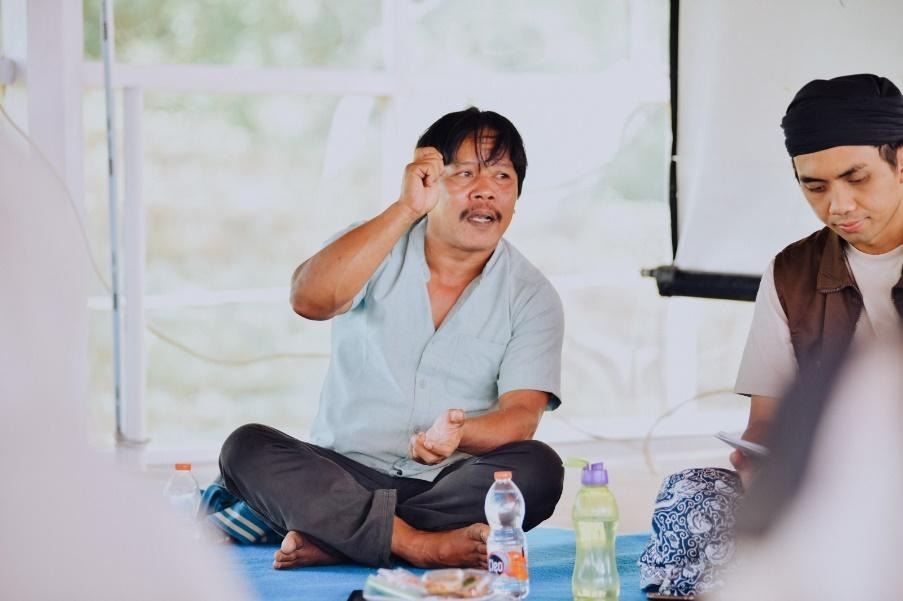
Mr. Sukad also elaborated on the ancient philosophy of Sanghyang Sangga Winata as the foundation of ecological awareness, wherein humans are obliged to undergo three spiritual stages: Ngaji diri (maintaining physical and inner purity through the 10 bodily orifices), Ngaji alam (caring for the 4 main elements: wind/oxygen, water, earth, and fire/magma), and finally reaching the stage of Ngaji semesta (contemplating the universe). He also corrected modern misconceptions that often scapegoat nature for disasters. Wisely, Mr. Sukad stated, “Volcanic eruption activity is a form of the mountain’s devotion to its Creator. The eruption results in volcanic ash that can serve as natural fertilizer to enrich the soil for 32 years, while the sand and rocks become building foundation materials used by humans; there is no waste in this process. Nature is never wrathful; it is humans who are wrathful.”
As a practitioner who has mastered the ecology of Ciremai through direct experience and oral tradition, Mr. Sukad assesses that this method is far more tangible and applicable than rigid Western theories alone. He gave the example of how the ancestors practically calculated oxygen levels through indicators of bodily recovery and by counting the number of trees while climbing the mountain. However, he also expressed his concern over the decline in disaster mitigation awareness among the public due to temporal distortions in legends and oral traditions. He reminded the audience that the damage upstream is already very real and can be measured logically, where the overflow of flash floods downstream actually reflects the volume of water that the capacity of the “earth’s jar” at the mountain peak can no longer hold.
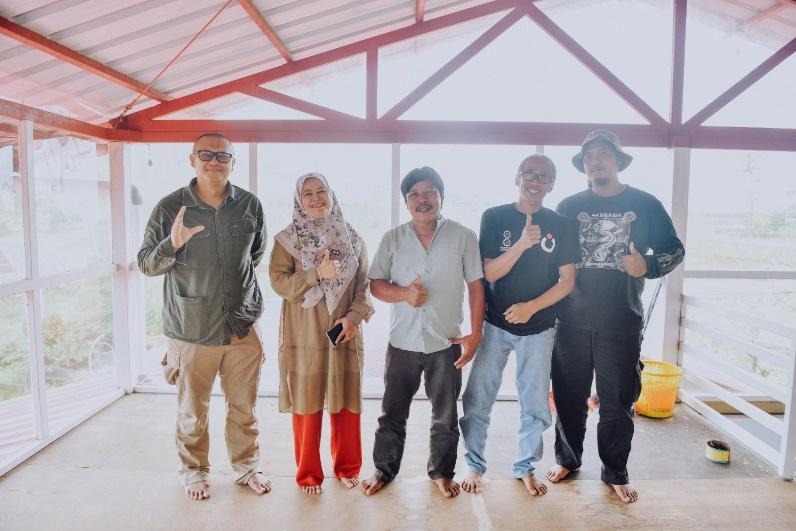
The ecological material presented by Mr. Sukad served as the main catalyst for the Lead Researcher, Lala Bumela Sudimantara, Ph.D., to contextualize it into the innovation of an English Digital Learning curriculum based on Deep Learning and the BIMA Framework. Continuing this line of thought, Lala Bumela Sudimantara, Ph.D. emphasized the importance of an epistemological shift from an extractive Western mindset to the regenerative logic of Sundanese Cosmology. He stressed that language learning must no longer be limited to memorizing rigid grammar, but must touch upon emotions, intonation, and sacred silence. To reinforce the commitment to this pedagogical transformation, he stated, “Children must move toward the area of cultural logic, to understand the difference between the Western extractive logic where humans are separated from nature, and the Sundanese cosmology logic which is regenerative, focusing on sustainable recovery and growth.”
This momentum marks the initial step for UIN Siber Syekh Nurjati Cirebon in integrating Sundanese local wisdom to reshape the direction of international English language education to be more character-driven, sovereign, and in harmony with nature.
Author: Resa Diah Gayatri