
Assoc. Prof. Lala Bumela Sudimantara, Ph.D. Presents Regenerative Human Capital Framework in International Webinar Hosted by Minhaj University Lahore, Pakistan
Cirebon, June 3, 2026 — The first keynote session of the international webinar What if We Truly Put the Learner at the Center? Implications for Language and Literacy Theory, Practice, and Assessment featured a presentation by Assoc. Prof. Lala Bumela Sudimantara, Ph.D., Director of the International Office of UIN Siber Syekh Nurjati Cirebon (UIN SSC). Delivering a presentation entitled When Learners Rewrite the Language and Literacy Curriculum: Affective Epistemic Co-Creation for Regenerative Human Capital, he explored how language and literacy education can respond to contemporary global challenges through learner-centred, ecological, and participatory approaches. The presentation emphasized the need to rethink literacy beyond language skills and position learners as active contributors to knowledge creation. Drawing on research, local wisdom, and educational innovation, he proposed a transformative model that integrates ancestral knowledge with modern scientific inquiry. Throughout the session, participants were invited to reflect on the role of education in cultivating sustainability, critical awareness, and social responsibility. The discussion offered a fresh perspective on how language education can contribute to regenerative human capital development.
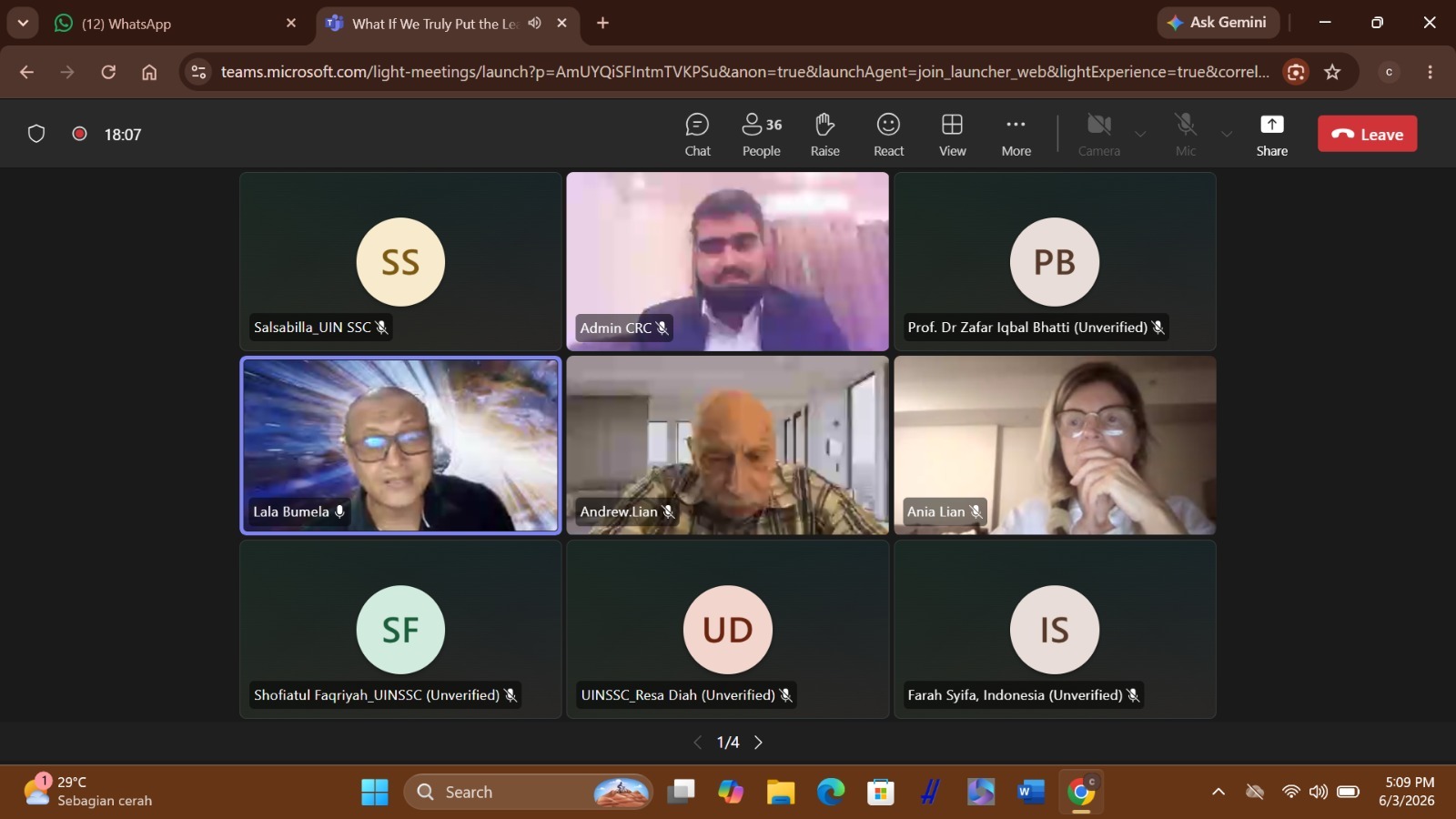
At the beginning of his presentation, Assoc. Prof. Lala Bumela Sudimantara, Ph.D. discussed the paradigm shift required in education amid increasingly interconnected global crises, including ecological degradation, climate instability, technological acceleration, social fragmentation, and cultural dislocation. He argued that environmental issues cannot be understood separately from culture, psychology, spirituality, governance, and education. Therefore, sustainability education should move beyond simply adding environmental topics into existing curricula while maintaining conventional assumptions about learning. Instead, learning should evolve toward relational, participatory, and ecological approaches that encourage systems thinking and regenerative consciousness. Emphasizing the importance of reconnecting people with the natural world, he stated, “Actually, we have to focus on rebuilding the relationship with nature. I don't think we can achieve something sustainable without rebuilding a strong relationship with nature.” His remarks encouraged participants to reconsider the foundations upon which educational systems are built.
The presentation then shifted toward the role of Sundanese ancestral knowledge as a valuable source of learning. Assoc. Prof. Lala Bumela Sudimantara, Ph.D. explained that current research is re-examining traditional texts to understand how ancestral knowledge compares with contemporary scientific findings. Inviting participants into a moment of reflection, he asked, “What kinds of texts truly resonate with you and your students?” Using examples from Pasir Batang in Kuningan and the oral tradition of Carita Pantun, particularly Lutung Kasarung, he demonstrated how traditional narratives contain ecological, cultural, and spiritual knowledge that remains relevant today. He described Lutung Kasarung as more than folklore, presenting it as an agricultural liturgy, a cosmological map, and a ritual technology for ecological alignment. Through this perspective, literacy becomes a means of understanding not only texts, but also the relationship between humans, nature, and society.
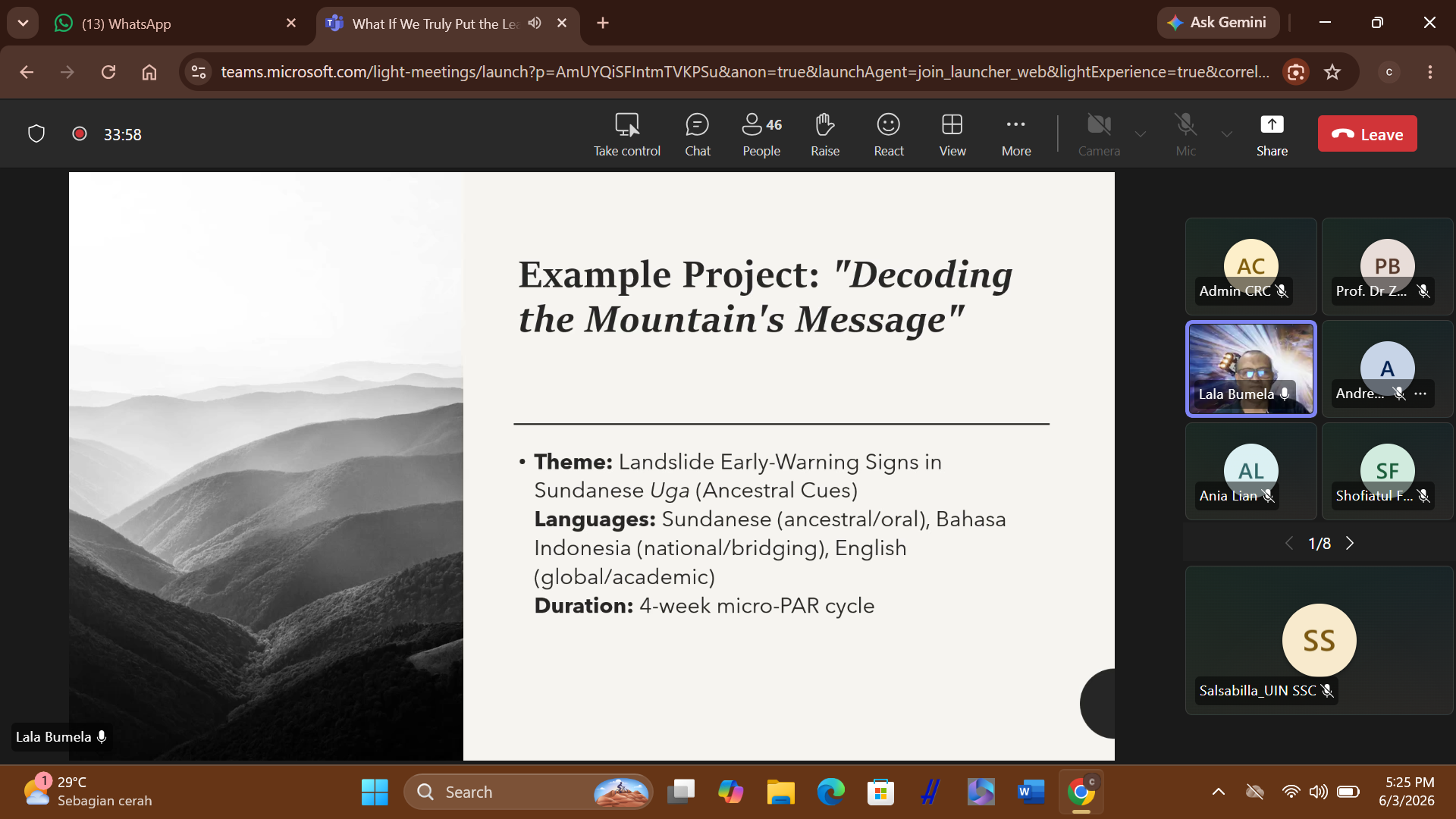
A significant portion of the presentation focused on the concept of Reading for Emotions, which examines how emotional progression within a story can strengthen reading engagement and critical reflection. Assoc. Prof. Lala Bumela Sudimantara, Ph.D. presented several recent studies conducted with his students that explored affective dimensions of reading materials, AI-assisted literacy evaluation, and emotional alignment within the Merdeka Curriculum. He also shared findings showing that many reading materials successfully capture students’ attention at the beginning but often fail to guide them toward deeper moral reflection. Based on these findings, he emphasized the importance of developing richer literacy content and more meaningful reading experiences. Furthermore, reflecting on BIMA (Bridging Intelligence, Mindfulness, and Awareness) framework, he introduced a transformative model of regenerative human capital that promotes collaboration between students, community elders, Juru Pantun, environmental scientists, and educators. According to him, literacy should become a bridge connecting ancestral wisdom and scientific knowledge to address contemporary social and environmental challenges.
During the Q&A session, one participant expressed curiosity about the term Juru Pantun after hearing it mentioned several times throughout the presentation. The participant asked what a Juru Pantun is and what role they play within Sundanese society. In response, Assoc. Prof. Lala Bumela Sudimantara, Ph.D. explained that a Juru Pantun is not merely a storyteller, but a custodian of ancestral knowledge responsible for transmitting cultural, ecological, and historical wisdom through oral performances. The discussion was later continued by the host, Prof. Dr. Zafar Iqbal Bhatti, who asked about the biggest challenges in implementing learner-centred approaches in higher education. In response, Assoc. Prof. Lala Bumela Sudimantara, Ph.D. highlighted challenges related to transforming students’ mindsets, developing more meaningful assessment systems, managing limited instructional time, and sustaining long-term classroom and research initiatives. He noted that meaningful educational transformation requires patience, collaboration, and a commitment to seeing learners as active creators of knowledge rather than passive recipients of information.
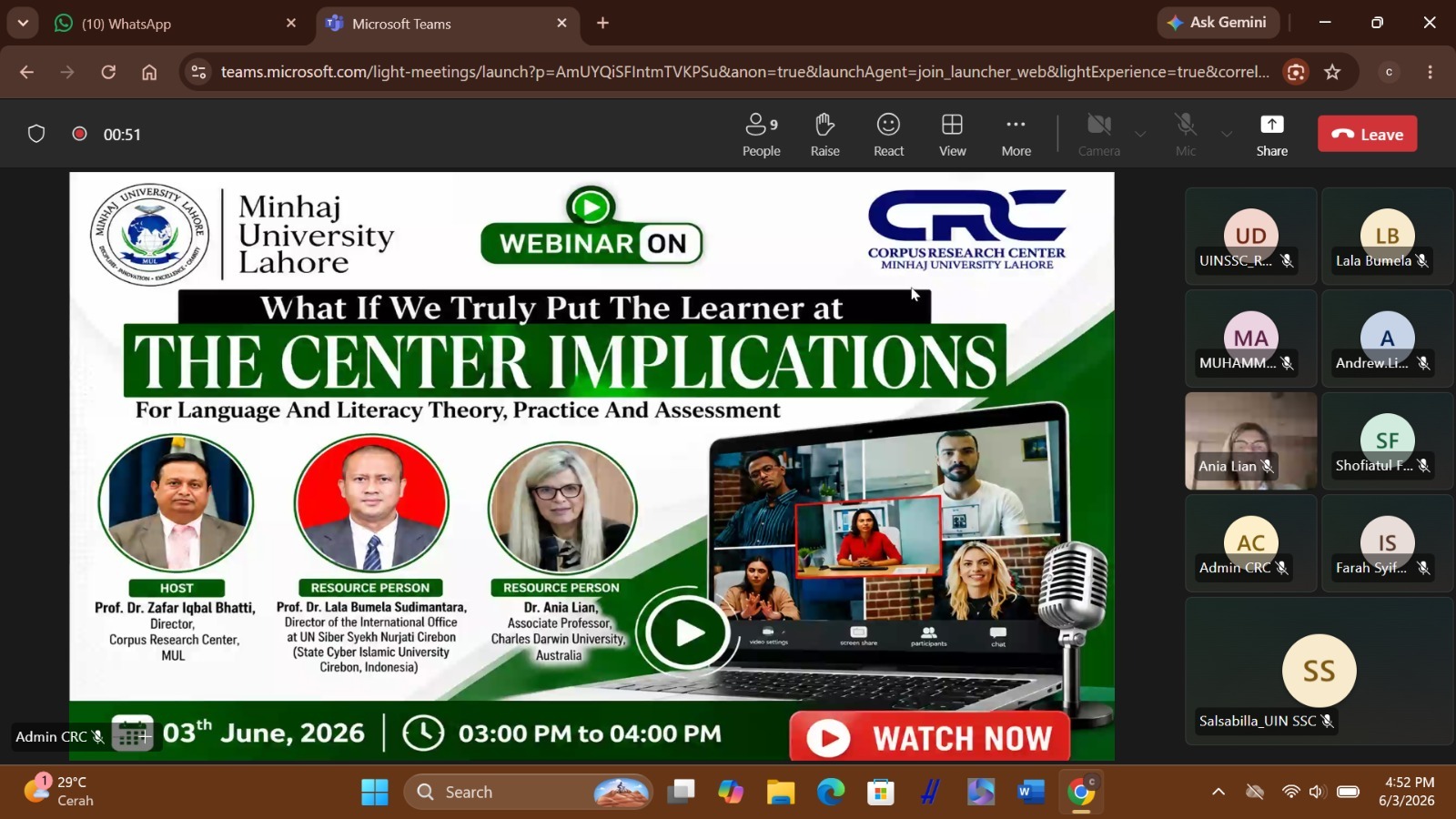
Organized by the Corpus Research Center of Minhaj University Lahore, Pakistan, the webinar connected participants from UIN Siber Syekh Nurjati Cirebon, Minhaj University Lahore, Charles Darwin University, and other educational practitioners interested in language and literacy studies. The event featured Assoc. Prof. Lala Bumela Sudimantara, Ph.D. and Assoc. Prof. Ania Lian, Ph.D. of Charles Darwin University, Australia, as keynote speakers, with Prof. Dr. Zafar Iqbal Bhatti, Director of the Corpus Research Center at Minhaj University Lahore, serving as host. Throughout the webinar, participants engaged in discussions on learner-centred education, literacy development, sustainability, and assessment practices in contemporary educational contexts. The exchange of perspectives highlighted the value of international collaboration in addressing educational challenges across different settings. More importantly, the event demonstrated how local knowledge and global scholarship can complement one another in shaping future learning environments. It is hoped that the webinar will inspire further academic partnerships and collaborative initiatives that promote innovative, inclusive, and sustainable approaches to education.
Author: Salsabilla