
Beginning an Exploratory Academic Partnership Between UIN Siber Syekh Nurjati Cirebon, Represented by Lala Bumela Sudimantara, Ph.D., Fatima Aldajani, Ph.D. from the University of Toledo, U.S., in Multilingual and Culture-Based Language Education
Cirebon, January 27, 2026 – The International Office of UIN Siber Syekh Nurjati Cirebon convened an initial exploratory meeting bringing together its Director, Lala Bumela Sudimantara, Ph.D., Fatima Aldajani, Ph.D. from the University of Toledo, United States, and Ivan Chabibillah from the International Cultural Communication Center, Malaysia. The virtual session marked the first informal academic exchange between the two institutions, focusing on shared interests in multilingual education, and the English Language Teaching. Lala Bumela Sudimantara, Ph.D. introduced his current research focus on reimagining English Language Teaching (ELT) materials through multisensory approaches, integrating Reading for Emotion and Aesthetics, with Indonesian local wisdom. Fatima Aldajani, Ph.D., in turn, shared her extensive experience supporting multilingual learners across K–12 and higher education contexts in the U.S., emphasizing her work in curriculum design, technology-enhanced instruction, and immigrant education.
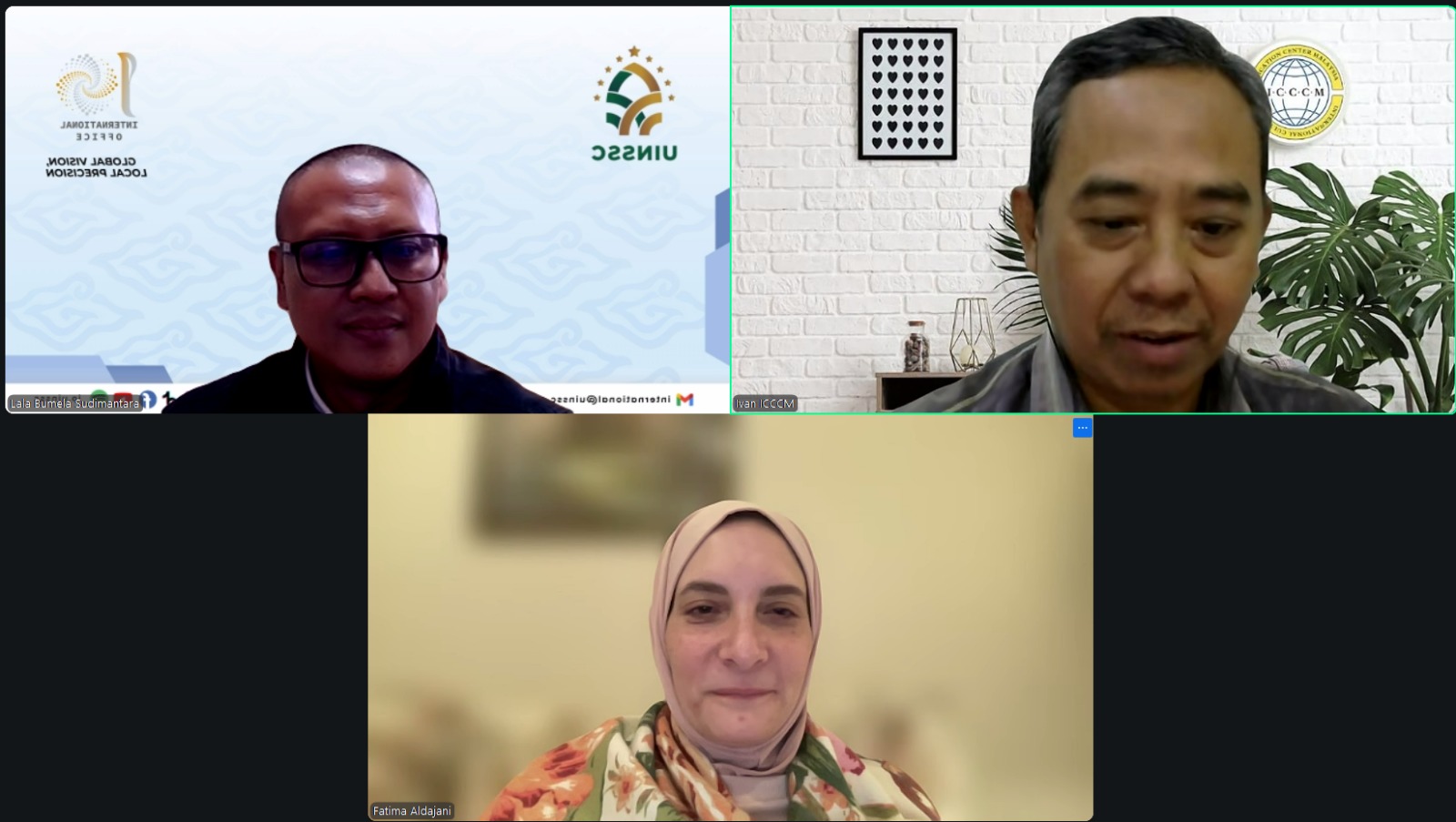
Lala Bumela Sudimantara, Ph.D. highlighted his commitment to developing ELT frameworks that honor Indonesia’s linguistic and cultural diversity, especially through the lens of ethnoscience, understanding how Indigenous communities encode ecological, social, and ethical knowledge in everyday practices and narratives. He explained that his approach moves beyond conventional communicative language teaching by embedding language acquisition in relational, multisensory, and spiritually grounded experiences rooted in local epistemologies. This perspective, he noted, aligns with global calls to decolonize language education and resist one-size-fits-all models that marginalize non-Western ways of knowing. The discussion underscored his ongoing efforts to integrate these principles into UINSSC’s cyber-campus pedagogy and international programming. “Language learning should not be reduced to screens and texts alone. In Multisensory CALL, we bring in sound, movement, imagery, environment, and cultural memory so that learners experience language as part of life, not as an abstract system,” he stated.
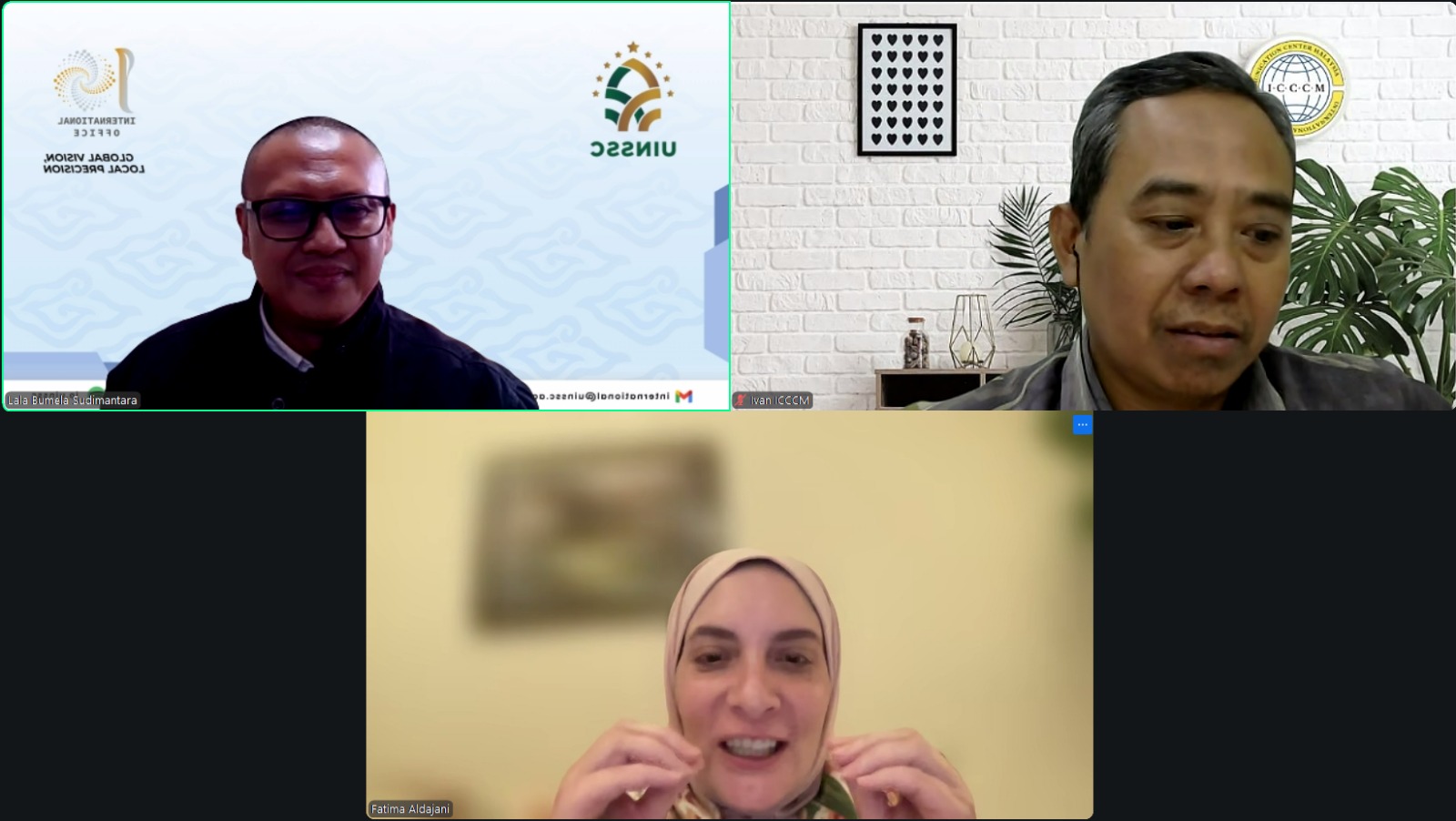
Fatima Aldajani, Ph.D. responded with strong interest, drawing parallels between Lala Bumela Sudimantara, Ph.D’s ethnoscience framework and her own work in culturally responsive pedagogy for multilingual learners. She outlined her 13-year trajectory in U.S. education, where she has designed curricula that validate students’ home languages, leverage translanguaging as a cognitive resource, and center social-emotional learning in linguistically diverse classrooms. Her research on professional development, family engagement, and AI integration in language instruction resonated with Lala Bumela Sudimantara, Ph.D’s emphasis on teacher agency and ethical technology use. She noted that while U.S. contexts often focus on migrant and refugee populations, the underlying principle, honoring learners’ full linguistic repertoires and cultural identities, is universally relevant. Both scholars acknowledged the potential for cross-contextual learning, especially in designing pedagogies that resist linguistic hierarchies.
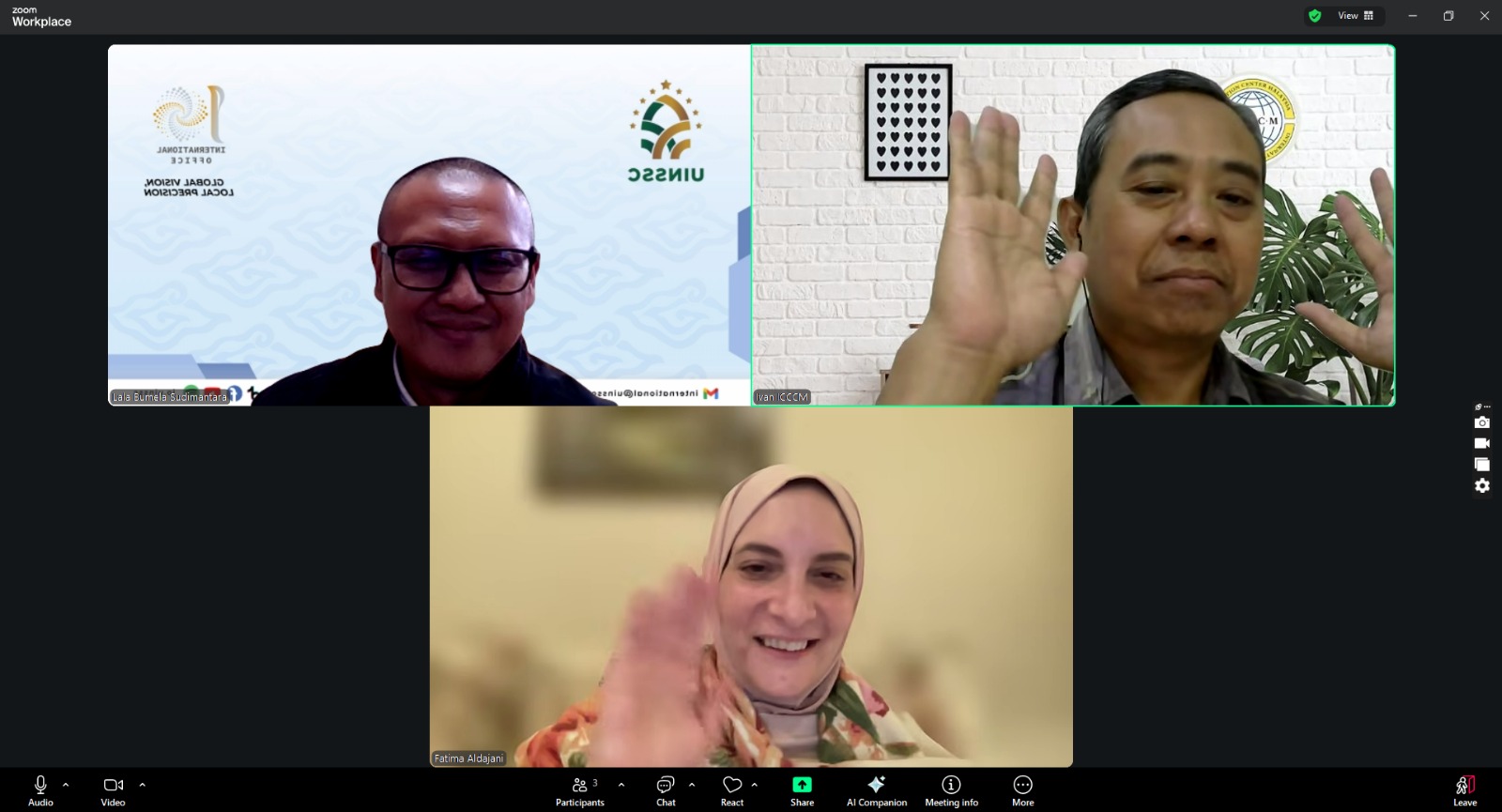
The dialogue further explored shared concerns about the uncritical adoption of AI in language education. They agreed that both Global North and South contexts face challenges in balancing innovation with integrity, though their starting points differ significantly. Fatima Aldajani, Ph.D. expressed particular curiosity about how Indonesian oral traditions encode environmental knowledge, seeing potential connections to place-based learning models in North American Indigenous education. The exchange remained open-ended, focused on mutual understanding rather than immediate outcomes.
This initial conversation exemplifies UINSSC’s evolving approach to internationalization: prioritizing intellectual alignment over transactional agreements, and valuing slow, trust-based relationship-building over rapid institutional formalities. By introducing his ethnoscience-oriented vision of English Language Teaching to a U.S. scholar deeply engaged in multilingual equity, Lala Bumela Sudimantara, Ph.D. reinforced UINSSC’s identity as a hub where local wisdom informs global discourse. The dialogue laid essential groundwork for potential future collaboration, rooted in genuine scholarly resonance around language, culture, and justice.
Authors: Resa Diah Gayatri