
Bridging Borders through Academic Mobility: UIN SSC and ICCCM Initiate International Community Service Program for the Faculty of Islamic Economics and Business (FEBI) Students in Malaysia
Cirebon, May 5, 2026 — Lala Bumela Sudimantara, Ph.D., Director of the International Office of UIN Siber Syekh Nurjati Cirebon (UIN SSC), held an online meeting with Ivan Chabibilah, S.S., M.Li. from the International Cultural Communication Center Malaysia (ICCCM) to discuss expanding international collaboration between UIN SSC and Malaysia. The meeting centered on two major initiatives, including a planned international community service program (KKN) for students of the Faculty of Islamic Economics and Business (FEBI) in Malaysia. This initiative reflects a growing commitment to providing students with global exposure and real-world learning experiences. The discussion was marked by a shared enthusiasm to strengthen academic mobility. Both parties emphasized the importance of collaboration in shaping globally competent graduates. From the beginning, the atmosphere reflected a strong sense of partnership and mutual vision.
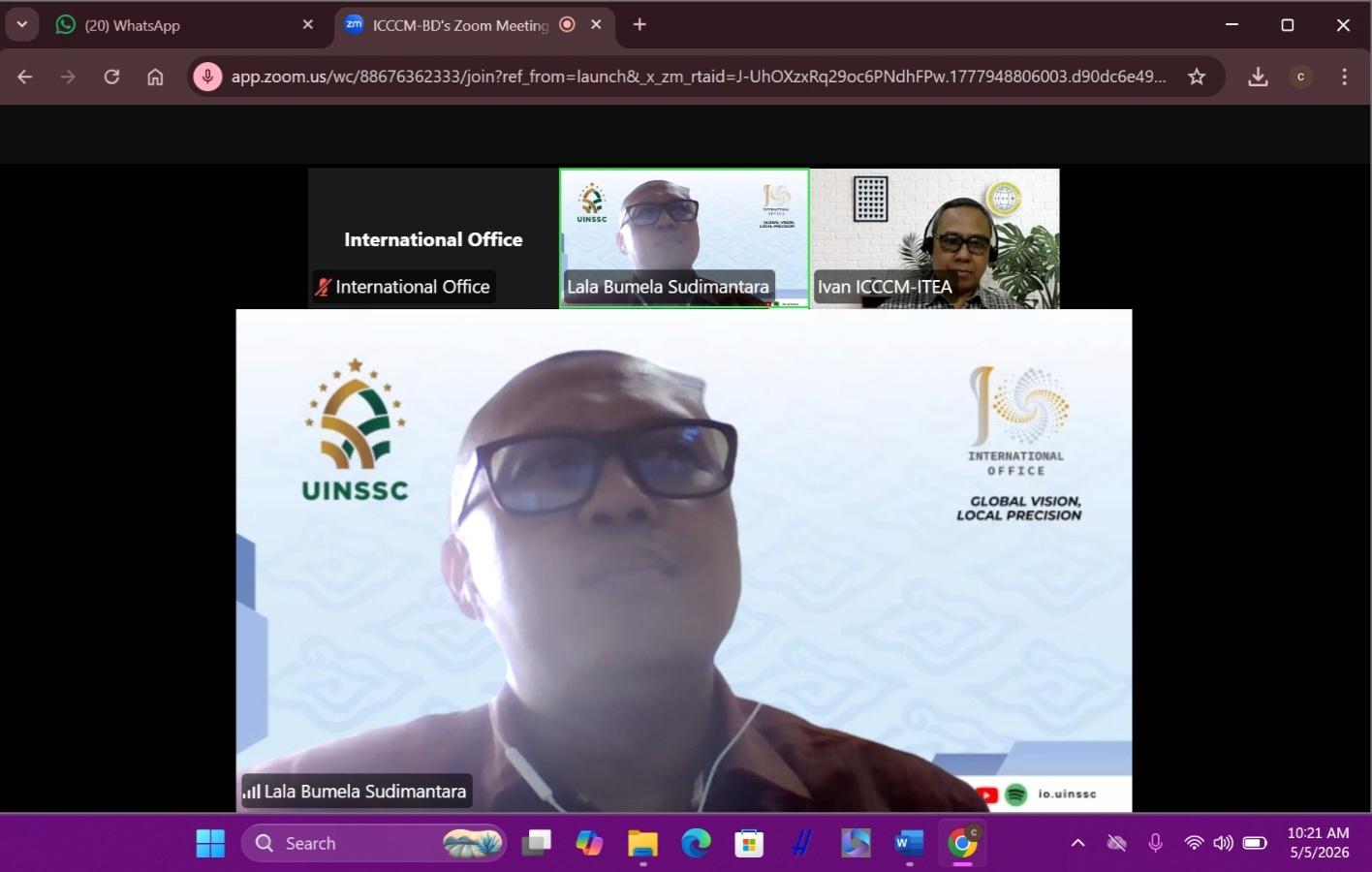
As the conversation developed, Lala Bumela Sudimantara, Ph.D. explained that FEBI is one of the most active faculties in initiating international programs within UIN SSC. FEBI consists of four main departments including Sharia Banking, Sharia Accounting, Sharia Economics, and Sharia Tourism. These disciplines, according to him, offer strong potential for global engagement, particularly in regions with shared cultural and economic values. The proposed KKN program in Malaysia is expected to become a platform for applying academic knowledge in real social contexts. It also allows students to engage directly with international communities. This initiative reflects a broader effort to connect education with global realities. It positions students not only as learners, but also as contributors.
From the perspective of International Cultural Communication Center Malaysia, the proposal and Terms of Reference (TOR) submitted by UIN SSC have been carefully reviewed and discussed internally. Ivan Chabibilah S.S., M.Li. noted that further feedback and suggestions will be provided after deeper consideration. As he stated, “We have reviewed the proposal and will provide detailed feedback and suggestions to strengthen this collaboration.” This response indicated a positive reception while also emphasizing the importance of careful planning. The discussion showed that both institutions are committed to ensuring the program is well-structured and impactful. This stage reflects a process of refinement rather than mere approval. It highlights the seriousness of both parties in building sustainable collaboration.
Beyond program planning, the meeting also became a space for exchanging experiences in international collaboration. Ivan Chabibilah S.S., M.Li. shared his involvement in mobility programs in partnership with the Sampoerna Foundation, which collaborates with ICCCM. Meanwhile, Lala Bumela Sudimantara, Ph.D. reflected on his experience leading an ecological learning journey in Sagarahiang, Kuningan, West Java with participants from 23 countries under the Global Tapestry of Alternatives network. These shared experiences enriched the discussion and created a deeper sense of connection. It showed that collaboration is not only institutional, but also personal and experiential. The exchange of stories added emotional depth to the meeting. It reinforced the value of learning through real engagement.
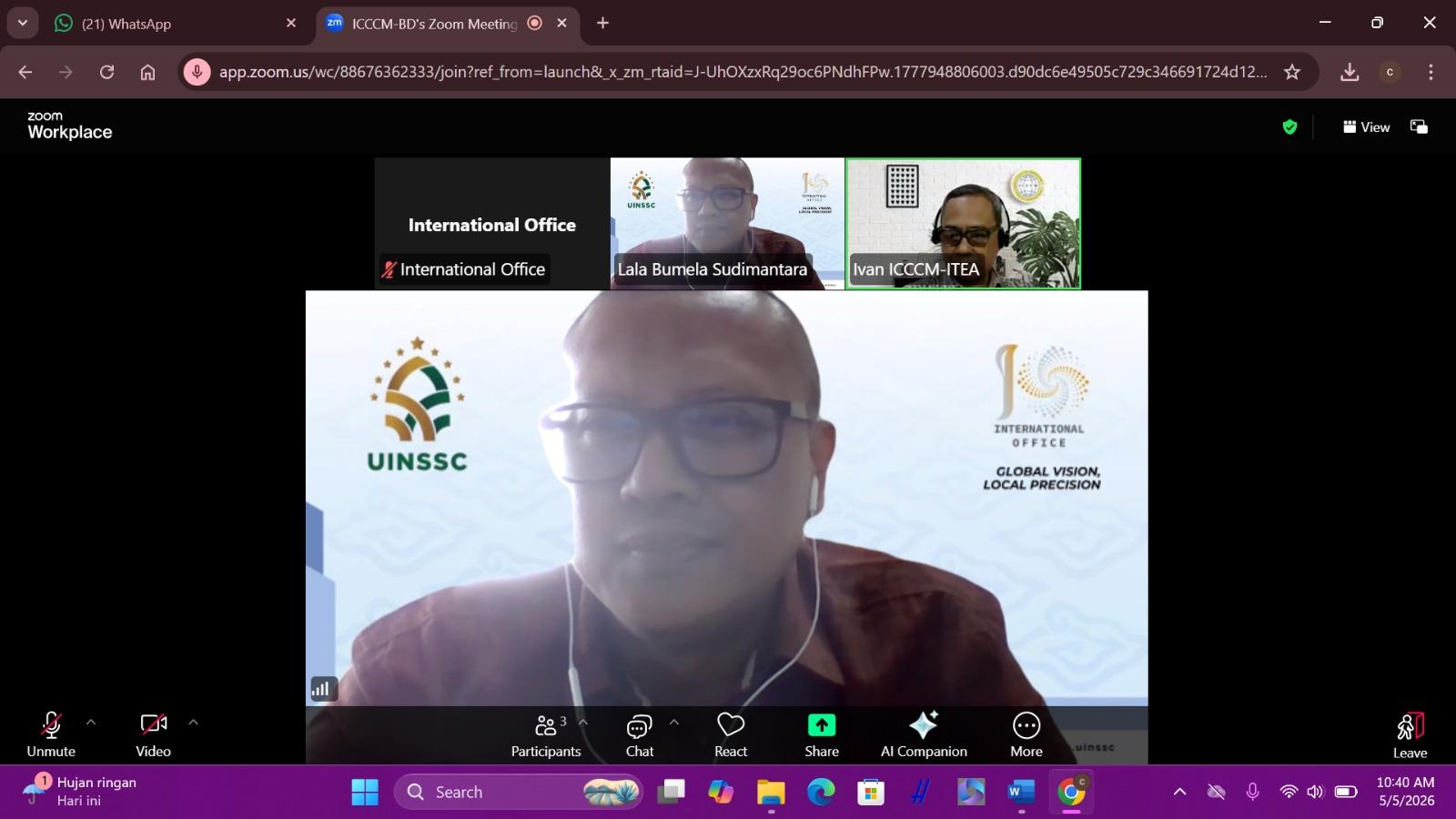
In a more focused reflection related to the planned KKN program, Lala Bumela Sudimantara, Ph.D. emphasized the importance of integrating sustainability and local wisdom into international academic activities. He explained that programs like KKN abroad should not only serve as academic requirements, but also as meaningful engagements that respond to real societal and environmental contexts. According to him, one of the ongoing challenges in education is that sustainability often remains a conceptual idea rather than a lived practice. Through this collaboration, he hopes students can experience sustainability directly within community settings. He also highlighted that local knowledge systems, including those from Nusantara, should be positioned as valuable contributions in global discourse. This perspective strengthened the relevance of the KKN program as more than just mobility, but as a transformative learning experience. It connected the initiative with broader goals of sustainable and contextual education.
In closing, Lala Bumela Sudimantara, Ph.D. expressed hope that this collaboration would grow into a long-term partnership that benefits both institutions and students. He emphasized the importance of continuous dialogue and mutual support in developing international programs. Ivan Chabibilah S.S., M.Li. echoed this sentiment, stating, “Let us continue to update each other on our collaborative activities and keep strengthening this synergy.” This statement reflected a shared commitment to maintaining communication and collaboration. The meeting concluded with a sense of optimism and forward momentum. It highlighted that beyond planning, the true value of collaboration lies in sustained connection. Ultimately, the initiative represents a step toward building globally engaged and socially responsive education.
Author: Salsabilla