
Building Global Research Networks: International Office UINSSC Holds General Diaspora Series 2
Cirebon, May 13, 2026 — Lala Bumela Sudimantara, Ph.D. participated in the General Diaspora Series 2: Diaspora Talks attended by the International Office of UIN Siber Syekh Nurjati Cirebon with the theme “Information Session: Diaspora Berdampak Program.” The event brought together participants from various countries and academic backgrounds, including diaspora scholars, lecturers, researchers, students, and representatives from educational institutions. Several participants attending the session included Ms. Sastia, Mr. Dwi Susanto, Prof. Rudolf, Mr. Brad, Mr. Pak Mul, Mr. Novana Aftasoit, Mr. Davin, and Mr. Dhani. Conducted through Zoom Meeting, the discussion became an important platform for exploring international academic collaboration and global research opportunities. Through its participation in the forum, the International Office of UINSSC continued to strengthen its global engagement and expand international academic connections. During the discussion, Lala Bumela Sudimantara, Ph.D. stated, “Diaspora communities hold an important role in connecting Indonesian universities with global knowledge, collaboration, and innovation.”
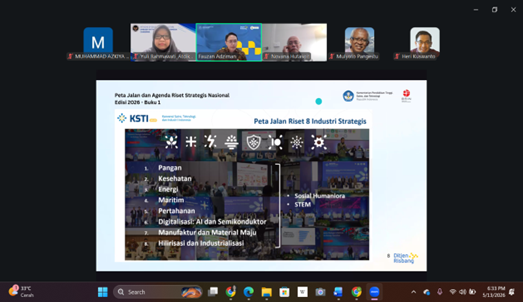
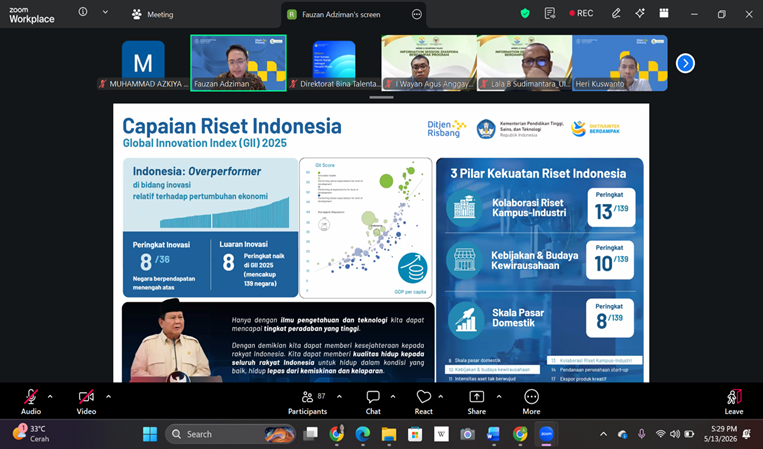
During the event, participants discussed the future direction of Indonesia’s research ecosystem and the importance of international collaboration in higher education. The session featured M. Fauzan Adziman as Director General of Research and Development and Heri Kuswanto as Director of Talent Development on Research and Development. The speakers explained how Indonesia is currently strengthening its national research system through collaborative, inclusive, and globally connected approaches. They also highlighted Indonesia’s achievement in the Global Innovation Index 2025, where the country was recognized as an overperformer in innovation development. According to the speakers, this achievement reflects Indonesia’s growing capacity in research, technology, and innovation at the international level. The International Office viewed this discussion as an important opportunity to encourage students and lecturers to actively engage in global academic activities and international partnerships.
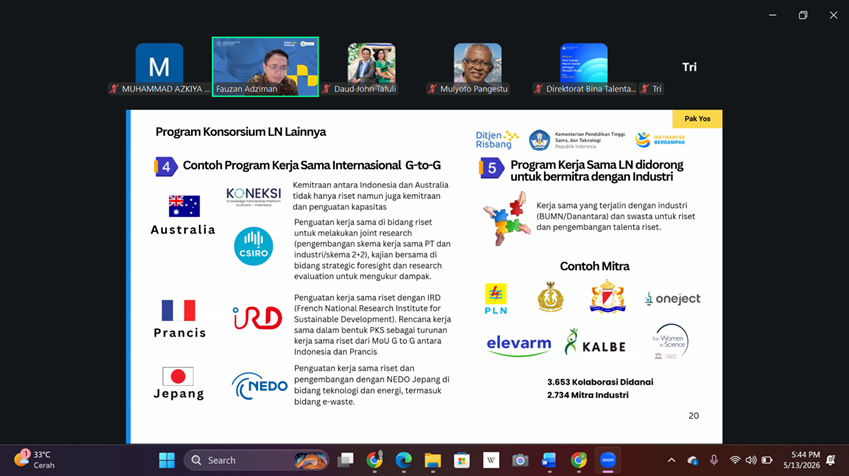
The discussion also focused on the Diaspora Berdampak Program initiated by the Ministry of Higher Education, Science, and Technology in collaboration with the Education and Cultural Attaché of the Indonesian Embassy in Canberra. Participants learned that the program was designed to connect Indonesian diaspora communities abroad with universities and research institutions in Indonesia. Through this initiative, diaspora scholars are expected to contribute their expertise, international experiences, and global academic networks to support Indonesia’s educational and research development. The International Office emphasized that programs like this are highly relevant to UINSSC’s vision of expanding international engagement and strengthening global cooperation. Many participants expressed enthusiasm about future opportunities involving joint research, international supervision, academic exchange, and collaborative innovation projects. The atmosphere throughout the session reflected optimism toward building stronger global academic connectivity for Indonesian higher education.
In the middle of the discussion, Lala Bumela Sudimantara, Ph.D. highlighted the importance of sustainable and meaningful collaboration between diaspora communities and Indonesian institutions. He stated, “International partnerships should create long-term impact, not only formal cooperation on paper.” His statement strongly reflected the mission of the International Office in promoting productive and impactful international engagement. Participants also discussed issues related to research equality, collaboration opportunities for universities outside Java, and the importance of strengthening research culture in different regions of Indonesia. Several diaspora members shared their experiences in supporting smaller universities and mentoring local researchers through international collaboration. The discussion became increasingly interactive as participants exchanged ideas on how global partnerships could contribute to more inclusive academic development across Indonesia.
Another important topic discussed during the event was Indonesia’s strategic research priorities and the growing need for interdisciplinary collaboration. The speakers introduced several priority sectors, including digitalization, artificial intelligence, health, maritime studies, energy, advanced manufacturing, and sustainable development. Participants were encouraged to view international collaboration not only as academic networking, but also as a way to solve real social and national challenges through research and innovation. The International Office emphasized the importance of preparing students and researchers to become globally connected scholars who can contribute to international academic discussions. Participants also explored opportunities for research mapping, global networking, and future collaboration through various international programs introduced during the session. Through this forum, the International Office continued to strengthen its role as a bridge connecting local academic communities with international opportunities and global partnerships.
Closing
the event, Lala Bumela Sudimantara, Ph.D. once again emphasized the importance
of international engagement in shaping the future of Indonesian higher
education. He remarked, “The future of Indonesian universities depends on
how successfully we connect local potential with global collaboration and
international knowledge.” His statement concluded the session with a strong
message about the value of academic diplomacy and global networking. The
General Diaspora Series 2 ultimately became more than just an information
session, as it successfully created a collaborative space connecting diaspora
scholars, researchers, universities, and students from different parts of the
world. Through the active involvement of the International Office of UINSSC,
the event reflected the university’s growing commitment toward
internationalization and globally connected education. Participants left the
session with broader perspectives, stronger academic networks, and renewed
enthusiasm for contributing to Indonesia’s research and educational development
through international collaboration.
Author : Laily Dwi Islami Azzahra