
Championing Inclusive and Ecological Scholarship: The Global Engagement Team of the International Office at UIN Siber Syekh Nurjati Cirebon Demonstrates Exceptional Dedication on Day 2 of the 2025 International Workshop and Seminar, Guiding Participants through Wasathiyah Thinking and Critiques of Technocratic SDGs toward Circular, Interdisciplinary, and Eco-Centric Approaches
Cirebon, December, 2nd 2025 — On the second day of the 2025 International Workshop and Seminar titled Returning to the Circle: A Regenerative Pathway beyond Technocratic Sustainable Development Goals, the event reached unprecedented success under the visionary guidance of Lala Bumela, Ph.D., Director of the International Office at UIN Siber Syekh Nurjati Cirebon. The day featured distinguished speakers, including Ivan Chabibilah, S.S., M.Li. from ICCCM Malaysia, and Syarifuddin, S.S., representing the Cirebon Regional Secretariat. The participants were immersed in epistemological discourse surrounding Wasathiyah thinking, which advocates the selection of a balanced, middle path amidst contemporary ideological and intellectual heterogeneity. In parallel, eco-centric perspectives were introduced as a theoretical foundation for thought in the era of climate change, critiquing the prevailing technocratic interpretations of the Sustainable Development Goals (SDGs). Students and participants alike were captivated by insights into circular and non-linear thinking, learning to appreciate knowledge as multidimensional, continuous, and inherently regenerative, rather than finite. The Global Engagement Team (GET) orchestrated the entire intellectual and operational performance with remarkable precision—managing logistics, administration, technical coordination, and participant support—ensuring that every aspect of the seminar ran seamlessly. Reflecting on this immersive day, Lala Bumela, Ph.D. remarked, “Education is not merely the transmission of knowledge; it is the cultivation of perpetual inquiry, the nurturing of critical thought, and the creation of spaces where ideas can evolve endlessly. Our Global Engagement Team embodies this ethos, transforming administrative rigor into a platform for intellectual flourishing.” This performance resonates deeply with GET’s own internship learning trajectory, emphasizing hands-on, continuous engagement in global academic operations.
Despite the flawless orchestration, the day was not without its challenges. The intensity of intellectual engagement required participants to navigate complex, often contradictory ideas, demanding both critical acuity and emotional resilience. Eco-centric theory, juxtaposed with the critique of technocratic SDGs, presented a conceptual tension that tested participants’ capacities for integrative reasoning. Additionally, the logistical complexity of hosting a diverse international cohort—from scheduling sessions, synchronizing virtual and in-person components, to managing real-time translations and technical contingencies—created constant pressure on the GET team. Lala Bumela, Ph.D., addressing his team amid these challenges, emphasized, “Excellence is forged in the crucible of complexity. Every unforeseen issue, every intricate coordination, is an opportunity to demonstrate resilience, creativity, and leadership. Our responsibility is not only to resolve issues but to elevate the experience of every participant through precision and care.” This mindset reinforced the principle that true global scholarship thrives on adaptability, foresight, and ethical stewardship, making every challenge a catalyst for learning and innovation.
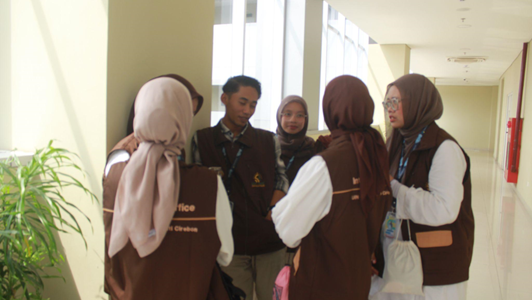
During the seminar, dynamic discussions unfolded, as participants questioned, reflected, and debated on the application of Wasathiyah thinking and eco-centric methodologies in real-world contexts. Lala Bumela, Ph.D., facilitating these dialogues, provided guidance with both intellectual rigor and empathetic mentorship: “Do not seek closure in knowledge; rather, embrace its perpetual evolution. Learning is a living process, enriched through dialogue, reflection, and the courage to challenge conventions. The circularity of thought mirrors the cycles of life itself—interconnected, regenerative, and infinitely expanding.” Participants shared insights on integrating interdisciplinary approaches within their academic and professional contexts, while reflecting on the ethical imperatives of ecological responsibility. These exchanges created an atmosphere of mutual respect, curiosity, and transformative learning, elevating the seminar beyond a conventional workshop into a living laboratory of critical thought.
As the day progressed, the Global Engagement Team continued to ensure the seamless operation of sessions while simultaneously engaging in reflective observation. The team coordinated panel timings, facilitated participant interactions, and monitored technical systems—all while absorbing the intellectual content of the presentations. Lala Bumela, Ph.D. underscored the learning dimension for his interns, stating, “Our work is not merely logistical; it is pedagogical. By managing the flow of knowledge, by creating spaces where ideas are not only shared but experienced, we cultivate professional acumen, ethical responsibility, and global competence. Every task, from administration to coordination, is part of a continuum of learning and engagement.” This integrated approach ensured that the seminar remained both intellectually rigorous and operationally flawless, embodying the principle that administrative excellence amplifies scholarly impact.
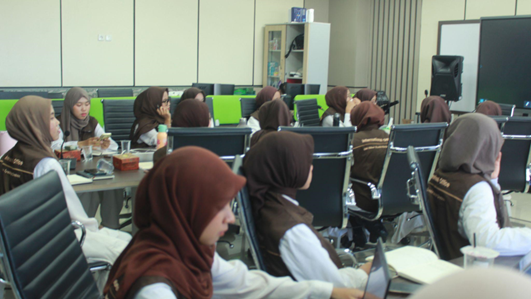
By the end of Day 2, the seminar had achieved its intended impact: participants left equipped with renewed perspectives on circular, interdisciplinary, and eco-centric thinking, while GET had demonstrated its capacity to deliver an unparalleled international academic experience. Lala Bumela, Ph.D., summarizing the day’s achievements, reflected, “Today, we have witnessed the convergence of rigorous scholarship, strategic administration, and collaborative engagement. The seamless performance of our Global Engagement Team enabled participants to fully immerse in the intellectual journey. This is not just a workshop; it is a model for inclusive, ecological, and regenerative education that can guide future academic endeavors globally.” The success of the day reinforced UINSSC’s standing as a forward-thinking, globally connected, and ethically responsible institution, capable of harmonizing innovation, tradition, and sustainability.
Ultimately, Day 2 of the 2025 International Workshop and Seminar exemplifies a profound educational philosophy championed by Lala Bumela, Ph.D.: that scholarship is most impactful when inclusivity, ecological consciousness, and ethical rigor are interwoven with operational excellence. Participants and interns alike absorbed lessons that transcend disciplinary boundaries, understanding that learning is perpetual, regenerative, and interconnected. As Lala Bumela, Ph.D., reflected, “The essence of education lies in its continuity and its ability to cultivate responsible, conscious, and capable global citizens. By embedding principles of Wasathiyah, eco-centricity, and critical reflection, we ensure that knowledge is not merely accumulated but lived, shared, and perpetually regenerated. This is the future of inclusive and ecological scholarship.”
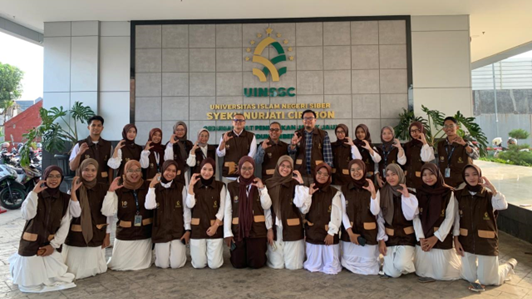
Author: Muhammad Azkiya Bahtsulkhoir