
Cultivating Pluriversal Literacy in Higher Education Research: Lala Bumela Sudimantara, Ph.D. Heads International Office UIN Siber Syekh Nurjati Cirebon in Integrating Digital, Ecological, and Cultural Perspectives
Cirebon, February 12, 2026 – With an orientation toward reflective scholarship and future-facing research practice, Lala Bumela Sudimantara, Ph.D., Director of the International Office at UIN Siber Syekh Nurjati Cirebon, spearheaded an academic initiative dedicated to cultivating pluriversal literacy in higher education research. This initiative frames literacy as a multidimensional capacity, one that intertwines digital competence, ecological sensitivity, and cultural consciousness within scholarly inquiry. Emerging from ongoing research preparation, publication refinement, and innovation ecosystem development, the initiative reflects a deliberate effort to reposition research as both intellectually rigorous and contextually grounded. Articulating this vision, Lala Bumela Sudimantara, Ph.D. stated, “Pluriversal literacy ensures that research does not drift into abstraction alone, but remains anchored in culture, environment, and the realities of digital transformation.”
Across contemporary academia, research practices increasingly risk becoming compartmentalized, where analytical precision is pursued at the expense of meaning, resonance, and contextual awareness. Many scholarly works demonstrate methodological sophistication yet struggle to engage learners emotionally or reflect local wisdom meaningfully. Simultaneously, the rapid adoption of digital tools often outpaces critical reflection on how technology reshapes interpretation, aesthetics, and learning depth. This tension exposes a fundamental challenge for higher education institutions: sustaining academic excellence while ensuring research remains relevant, humane, and intellectually transformative.
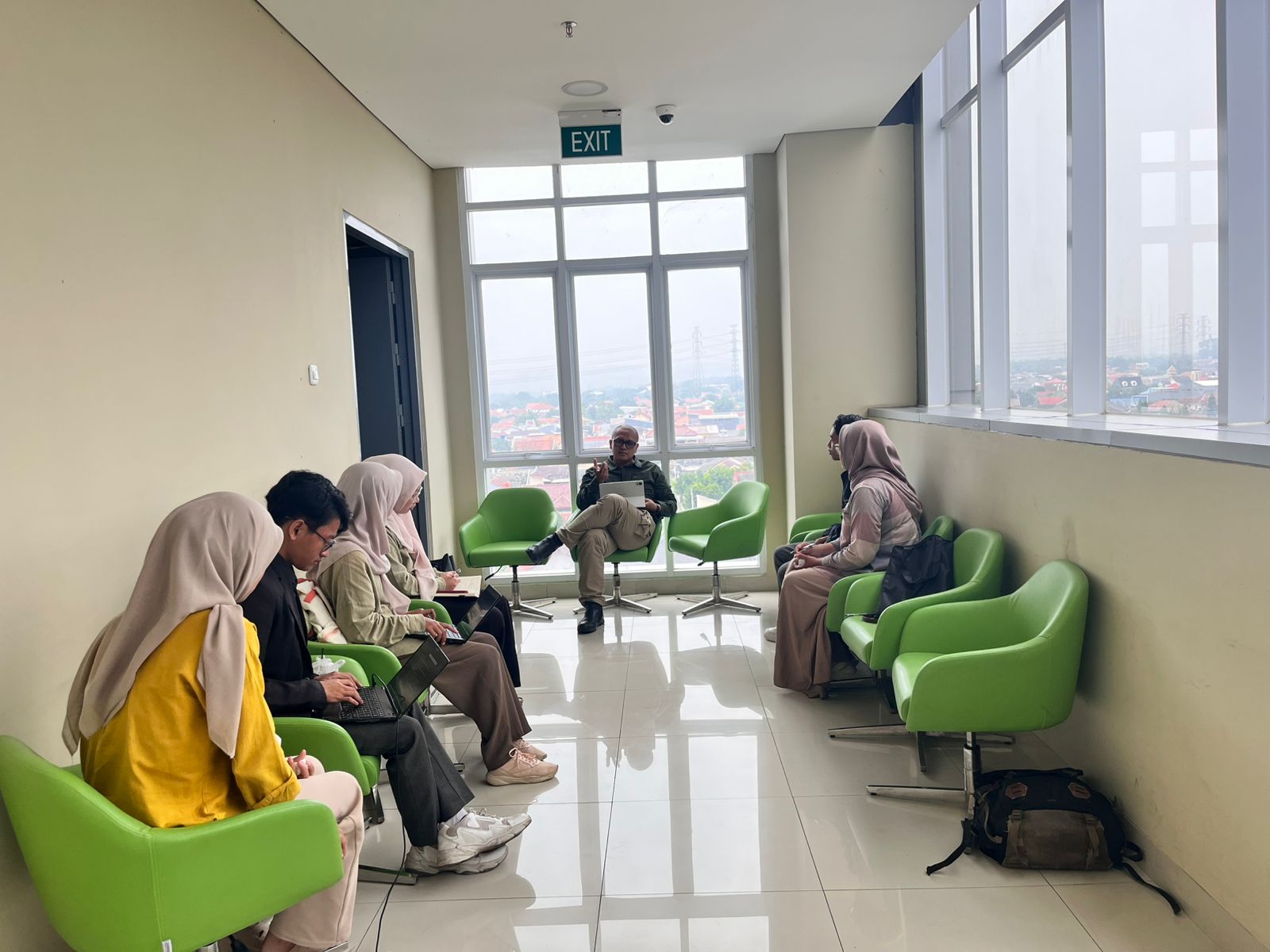
In light of these complexities, the International Office facilitated a series of conceptual exchanges centered on integrating Reading for Emotions (RfE) and Reading for Aesthetics (RfA) as complementary lenses for textual analysis. These discussions examined how emotional focus and aesthetic peakshift can illuminate a text’s inner logic, narrative movement, and cognitive impact, rather than merely evaluating argumentative accuracy. Participants also explored why thematic clustering often produces deeper understanding than fragmented analysis. Reflecting on these insights, Lala Bumela Sudimantara, Ph.D. observed, “When emotion and aesthetics are treated as analytical partners, research begins to cultivate thinking, not just answers.”
The initiative advanced through research-oriented workshops designed to translate theory into practice. Emphasis was placed on concise yet conceptually dense texts, case-based exploration, and visualization-supported interpretation. AI-assisted tools were introduced to generate visual mappings of narrative flow, enabling researchers and students to trace emphasis, transitions, and conceptual groupings within a text. In this framework, images function as analytical instruments, serving as indicators of aesthetic intensity rather than decorative supplements. This approach fosters deeper engagement while preserving analytical discipline and creative insight.
In reinforcing its role as a research-oriented cyber university, the cultivation of pluriversal literacy contributes directly to strengthening its research ecosystem and publication readiness. Structured revision processes, journal mapping, and analytical flow development support scholars in refining their work for international dissemination. At the same time, the initiative reaffirms the role of local wisdom, cultural narratives, and ecological awareness as legitimate sources of academic insight. Research activities such as pilgrimage-based inquiry and narrative documentation are positioned not as peripheral practices, but as integral components of a holistic scholarly methodology.
At its core, this initiative underscores UIN SSC’s commitment to research that is intellectually demanding, ethically aware, and socially rooted. Pluriversal literacy emerges as a guiding principle for nurturing scholars capable of navigating complexity without losing cultural and ecological sensitivity. Concluding the initiative, Lala Bumela Sudimantara, Ph.D. emphasized,“Research should sharpen critical thought while reminding scholars that knowledge grows from lived experience, place, and responsibility.” Through this integrative endeavor, the International Office continues to affirm UIN Siber Syekh Nurjati Cirebon’s role as a cyber university that advances meaningful, future-oriented scholarship.
Author: Muhammad Azkiya Bahtsulkhoir