
Decoding Indigenous Epistemologies: English Education Students’ Q&A on Lingga-Yoni Heritage and Kabuyutan Systems in Sagarahiang, Mount Ciremai
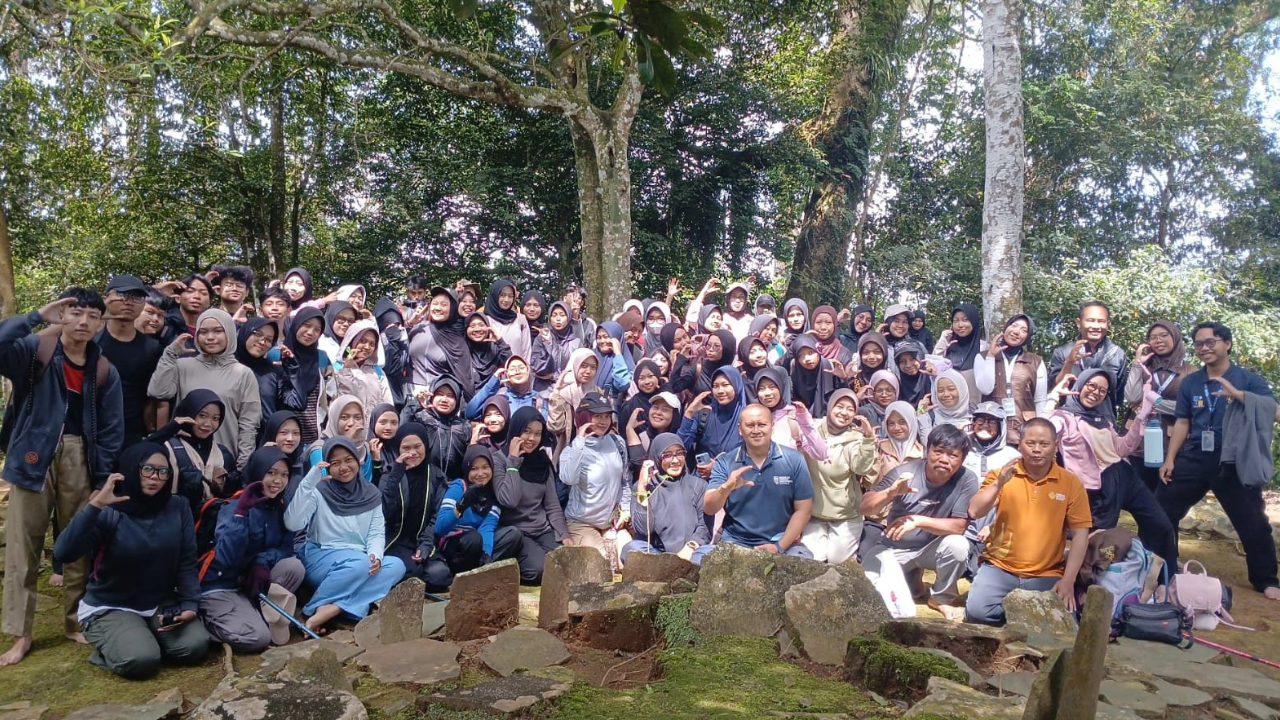
Kuningan, April 25, 2026 – In the Public Lecture “Academic Voices for Sustainable Earth,” part of the Seminar Series on Sustainability and Eco-Theology, organized by the International Office of UIN Siber Syekh Nurjati Cirebon in Sagarahiang, Lala Bumela Sudimantara, Ph.D., Director of the International Office and a scholar of Regenerative Multisensory ELT, stated, “This learning space is not simply an outdoor academic activity, but a living epistemic environment where knowledge emerges through multisensory engagement, associative thinking, and embodied experience.” The program brought together Mr. Sukad (a key custodian of Sundanese cultural heritage in Kuningan), the International Office team, and 84 second-semester students of English Education (Tadris Bahasa Inggris), who collectively participated in a field-based inquiry exploring indigenous knowledge systems embedded in the Sagarahiang landscape of Mount Ciremai.
An English Education student asked, “Where does the knowledge about the Lingga-Yoni Sagarahiang site actually come from, and how is it transmitted across generations?” In response, Mr. Sukad explained that the epistemological foundation of the site does not originate from formal academic documentation, but from oral tradition and kabuyutan practices that have been preserved through generations. He stated that knowledge is transmitted through ritual performances such as babarit, which function not merely as ceremonial acts but as living pedagogical spaces where ecological, spiritual, and social knowledge are simultaneously encoded. According to him, Lingga-Yoni is not an inert artifact but part of a living knowledge system in which understanding emerges through direct participation in sacred space, where humans do not only interpret symbols intellectually but also experience them physically, emotionally, and spiritually as part of a unified cosmological order.
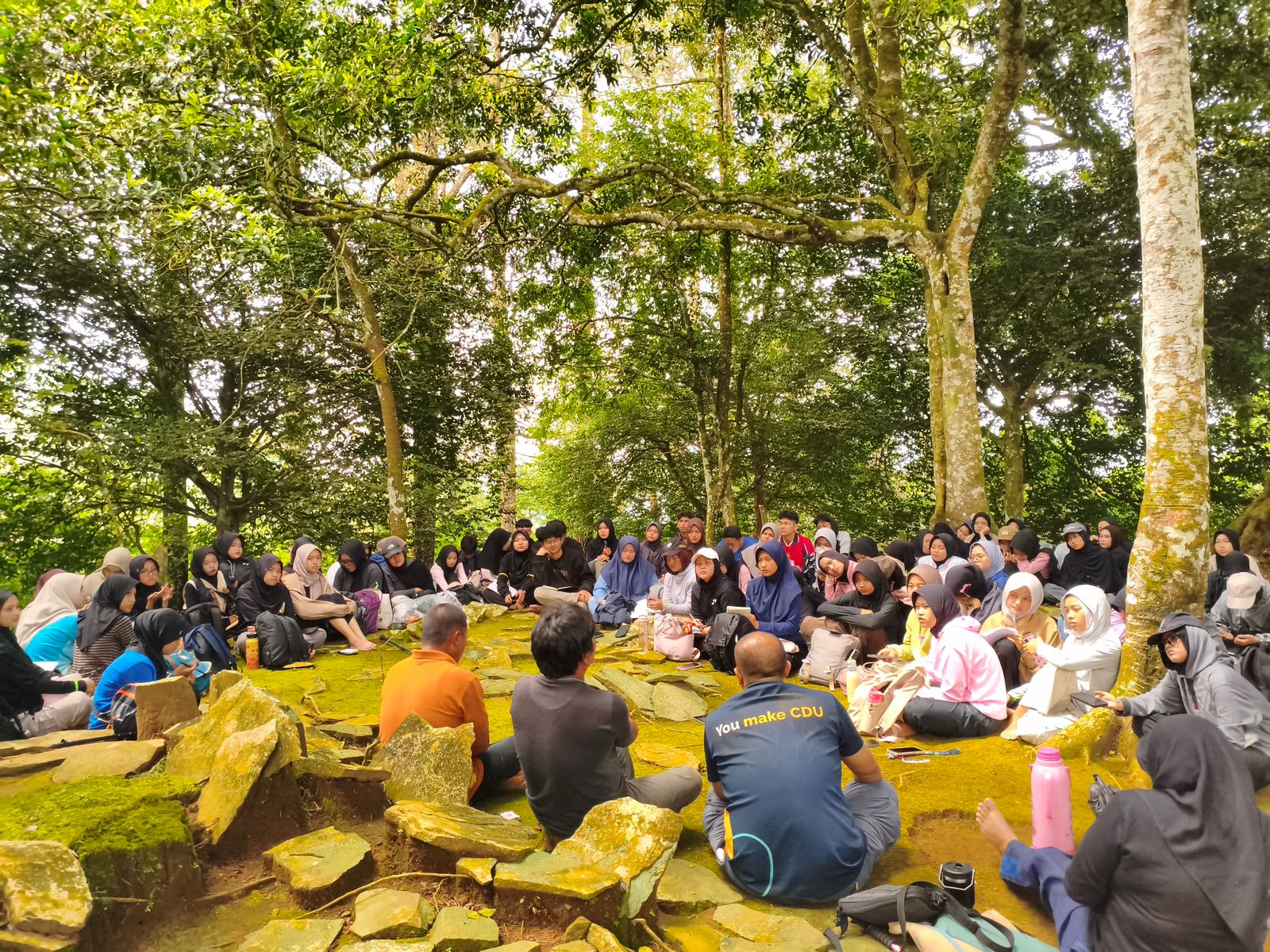
Another student raised a concern, asking, “What is the biggest challenge in preserving the Lingga-Yoni Sagarahiang site in the present day?” Mr. Sukad responded at length that the most significant challenge lies in the epistemic mismatch between indigenous kabuyutan values and modern utilitarian perspectives that tend to treat sacred landscapes as exploitable objects. He emphasized that many visitors enter the site without understanding the ethical spatial structure of kabuyutan, which includes restrictions, protected zones, and sacred boundaries that regulate human interaction with nature. He further warned that the most serious risk is not only physical damage, but also the disruption of cosmological integrity—because in Sundanese epistemology, every stone, orientation, and spatial arrangement is interconnected within a larger system of meaning. When one element is removed or altered, the entire knowledge system becomes destabilized, resulting in the erosion of both ecological balance and spiritual continuity.
A further question from the English Education students asked, “Are the hills and water sources in this area interconnected within a single system?” Mr. Sukad elaborated that the Lingga-Yoni Sagarahiang landscape is part of an integrated ecological-spiritual system centered on Mount Ciremai. He explained that water sources such as Seke Sadel and Seke Menger are not isolated natural features but components of an ancestral hydrological network that sustains both ecological and cultural life. Within the framework of ilmu gunung (mountain knowledge), the mountain is understood as a regulating system of life, governing rainfall cycles, seasonal transitions, and water distribution. He stressed that this system reflects a sophisticated ecological intelligence in which water, soil, vegetation, and human settlement are interdependent, forming a unified organism of life that cannot be separated without disrupting its balance.
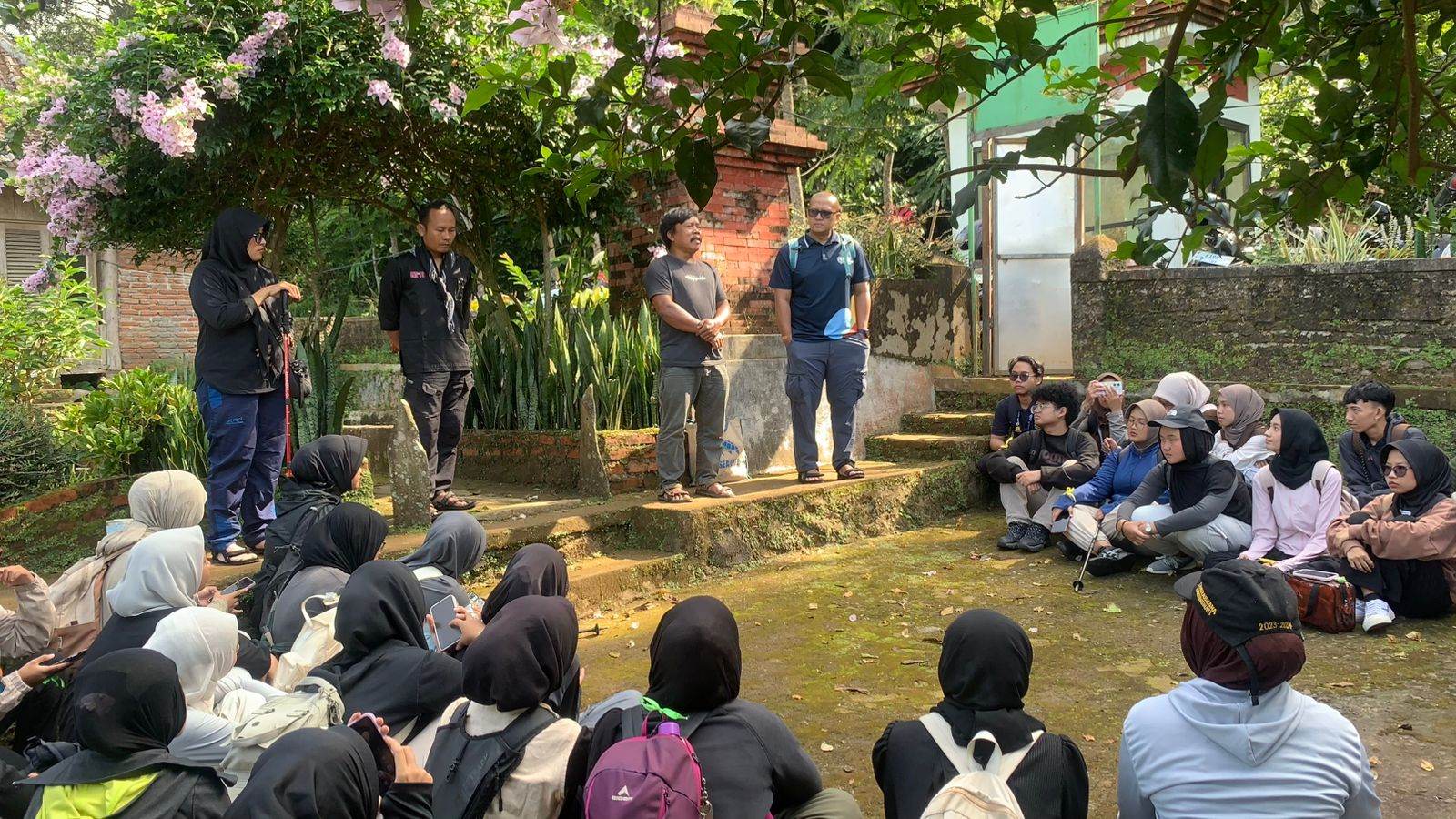
When asked, “Is the Lingga-Yoni Sagarahiang site connected to ancient kingdoms?” and “What distinguishes the original site from modern reconstructions?” Mr. Sukad provided an extended explanation that the site is historically linked to early Sundanese civilizational networks, including proto-kingdom formations such as Saunggalah (Ariresaunggala), which later evolved into broader political structures like Pakuan Pajajaran. He noted that lingga-yoni functioned not only as symbolic artifacts but also as cosmological instruments used to interpret time, spatial orientation, and environmental rhythms through shadow and alignment. However, he emphasized that much of the physical evidence has been obscured by time, making oral tradition and collective memory essential sources of interpretation. Regarding modern reconstructions, he stated that contemporary structures often lack the original cosmological embeddedness, as they are primarily symbolic representations rather than components of a living knowledge system. He stressed that reducing lingga-yoni to aesthetic or decorative objects results in epistemic loss, because their original meaning is inseparable from ritual, cosmology, and ecological ethics.
In his closing reflection, Lala Bumela Sudimantara, Ph.D. stated, “What we encountered today is not merely cultural heritage, but an epistemic invitation to rethink how knowledge itself is produced, experienced, and validated in the 21st century.” He emphasized that contemporary education must move beyond textual and fragmented epistemologies toward a holistic and regenerative paradigm that integrates cognitive understanding, emotional awareness, and sensory engagement. He further underscored that indigenous knowledge systems such as those discussed in Sagarahiang should not be romanticized, but critically engaged as living epistemologies capable of contributing to global academic discourse. According to him, decolonizing knowledge means re-situating learning within ecological responsibility and lived experience, where nature is not an object of study but a co-teacher in the process of meaning-making. Ultimately, he concluded that education must evolve into a regenerative practice—one that reconnects humans with place, memory, and the ethical foundations of existence within a shared planetary system.
Author: Muhammad Azkiya Bahtsulkhoir