
Exhibiting Strong Global Engagement, IO UIN SSC Opens Day 1 of “Returning to the Circle” with a Comprehensive Session by Didin Misbahuddin, S.Hum., Niskala Institute Researcher and Sagarahiang Ukad, Who Interprets Carita Pantun as a Relational, Performative, and Ancestral System of Knowledge
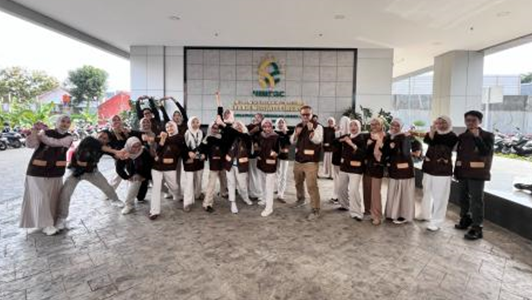
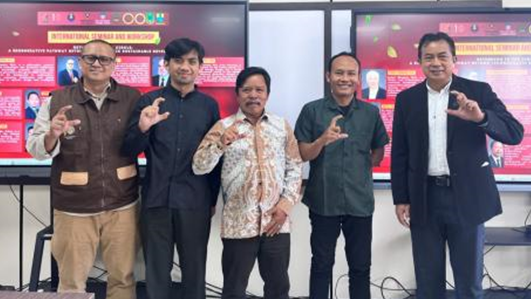
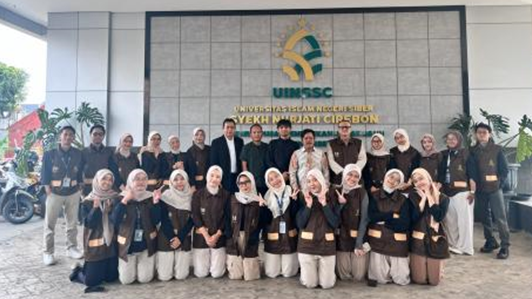
Cirebon, December, 3rd 2025 — The International Office of UIN Siber Syekh Nurjati Cirebon has triumphantly inaugurated its three-day International Seminar and Workshop titled Returning to the Circle: A Regenerative Pathway Beyond Technocratic Sustainable Development Goals, an academic convergence designed to reposition ecological thinking at the center of modern global discourse. Under the leadership of Lala Bumela, Ph.D., Director of IO UIN SSC, the event unfolded with a distinctly holistic and ecologically grounded intellectual framework. The opening day was graced by distinguished speakers whose scholarly credibility extends across continents: Rudolf Wirawan, Ph.D. (University of Adelaide, Australia); Ivan Chabibilah, S.S., M.Li. (ICCCM Malaysia); Luqman Baehaqi, Ph.D. (UIN Palangkaraya); Syarifuddin, S.S. (Government Protocol and Leadership Communication Division, Cirebon City Government); Didin Misbahuddin, S.Hum. (Niskala Institute Bandung); and Ukad, the Spiritual Elder and Guardian of Sagarahiang Kuningan. Representatives from Hakim Ventural International—Aries Endri Susanto, S.T., M.E. and Nur’aeni, S.E., M.E.—further strengthened the international gravitas of the program. Meanwhile, the IO UIN SSC student internship team—the Global Engagement Team (GET)—stood at the frontlines of coordination, ensuring flawless execution across logistics, technical operations, and organizational systems. Marking the first day, Didin Misbahuddin, S.Hum. and Ukad presented a groundbreaking session that re-situated Carita Pantun as a living archive of ecological and ancestral intelligence. As emphasized by Lala Bumela, Ph.D., “The success of this first day reflects not only the strength of our institutional commitment but also the transformative spirit that IO UIN SSC consistently strives to cultivate—one that honors knowledge, community, and the environment as a unified moral ecosystem.”
Yet, beneath the celebratory momentum of Day 1 lies a profound recognition of disruption—one that is embedded in the very theme of returning to the circle. The opening sessions illuminated how modern societies, driven by technocratic interpretations of the Sustainable Development Goals, have gradually detached themselves from relational, land-based, and intergenerational ways of knowing. In this context, the speakers underscored how indigenous epistemologies, such as those embedded in Carita Pantun, confront the fragmentation created by contemporary development policies. The tension between ancestral wisdom and modern governance becomes not merely an academic issue but a pressing cultural disturbance that defines our collective ecological future. It is from this recognition of disequilibrium that the seminar framed Day 1: as a necessary reorientation, a call to examine the fractures that separate economic advancement from ecological responsibility.
This disturbance soon unfolded into a deeper intellectual dialogue, inviting participants to reconsider how knowledge, morality, and ecology intersect within the Indonesian cultural landscape. During the discursive exchanges, Lala Bumela, Ph.D. articulated a crucial institutional position that framed the conversation toward a regenerative academic direction. In his reflective remarks, he affirmed, “Our engagement today compels us to listen—not only to the experts before us but also to the knowledge systems that have long existed beyond academic walls. True internationalization does not mean importing ideas; it means elevating the wisdom we already have and situating it within global conversations.” This statement resonated throughout the hall, prompting the audience to rethink the meaning of scholarship, authority, and relational ethics. The dialogue further emphasized that ecological and cultural restoration is impossible without acknowledging the voices and epistemologies that have been historically sidelined, particularly those rooted in ancestral practices and local cosmologies.
The development of the session on Day 1 deepened the conceptual landscape by connecting ecological ethics with performative heritage. Didin Misbahuddin, S.Hum. meticulously unfolded the interpretive architecture of Carita Pantun, presenting it not merely as literature but as a multi-layered system of knowledge that encodes cosmological balance, moral instruction, and ecological relationality. Meanwhile, Ukad, in his role as a spiritual elder, brought these insights into embodied expression, demonstrating how the performance of Carita Pantun carries ethical weight and ancestral memory. This convergence between scholarship and lived tradition created an academically rigorous yet culturally grounded atmosphere—one that positioned IO UIN SSC as a unique intellectual crossroads where ecological thinking, cultural identity, and global academic engagement weave together. Through this developmental arc, Day 1 established a foundation not only for intellectual discourse but also for institutional transformation..
The resolution of Day 1 emerged through an institutional reaffirmation of ecological justice and knowledge plurality. IO UIN SSC, through the direction of Lala Bumela, Ph.D., expressed a strong commitment to integrating indigenous ecological knowledge into broader international academic networks. Reflecting on the day’s achievements, he stated, “If we are to advance as a global institution, we must anchor our steps in the values that define our land, our people, and our ecological responsibilities. Global relevance begins with local integrity.” This resolution marked more than a closing statement—it became a strategic compass for the remaining days of the seminar. By synthesizing ancestral wisdom, scholarly analysis, and ecological ethics, the first day crystallized a shared sense of purpose: to cultivate a regenerative intellectual pathway that transcends technocratic boundaries and reinstates relational knowledge as a cornerstone of sustainable development.
The moral insight drawn from Day 1 resonates far beyond the event itself. The seminar invited participants to acknowledge that ecological crises cannot be addressed solely through modern policy frameworks; rather, they require a return to the relational and ethical foundations encoded within cultural and ancestral narratives. This moral imperative was underscored by Lala Bumela, Ph.D., who concluded with a compelling reminder: “The circle we seek to return to is not a metaphor—it is a living ethical structure that teaches us humility, responsibility, and continuity with all beings. Our duty is to ensure that this circle is not broken again.” Through this closing moral reflection, IO UIN SSC asserted its position not only as an academic institution but as a custodian of ethical, cultural, and ecological regeneration. The first day thus stands as a testament to the transformative possibilities of global engagement rooted in local wisdom.
Author: Muhammad Azkiya Bahtsulkhoir