
Fostering Seamless Financial Connectivity: GET Assists Nigerian SN-GES 2025 Scholars in Adapting to Indonesia’s Digital Economy through GoPay Registration and Cross-Cultural Guidance
Cirebon, October, 9th 2025 — The Global Engagement Team (GET) of the International Office at UIN Siber Syekh Nurjati Cirebon continues to bridge cultures through hands-on assistance for international students. Recently, the team supported Nigerian awardees of the Syekh Nurjati Global Excellent Scholarship (SN-GES) 2025 in setting up their GoPay accounts — a crucial step in adapting to Indonesia’s fast-evolving digital economy. Under the direction of Lala Bumela, Ph.D., the initiative not only addressed technical needs but also nurtured cultural understanding, ensuring that students could integrate smoothly into everyday Indonesian life. “Guiding international students goes beyond academics; it’s about helping them live, move, and connect meaningfully in their new environment,” said Lala Bumela, Ph.D., acknowledging the team’s dedication to inclusive, student-centered service.
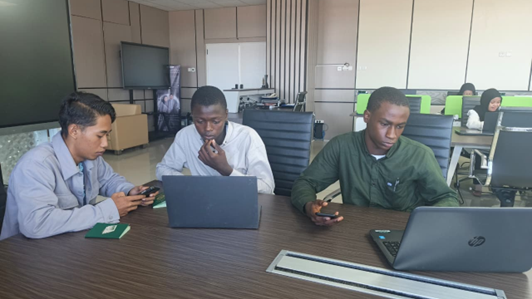
Despite the supportive environment, the Nigerian students initially faced several challenges during the GoPay registration process. The digital form interface, which was fully in Bahasa Indonesia, presented linguistic barriers, while the application’s identification system required specific verification steps that differed from international ID formats. These complications led to moments of confusion and frustration. Yet, rather than allowing these obstacles to become hindrances, the GET team turned them into opportunities for deeper guidance — explaining each feature patiently, providing translation assistance, and offering contextual understanding of Indonesia’s cashless payment culture. Their consistency proved that adaptation, when coupled with empathy, can transcend any technical limitation.
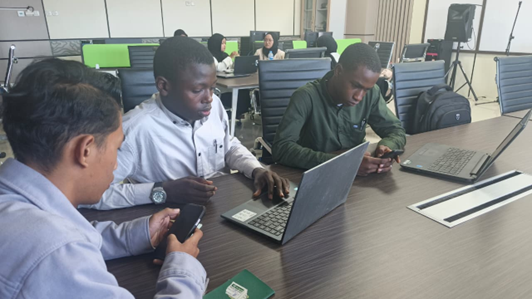
During a mentoring session, Lala Bumela, Ph.D., emphasized that cultural and financial literacy are equally vital for successful international education. “Digital economy integration is part of global citizenship,” he stated. “When students can navigate daily systems independently, they gain more than convenience — they gain confidence.” His statement resonated deeply with both the students and the GET members, reinforcing the idea that international engagement extends far beyond classrooms. It involves fostering the ability to live and act competently in new cultural and technological landscapes.
In response to these insights, the GET team developed a step-by-step digital guide for future SN-GES awardees. The document, written in both English and Bahasa Indonesia, includes screenshots, translations, and explanations of common Indonesian financial terms. Alongside the guide, mentoring sessions were conducted in small groups, creating an environment of peer learning and mutual assistance. The Nigerian scholars, once hesitant, began to help one another troubleshoot their accounts, showing a growing sense of independence and camaraderie. This process marked a significant development in their adjustment — not only to the technology but also to Indonesia’s collaborative academic culture.
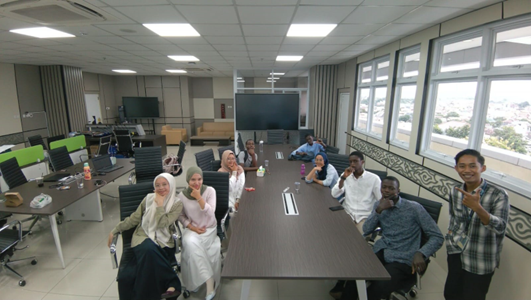
After a few sessions, all participating students successfully registered their GoPay accounts and began using them confidently for transportation, food, and daily needs. The initiative’s success highlighted the International Office’s holistic approach to internationalization: integrating technical support, intercultural sensitivity, and empowerment. The students’ newfound confidence also encouraged them to explore broader aspects of Indonesian society — from local markets to university canteens — using their digital wallets as tools of both convenience and connection. What began as a challenge evolved into a story of empowerment, symbolizing how digital literacy can strengthen cultural belonging.
Reflecting on the achievement, Lala Bumela, Ph.D., concluded, “True internationalization is achieved when students not only study abroad but also feel at home abroad.” His words encapsulated the essence of UIN SSC’s mission — to create an ecosystem where education, technology, and culture intertwine harmoniously. The GET team’s effort in assisting the Nigerian SN-GES scholars proved that fostering seamless financial connectivity is more than technical support; it is a gesture of inclusion, empathy, and global vision that continues to define the university’s international engagement journey.
Author: Muhammad Azkiya Bahtsulkhoir