
From Brain Drain to Brain Circulation: How Lala Bumela Sudimantara, Ph.D.’s Visionary Discourse on Sundanese Manuscripts and Cirebon’s Eco-Conservation Reshapes the Global Indonesian Diaspora’s Engagement Paradigm by Integrating Ancient Indigenous Wisdom into the Heart of International Flagship Frameworks
Cirebon, May 14, 2026 – Lala Bumela Sudimantara attended Diaspora Series 1: Diaspora Talks under the theme “Building Global Networks: Indonesian Diaspora Connecting Global Opportunities,” a distinguished international forum convening diaspora leaders, scholars, policymakers, and participants from various academic institutions. The event featured Rudolf Wirawan and Mulyoto Pangestu as keynote speakers and was moderated by Sarina Hanifah. Special guests included Bernard Tampubolon, President of Indonesian Diaspora Network Australia, and Yuli Rahmawati, Education and Cultural Attaché of the Embassy of the Republic of Indonesia in Canberra. The discussion was also attended by Ivan Chabibilah, S.S., M.Li., Indonesian diaspora representatives from multiple countries, as well as lecturers, researchers, and students participating through Zoom Meeting. During the session, Lala Bumela Sudimantara, Ph.D. emphasized, “Diaspora should no longer be perceived merely as a phenomenon of migration, but rather as a dynamic circulation of knowledge, cultural consciousness, and collaborative global energy capable of revitalizing local communities through internationally interconnected frameworks.”
Despite the increasingly expansive discourse surrounding global networking and diaspora engagement, Lala Bumela Sudimantara highlighted a growing concern regarding the persistent gap between international academic and professional networks and the realities faced by local communities in Indonesia. He observed that much of the contemporary diaspora conversation continues to revolve around mobility, professional achievement, and transnational opportunities, while issues concerning grassroots empowerment, indigenous knowledge preservation, environmental sustainability, and long-term community development frequently remain situated at the margins of broader international agendas. This emerging concern subsequently created a critical point of reflection within the forum regarding how diaspora networks might evolve beyond symbolic representation toward becoming transformative agents capable of connecting global expertise with the concrete needs of local communities.
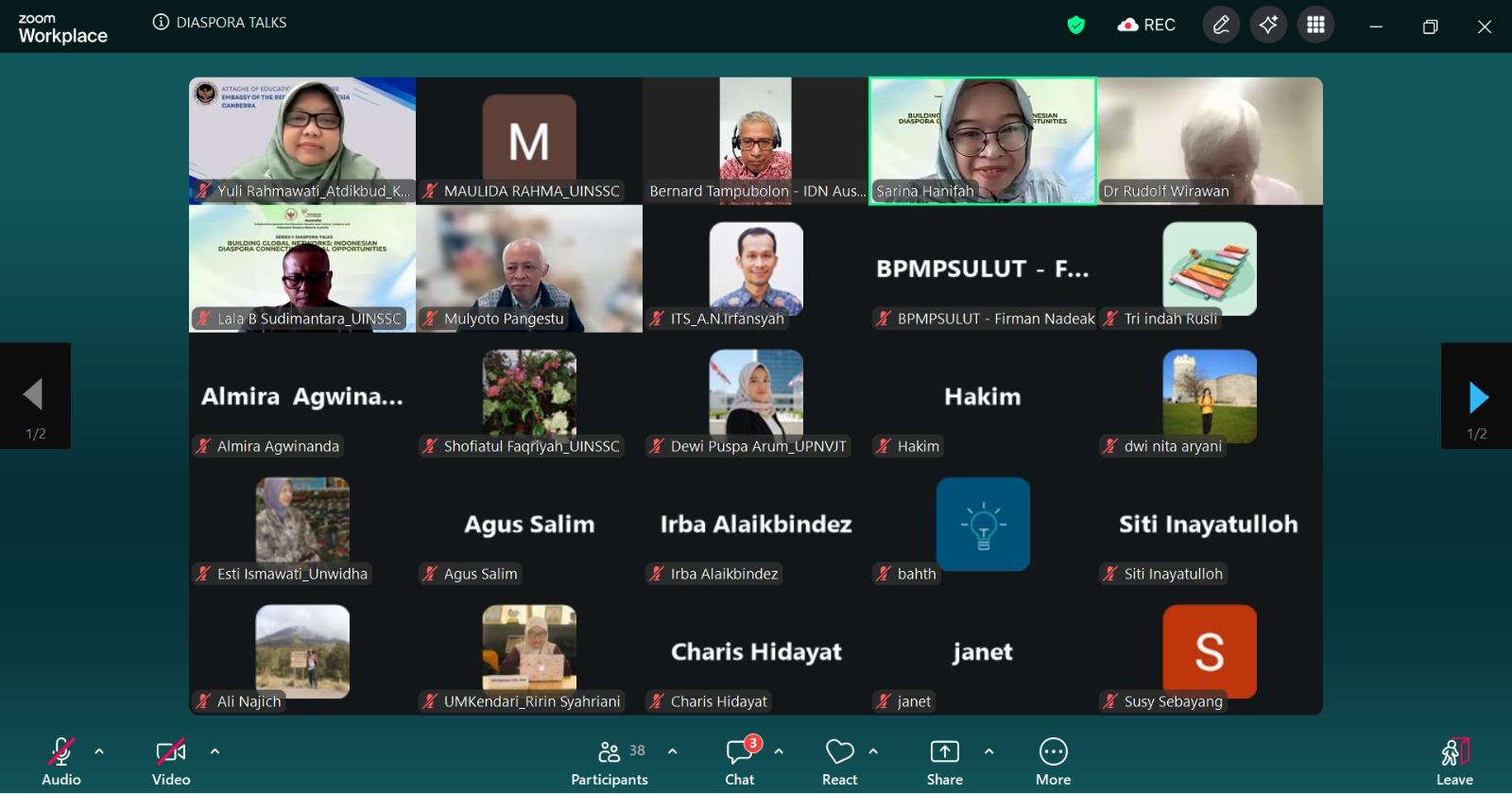
During the interactive dialogue session, Lala Bumela Sudimantara delivered a reflective intervention grounded in his ongoing field-based initiatives across the Cirebon and Mount Ciremai regions. He elaborated on several community-driven projects currently being developed collaboratively with local residents, focusing on environmental conservation, rural empowerment, sustainability-oriented education, and disaster resilience. Furthermore, he highlighted the ongoing study of ancient Sundanese manuscripts and their prospective integration into modern educational frameworks, including the formulation of an innovative curriculum combining English language instruction, indigenous cultural heritage, sustainability discourse, and insights derived from international academic engagement. Within this context, he raised a critical question concerning how the Indonesian diaspora might transcend symbolic representation abroad and instead function as an active source of mentorship, intellectual transfer, collaborative partnership, and transformative support for local communities struggling to establish meaningful global connectivity.
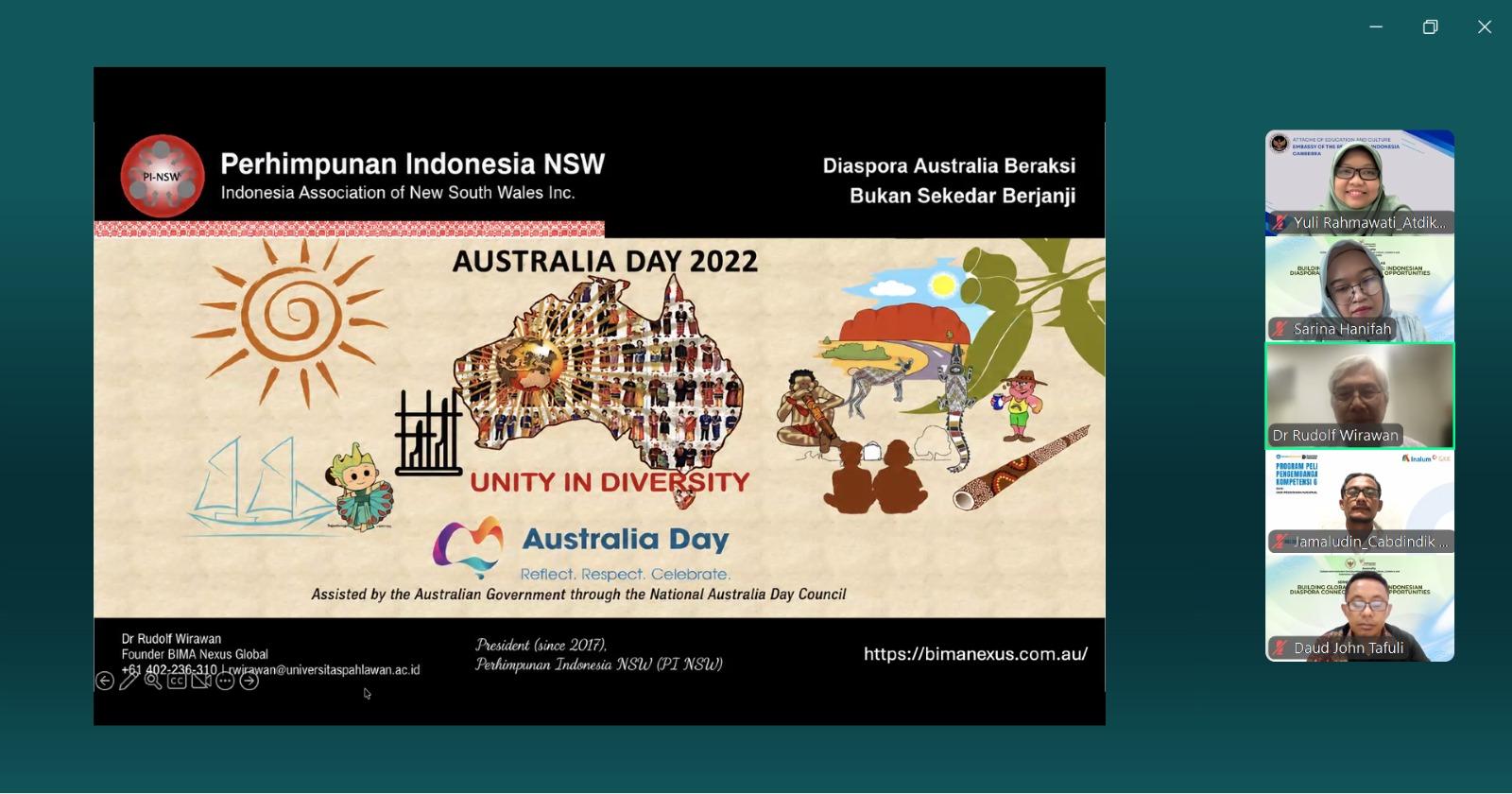
Responding to the discourse, Rudolf Wirawan underscored the urgency of preserving and elevating indigenous ecological and cultural knowledge amid the homogenizing tendencies of globalization and digital acceleration. He argued that local communities often possess forms of environmental and social wisdom that are, in certain respects, more nuanced than conventional academic theories. Consequently, he asserted that scholars and diaspora networks bear an ethical responsibility to document, translate, and globalize such knowledge through research, digital technologies, and international publication platforms. As a concrete example, he introduced the development of automated translation systems for regional languages capable of transforming local knowledge into globally accessible discourse through English and other international languages. Complementing this perspective, Mulyoto Pangestu emphasized the necessity for Indonesian society to fundamentally reorient its perception toward its own cultural and intellectual heritage. He noted that foreign researchers frequently demonstrate greater commitment to studying Indonesian local traditions than domestic scholars themselves. According to him, the initiatives undertaken by Lala Bumela Sudimantara, Ph.D. in Mount Ciremai, Cigobang, and the Cisanggaraung River region represent a compelling model integrating conservation, culture, education, and community empowerment into a future-oriented sustainable development framework.
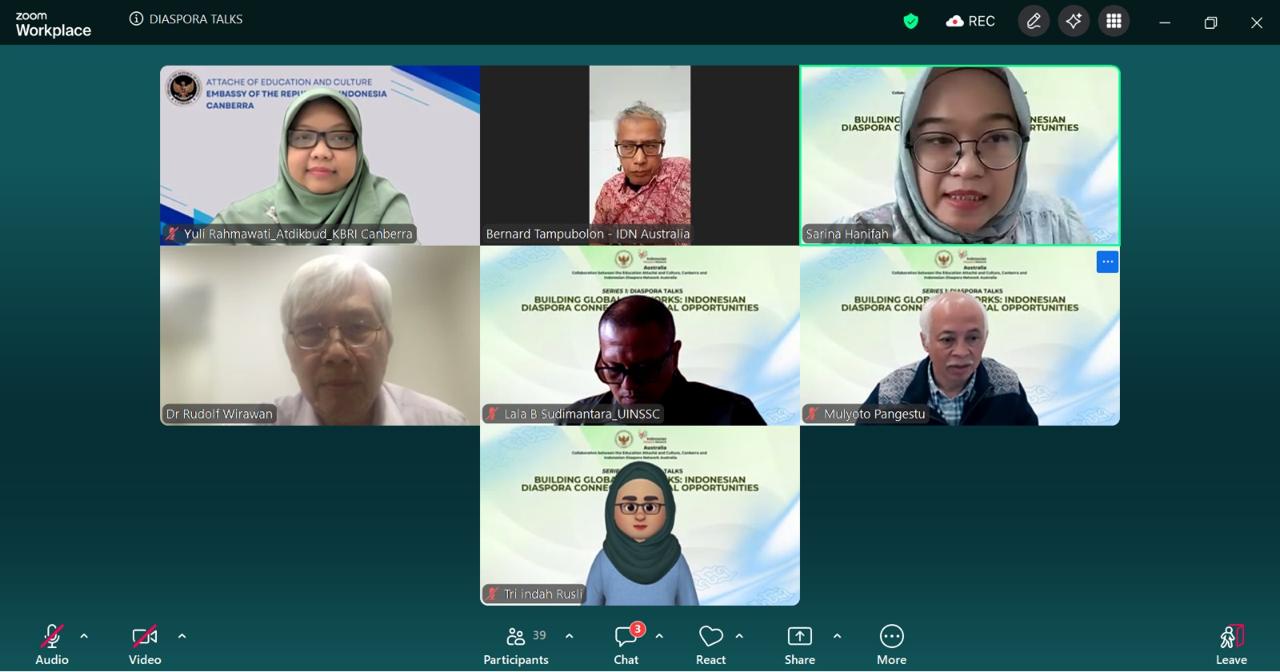
The discussion was further enriched by Yuli Rahmawati, Education and Cultural Attaché of the Indonesian Embassy in Canberra, who expressed appreciation for the organic growth of community-based environmental and cultural movements throughout Indonesia. She emphasized that many local communities possess remarkable commitment toward environmental stewardship and cultural preservation but still require broader access to sustainable networking ecosystems, collaborative mentorship, and international institutional support. According to her, the Indonesian diaspora occupies a uniquely strategic position as a “global connector” capable of bridging grassroots communities with academics, researchers, industries, and international institutions worldwide. She further explained that her institution is currently developing a diaspora database categorized according to fields of expertise in order to facilitate long-term collaboration between local communities, universities, and global Indonesian networks. Ultimately, all speakers converged on the view that community-centered models grounded in local wisdom, environmental conservation, cultural preservation, and sustainability-oriented education—such as those initiated by Lala Bumela Sudimantara, Ph.D.—hold significant potential to evolve into globally recognized frameworks capable of generating meaningful local and international impact simultaneously.
Concluding the discussion, Lala Bumela Sudimantara affirmed, “The future of Indonesia’s global engagement does not reside solely in technological advancement or economic expansion, but in our ability to reconnect the world with the ethical intelligence embedded within local cultures, indigenous ecological knowledge, and community-centered sustainability practices. When diaspora networks, academia, and local communities move collaboratively, local wisdom ceases to remain peripheral—it becomes a globally transformative force.”
Author: Muhammad Azkiya Bahtsulkhoir