
From Ideas to Impact: The International Office of UIN SSC’s Transformative Meeting and Discussion Sparks Dialogue on Research, Environment, and the Future of Education
Cirebon, April 15, 2026—Lala Bumela Sudimantara, Ph.D., the Director of the International Office of UIN Siber Syekh Nurjati Cirebon (UIN SSC), hosted a transformative meeting and discussion conducted online via Zoom, bringing together prominent scholars in a thought-provoking exchange of ideas. The meeting featured Prof. Rudolf Wirawan, Luqman Baehaqi, Ph.D. (UIN Palangka Raya), and Dr. Maulidya Ulfah, M.Pd.I. (Head of the Center for Scientific Publications and University Rankings at UIN SSC), each contributing distinct perspectives to the conversation. The session centered on exploring new directions in research, particularly through the integration of the BIMA (Bridging Intelligence, Mindfulness, and Awareness) Framework, ethnoscience, and technological innovation. The discussion also highlighted the evolving role of higher education in fostering not only intellectual growth but also ecological awareness. This commitment is further reflected in the institution’s ongoing international collaboration, as International Office of UIN SSC has established a Memorandum of Understanding (MoU) with Global Nexus Australia since 2025 and is currently working on several joint research projects, including a study on water management systems in Mount Ciremai.
As the discussion began, Lala Bumela Sudimantara, Ph.D. opened the session by introducing a broader vision for future research. He explained that the integration of the BIMA Framework would allow scholars to connect intelligence, mindfulness, and awareness in a more meaningful way. Drawing from his exploration of Sundanese cosmology, he highlighted how some forms of knowledge are shared publicly while others are carefully preserved. He emphasized that researchers should begin to focus on aspects that cannot be replicated by artificial intelligence, particularly empathy toward nature. “We need to focus on what AI cannot do, especially in developing a deeper connection with the environment,” he noted. He also proposed integrating local myths with scientific frameworks to create more sophisticated disaster mitigation strategies. This opening set a reflective tone, inviting participants to reconsider the depth and purpose of knowledge.
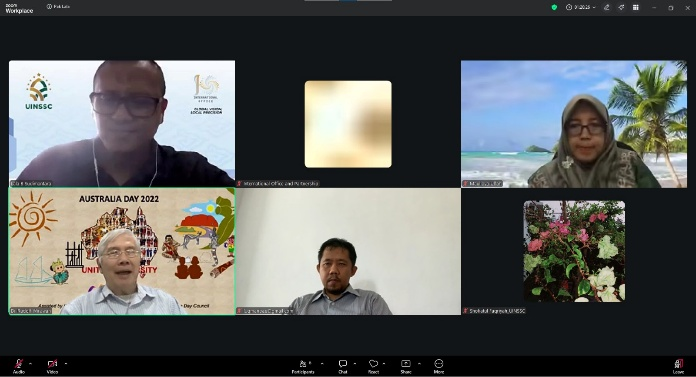
Building on this perspective, Prof. Rudolf Wirawan responded by affirming the value of the ideas presented while expanding them into a broader intellectual framework. He explained that data science and ethnoscience should not be seen as separate domains, as both offer important insights into understanding reality. According to him, while data science emphasizes logic and measurable patterns, ethnoscience brings in emotional and spiritual dimensions. He stressed that relying on only one approach would limit the depth of understanding needed in addressing complex issues. Prof. Rudolf also introduced the concept of circular thinking, encouraging scholars to revisit traditional knowledge while continuously advancing their level of insight. He warned against dismissing ancestral knowledge as mere folklore, emphasizing that it often carries important lessons about nature. In addition, he proposed a practical innovation where communities can share their concerns through AI systems to identify patterns and generate solutions.
The discussion took a more urgent turn when Luqman Baehaqi, Ph.D. shared his perspective on environmental issues, particularly in Kalimantan. He reflected on how his background as an English education lecturer often leads others to question his focus on environmental topics. However, he argued that educational concerns should not be limited to classroom contexts, especially when facing real-world crises. He described the severe deforestation in Kalimantan, where nearly 80 percent of forests have been transformed into plantations and mining areas. Rivers that once supported local communities have turned brown, and access to clean water and fish has become increasingly scarce. He also highlighted how both large investors and local communities contribute to this environmental degradation. These realities created a strong sense of urgency within the discussion.
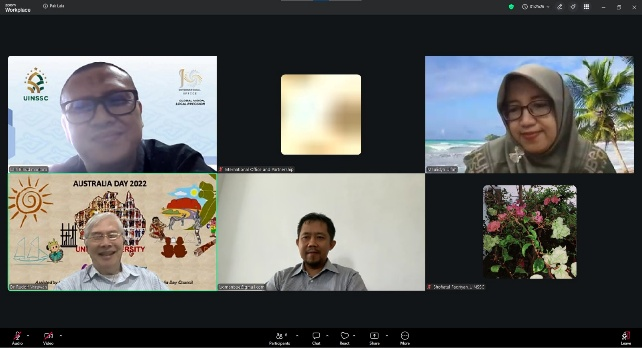
Responding to this concern, Prof. Rudolf Wirawan further elaborated on the broader context of environmental challenges in Indonesia. He emphasized that Indonesia possesses extraordinary natural potential due to its geographical and ecological diversity. However, he pointed out that without strong human resources and proper governance, these resources are often exploited without delivering fair benefits to local communities. He also touched on the influence of foreign intervention, suggesting that Indonesia has long been positioned at a disadvantage despite its rich resources. As an example, he mentioned the diversity of Indonesian coffee, which holds global value yet is not fully optimized domestically. “If our human resources are strong and well-supported, we will no longer be easily deceived by external forces,” he stated. His response reinforced the importance of empowerment and self-sufficiency.
As the session moved forward, Dr. Maulidya Ulfah, M.Pd.I. (Head of the Center for Scientific Publications at UIN SSC), offered a critical reflection on the ideas presented. She acknowledged the BIMA Framework as a holistic approach rather than a purely technocratic one. However, she raised concerns about its practical implementation, particularly in integrating advanced technologies into local contexts. In response, Prof. Rudolf emphasized that the initiative is intended to move beyond theoretical discussion into real action. He explained that students and lecturers would play a key role in implementing these ideas within communities. “We must focus on what we can do,” he stated, reflecting on real challenges in the field. Building on this, Lala Bumela Sudimantara, Ph.D. concluded the session by emphasizing the importance of developing an ecologically aware curriculum that integrates local wisdom, technology, and regenerative learning. He expressed hope for future collaboration, including broader discussions with educators, to reimagine education as a force that reconnects knowledge, humanity, and the natural world.
Author: Salsabilla