
GET Groups Explore Interfaith Understanding and Islamic Moderation Through Critical Video Analysis at the International Seminar and Workshops 2025
Cirebon, December 3, 2025 — Led by the Director of the International Office, Lala Bumela Sudimantara, Ph.D., the International Office of UIN Siber Syekh Nurjati Cirebon successfully held the second day of the International Seminar and Workshops 2025 under the theme “Returning to the Circle: A Regenerative Pathway Beyond Technocratic Sustainable Development Goals.” During the first keynote session, Ivan Chabibillah, M.Li from the International Cultural Communication Center Malaysia (ICCCM), delivered a dynamic and inspiring presentation on Wasathiyah—the concept of a moderate Islamic perspective. As part of the session, three Global Engagement Team (GET) groups were assigned three different videos to analyze, each presenting unique viewpoints on faith, identity, and intercultural dialogue. Under Ivan’s guidance, the activity was designed to encourage students to explore essential Islamic values while sharpening their critical thinking skills. The atmosphere was filled with energy and curiosity as participants prepared to share their analyses. The session took place on the 5th floor of the Cyber Building and was attended by the Director of the International Office, Lala Bumela Sudimantara, Ph.D., along with all members of the GET.
Group 1 focused their analysis on why individuals—regardless of their religious background—should learn about Islam and the universal values it offers. They highlighted a central Islamic principle: all humans stand equal before God, irrespective of social status or background. The group also emphasized Muslims’ spiritual practices, such as the five daily prayers and the habit of invoking God’s name before and after engaging in daily activities. One participant stated, “We must look at what is being conveyed, not who conveys it,” reflecting the spirit of openness emphasized throughout the seminar. They concluded that wisdom can come from anyone and anywhere, as long as one maintains a balanced and moderate perspective in engaging with it.
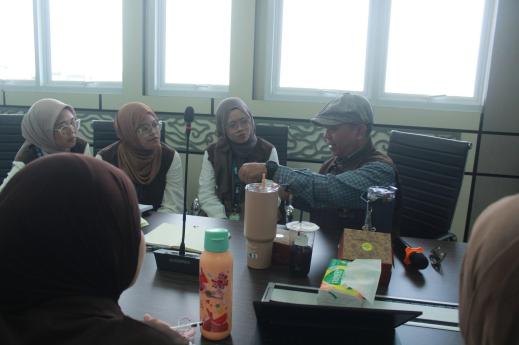
Group 2 discussed a video featuring a non-Muslim attempting to justify the claim that Islam is not a religion of peace by citing QS At-Tawbah verse 29. They noted that quoting the verse without context could lead to misinterpretation and misunderstanding. The group explained that the Qur’an must be understood holistically, together with the historical background and circumstances of each revelation. Through deeper research, they discovered that the verse was revealed in response to a treaty violation by the Roman Empire that endangered the Muslim community—making it a directive rooted in self-defense rather than aggression. Their discussion expanded into the concept of tathawwru wa ibtikar, emphasizing the importance of contextualizing Islamic teachings within changing times.
The group also stressed that Islam encourages kindness even toward adversaries. Instead of escalating hostility, the Qur’an encourages believers to respond to wrongdoing with goodness as a way to open the door to reconciliation. International participants found this perspective aligned with global principles of conflict transformation and peacebuilding. Group 2 concluded that although the forms of conflict from the past may no longer be relevant today, values such as justice, dignity, and compassion remain universally applicable. They emphasized that accurate and responsible interpretation of religious texts is essential in today’s interconnected world.
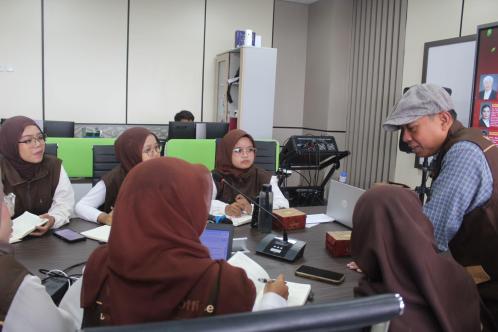
Group 3 analyzed a video featuring two individuals from strong Catholic backgrounds who possessed differing levels of understanding regarding religion. One of them, now a Muslim, demonstrated a deep knowledge of the Bible and explained how this understanding had led him toward Islam. Meanwhile, the other appeared confused, influenced by inaccurate information he had encountered in the media. This contrast sparked a meaningful discussion within the group about how spiritual journeys can vary greatly and how misinformation can shape—or distort—one’s beliefs. They observed that theological statements may be easily accepted in a homogenous environment but can present challenges in diverse settings.
The group’s discussion evolved into a reflection on the metaphor that “Islam is not just a religion, but like a city with many roads leading to it.” Participants found this imagery powerful, illustrating that each individual travels a unique spiritual path. With this perspective, they agreed that faith should never be imposed and that respect for diversity is essential in intercultural interactions. Their discussion brought the session to a thoughtful close, underscoring the importance of approaching differences with wisdom and sensitivity. Ultimately, they highlighted that sincerity and openness are foundational to interfaith communication.
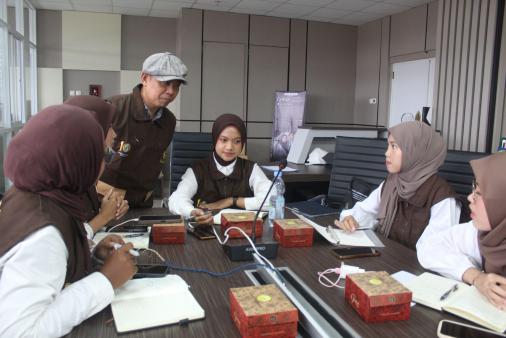
The International Office noted that the series of discussions strengthened participants’ understanding of Islamic concepts as well as interfaith issues. The seminar also provided a platform for students to enhance their ability to communicate globally with respect and empathy. These reflections will serve as valuable insights for students preparing to navigate multicultural environments in the future. The International Office emphasized that activities of this kind will continue to be part of its international engagement programs. The event concluded with a message that building understanding begins with the willingness to listen.
Author: Cindi Aulia