
Global Engagement Team Accelerates Post-AsiaCALL Momentum with a Heterogeneous and Holistic Analysis of the BIMA Framework, Strengthened by Strategic Insights from Prof. Rudolf Wirawan of the University of Adelaide for Future Capacity Building
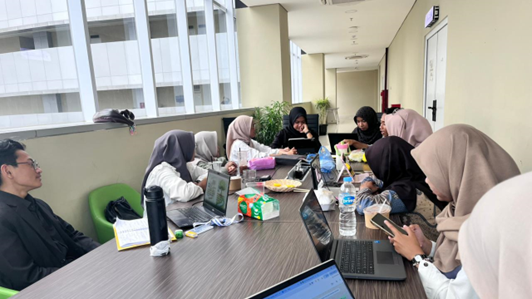
Cirebon, November, 26th 2025 — The Global Engagement Team (GET) of the International Office UIN Siber Syekh Nurjati Cirebon successfully initiated an extensive epistemic discourse on the BIMA Framework (Bridging Intelligence, Mindfulness, and Awareness), developed by Prof. Rudolf Wirawan of the University of Adelaide, Australia. Guided by the strategic leadership of Lala Bumela, Ph.D. (Director of International Office UINSSC), the discourse examined how this framework becomes a generational continuum of intellectual regeneration rooted in Indonesian philosophical structure. The GET members elevated knowledge by cultivating an artistic processing of insight derived from deep cultural reasoning, embodying a cognitive awareness that extends beyond academia toward real-life applications. Held under the direction of student leaders Resa Diah Gayatri and Farah Syifa, both internship students from the English Language Teaching Department, semester 7, the discussion was attended by Cyril Tsania Azzahra, Indah Fitri Nurhidayah, Maulida Rahma, Indra Maulana Arfan Ajiz, Muhammad Azkiya Bahtsulkhoir, Tsamara Bahira Alzena, Azizatul Fikriyah al-Qory, Cindi Aulia and Bilqis Syifa Shoraya, representing three academic generations from semesters 3, 5, and 7. “This is the starting point of our programmed way of thinking — leaving conventional thinking toward multidisciplinary, multidimensional and non-linear perspectives. The BIMA Framework is a roadmap to confront the crisis of linearity,” explained Resa Diah Gayatri, emphasizing the urgent necessity of mental evolution for young scholars in a rapidly transforming world.
In a larger global perspective, Lala Bumela,
Ph.D. showed exceptional openness to dynamic global systems that embrace
multi-directional perspectives and pluralistic ways of thinking. He underlined
the pressing reality that many issues in society remain hidden or unrecognized
as true problems, yet subconsciously affect humanity on a massive scale. With
the emergence of disruptive technologies, the expansion of globalization
landscapes, and complex socio-economic challenges hindering global achievements
— particularly those directly associated with the Sustainable Development Goals
— the world requires an intellectual framework that is adaptive, reflective,
and anticipatory. He highlighted how the International Office must nurture
young scholars who can interpret problems as interconnected rather than
isolated cases, ensuring future policy and academic diplomacy remain visionary
and human-centered. “The world does not reward passive thinking — the world
rewards the courage to reinterpret how knowledge works,” emphasized Lala
Bumela, Ph.D., projecting the collective responsibility of international
education to cultivate transformative thinking rather than repetitive systems.
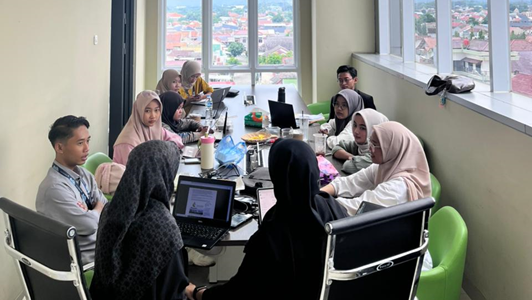
From a methodological standpoint, the discussion emphasized that modern life and current systems remain too mechanistic in processing knowledge, which often results in limited awareness of holistic transformation. Starting from seci as actual knowledge, the BIMA Framework introduces a new collaboration dynamic that integrates didactic reasoning with authentic human experience, regenerating a learning cycle capable of anticipating global change in a fluid and strategic way. The presence of the framework is not only academic — it becomes a living cognitive tool that activates the awareness of positioning oneself in the global era while still rooted in ecological and cultural consciousness. The discussion revealed the urgency of bridging internal psychological balance with external international expectations, enabling GET students to prepare for broader responsibilities in intercultural engagement, academic diplomacy, and international communication. “Reconstructing a cognitive map is not merely about gathering information — it is about synchronizing meaning so that knowledge remains alive and transferable across different contexts,” asserted Farah Syifa Mutiara Riyadi, strengthening the epistemic value of this intellectual movement.
This initiative also represented a psychological and philosophical shift within the GET ecosystem — a reprogramming of personal cognition to channel individuals toward regenerating new conceptual models. Although participants acknowledged that the BIMA Framework is undeniably complex, they collectively understood that deep intellectual restructuring never emerges from simplicity. Instead, it requires rigorous reasoning, emotional clarity, structural planning, and long-term cognitive discipline. Complexity becomes a necessary space where intellectual maturity is born, and through that challenge, the GET members reconstructed awareness with high interpretive sensitivity. The dialogue, therefore, evolved beyond a mere academic discussion; it transformed into an orchestration of holistic harmony, where each member contributed their interpretation, emotional response, and ecological perspective to reinforce the collective intellectual foundation of the team.
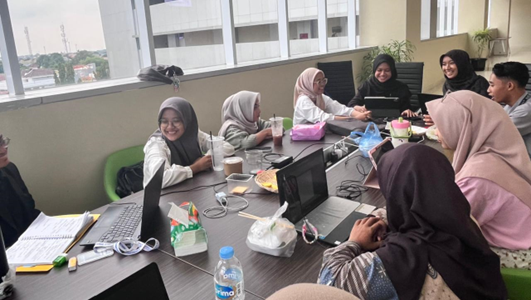
In strengthening its post-AsiaCALL momentum, the Global Engagement Team demonstrated how internationalization in higher education is no longer limited to participation in conferences, academic exposure, or network expansion, but deeply rooted in capacity building that prepares students to become future global actors. Within this initiative, the BIMA Framework serves as a nucleus of intellectual stamina that connects knowledge production, emotional resilience, cultural reasoning, and ecological awareness. From the dimension of self-awareness to global responsibility, GET students practiced how international engagement begins internally — from the way young scholars discipline their own minds, reinterpret meaning, and make strategic decisions that align with future diplomatic, educational, and humanitarian missions. This discourse not only sharpened the collective capacity of GET, but also reaffirmed International Office UINSSC's commitment to nurturing globally adaptive young professionals who possess analytical strength, cultural grounding, and high emotional intelligence.
Ultimately, the discussion concluded that the true achievement of this program is not merely the theoretical mastery of a framework, but the awakening of a way of thinking that transforms challenges into sustainable opportunities. The BIMA Framework becomes an epistemic compass that guides GET members in navigating complexity with strategic clarity, ecological sensitivity, and intellectual responsibility — both in their daily engagement at the International Office and in real global arenas they will enter in the future. It is a reminder that learning is not static; it is a journey of constantly reorganizing meaning and reinventing self-awareness in relation to the world. “Education is a revolution of thinking — and revolution begins when we dare to outgrow the limits of our own minds,” affirmed Lala Bumela, Ph.D., marking the moral core of this intellectual and cultural milestone for the Global Engagement Team.
Author: Muhammad Azkiya Bahtsulkhoir