
Hands-On Experience: New GET Members Explore Camera Angles in AsiaCALL Digital Content Production
Cirebon, August, 19th 2025 — When the first day of shooting for the second promotional video of AsiaCALL 2025 began, the atmosphere was charged with both creativity and challenge under the vision of Lala Bumela, Ph.D., Director of the International Office of UIN Siber Syekh Nurjati Cirebon. From the very beginning, his presence reminded the Global Engagement Team (GET) that this project was more than filming—it was a training ground for shaping global competencies. “Every frame you capture is not only for a video; it is a reflection of how we place ourselves in the international arena,” he remarked, setting the tone for the day. His statement both inspired and unsettled the team, raising the question: could students, especially the newest generation of GET, rise to such expectations while handling professional digital content production for a major international conference?
The answer began to unfold through collaboration across generations. The script for the video had been carefully crafted by Indah Fitri, a first-generation GET member whose words laid the foundation for the visual storytelling. With her script as the guiding thread, the production was then carried forward by the second generation: Muhammad Azkiya Bahtsulkhoir, AsiaCALL’s video editor, and Bryan Setiaji, stepping into the role of talent. Alongside them, GET’s third generation—newcomers Nok Dini Wulan Ramadan and Keysha Aulya Febrina—took their first steps into videography. “It’s one thing to watch tutorials on social media, but another to actually hold the camera and decide how a story should be seen,” Keysha admitted, capturing the mix of nervousness and excitement that defined their first day.
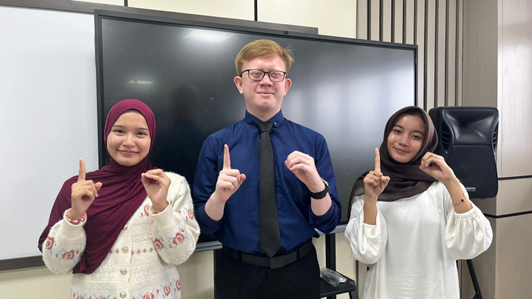
Azkiya, balancing his dual role as editor and mentor, provided steady guidance throughout the shoot. “Mistakes are not failures, they are lessons that bring us closer to mastery,” he encouraged, as Dini experimented with different framing techniques. At this moment, Lala Bumela’s earlier words about turning creativity into international readiness echoed in the background. “This is what GET was built for—learning by doing, growing by sharing, and daring to innovate. What we are producing today is more than a video; it is a rehearsal for the global stage,” he emphasized, reminding everyone that the project’s true value lay in experience as much as in the final product.
The cyber-inspired concept of the promotional video added layers of challenge that tested both technical and creative thinking. Bryan, patient in his role as talent, repeated scenes to give the new members room to explore camera angles. The collaborative spirit across GET generations transformed the set into a dynamic workshop. Lala Bumela reinforced the meaning of this collaboration, saying, “Angles are not only technical choices—they are the way we tell the world our story, and in telling it well, we declare that UIN SSC belongs on the international stage.” His words elevated the practice from a student exercise to an act of representation, giving purpose to every decision made on set.
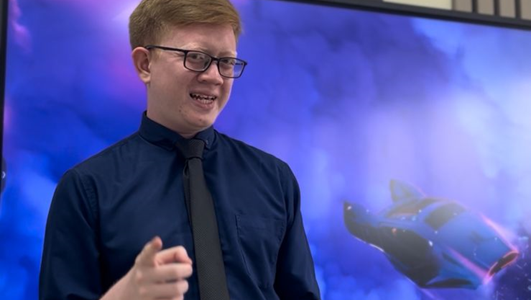
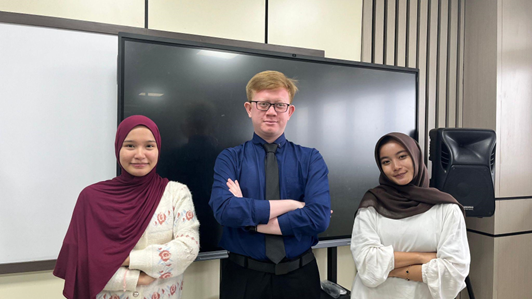
By the end of the day, the cameras had captured more than just scenes for AsiaCALL’s promotion—they had also documented the growth of their creators. Indah Fitri’s script had found its visual form, Azkiya’s editing eye ensured professional quality, Bryan’s performance brought the story to life, and Dini and Keysha discovered the power of applying what they once only saw online. The result was more than just raw material for AsiaCALL’s campaign; it was a symbol of intergenerational collaboration, where the strength of GET lies in continuity, mentorship, and shared creativity.
The first day of shooting left a lasting impression, not only in footage but in conviction. Under the guidance of Lala Bumela, the activity became a testament to how education in the digital era must embrace experimentation, creativity, and collaboration. For GET’s newest members, the shift from learners to creators happened in a single day; for the institution, it reaffirmed that preparing students for global opportunities requires trust, vision, and hands-on experience. The moral was clear: when leadership and youth creativity converge, even a camera angle—or a single line in a script—can become a gateway to the world.
Author: Muhammad Azkiya Bahtsulkhoir