
Inaugurating the AsiaCALL 2025 Pre-Conference, Assoc. Prof. Dr. Pham Vu Phi Ho Presents a High-Level Opening Speech on Innovation, Academic Integrity, and the Next Era of AI in Language Learning
Cirebon, November, 14th 2025 — Following the welcoming remarks of Lala Bumela, Ph.D. as Director International Office UIN Siber Syekh Nurjati Cirebon and President of the AsiaCALL Conference 2025, the Pre-Conference transitioned into its formal inauguration led by Associate Professor Dr. Pham Vu Phi Ho, Vice President for Administrative Affairs of AsiaCALL. The session was attended by UIN Siber Syekh Nurjati Cirebon’s International Office team—Ghina Amaliyah Sholihah, S.Sos, Ivo Dinasta Yanuar, S.S., M.Appling—alongside prominent AsiaCALL distinguished keynotes such as Assoc. Prof. Hassan Khosravi, Ph.D. (The University of Queensland, Australia), Prof. Shameem Rafik-Galea, Ph.D. (SEGi University, Malaysia), and Made Hery Santosa, Ph.D. (Universitas Pendidikan Ganesha, Indonesia). Also present were the invited pre-conference speakers Sirniawati, M.A. and Wulan Rahmatunnisa, M.Pd., together with hundreds of English Education students and faculty members of UIN SSC. Although AsiaCALL’s key leaders—Professor Andrew Lian, Professor Ania Lian, and Professor Dr. Jeremy White—were unable to join the session in person, their academic presence remained integral to the conference’s framework. Standing before this diverse and highly engaged audience, Assoc. Prof. Dr. Pham opened his speech by expressing deep appreciation: “It is my honor to be here among passionate educators, researchers, and students who are shaping the future of technology-enhanced language education.”
Assoc. Prof. Dr. Pham continued by openly acknowledging the circumstances that shaped this pre-conference session. Several AsiaCALL leaders were absent due to academic schedules, keynote preparations, and ongoing travel, which created a unique leadership dynamic for the opening event. Professor Andrew Lian, the AsiaCALL President, was unable to be physically present in Indonesia, though his keynote and remarks were scheduled for the following day. Professor Ania Lian remained off-stage as she finalized her AI-centered keynote, while Professor Dr. Jeremy White was mid-travel and expected to arrive in Cirebon later that afternoon. These conditions—though unexpected—did not diminish the momentum of the Pre-Conference. Instead, Assoc. Prof. Dr. Pham used the moment to highlight how academic gatherings often require adaptability, resilience, and collective responsibility. He remarked that the temporary absence of key leaders should not be seen as an obstacle but as a reminder of the global commitments and ongoing intellectual labor that sustain AsiaCALL.
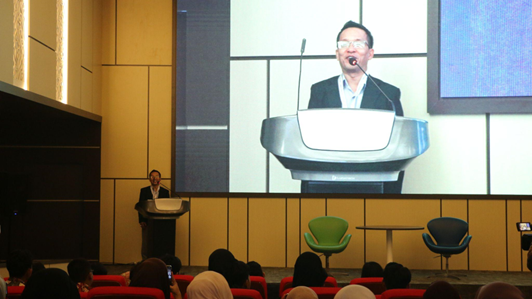
In the central part of his speech, Assoc. Prof. Dr. Pham offered a reflective narrative on his long-standing involvement with AsiaCALL. He shared that his formal engagement began in 2009 when he presented and published his early CALL research—though he noted with humility that his association with the organization likely began even earlier. This personal reflection served as an entry point for a deeper message: AsiaCALL has evolved significantly over the years. What began as a community focused on Computer-Assisted Language Learning has now transformed into a forward-looking consortium addressing Artificial Intelligence in Language Education. Reflecting this shift, he emphasized that AI is no longer a peripheral tool but a foundational element in modern pedagogy. He urged the audience to embrace this transformation and to contribute actively to the body of knowledge that is reshaping language teaching worldwide.
Assoc. Prof. Dr. Pham then expanded his speech into a critical examination of the opportunities and challenges emerging at the intersection of AI and language learning. He highlighted AI as a transformative force capable of expanding research horizons, enhancing teacher professional development, and improving student engagement. However, he also addressed academic risks, particularly the growing phenomenon of fake citations produced by misuse of AI tools. This issue, he warned, poses a serious threat to scholarly credibility and must be openly confronted by educators and institutions. He called upon researchers—and especially young scholars—to use AI responsibly, ensuring that technological convenience does not compromise academic integrity. His message underscored that the future of AI in education depends not only on innovation but also on ethics and accountability.
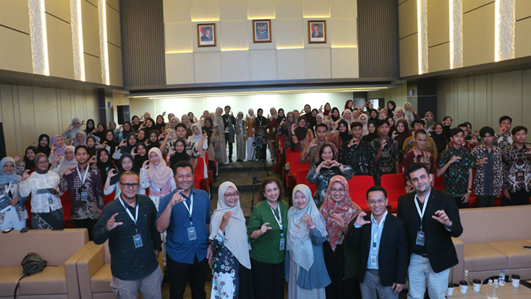
Moving toward the resolution of his address, Assoc. Prof. Dr. Pham articulated a hopeful and progressive vision for the future of AsiaCALL and its role in shaping global discourse on AI in language education. He noted that conferences like AsiaCALL 2025 are crucial spaces where new ideas can emerge, problems can be examined collaboratively, and students can witness the transformative power of academic networking. He encouraged participants—particularly the young scholars filling the hall—to see themselves not merely as attendees, but as contributors to the next era of AI-driven educational innovation. He emphasized that AsiaCALL thrives on inclusivity, creativity, and critical engagement, and that the future of the organization rests in the hands of emerging researchers and educators.
Assoc. Prof. Dr. Pham concluded his high-level opening speech with a motivating message that blended hope, academic responsibility, and international collaboration. He reminded participants that the pre-conference was not simply an academic ceremony but a symbolic beginning of two days that would shape the future of their intellectual journey. His final remarks carried a moral sentiment rooted in scholarly integrity and the shared pursuit of knowledge: “The future of AsiaCALL belongs to you. Learn boldly, research honestly, and lead this field with integrity.” With these words, he reaffirmed the central value of the AsiaCALL community—knowledge that is innovative, ethical, and globally impactful—before inviting the audience to continue their participation in the sessions ahead.
Author: Muhammad Azkiya Bahtsulkhoir