
Indonesian Language for Speakers of Other Languages (BIPA) as Soft Diplomacy: Educational and Cultural Collaboration Opportunities between Indonesia and Timor Leste
Cirebon, August 03, 2026 – As part of the Seminar Series of the Indonesian Education and Cultural Attachés and the Permanent Delegation of Indonesia to UNESCO, held on 1–8 August 2026, the Monday session highlighted the rich opportunities for educational and cultural collaboration between Indonesia and Timor Leste. The session featured Professor Tasrifin Tahara, the Education and Cultural Attaché of the Indonesian Embassy in Dili, who shared his firsthand experience in running language and cultural diplomacy programs in the young nation. The International Office viewed this forum as a valuable window to understand how Indonesian campuses can engage with neighboring countries through language and culture.
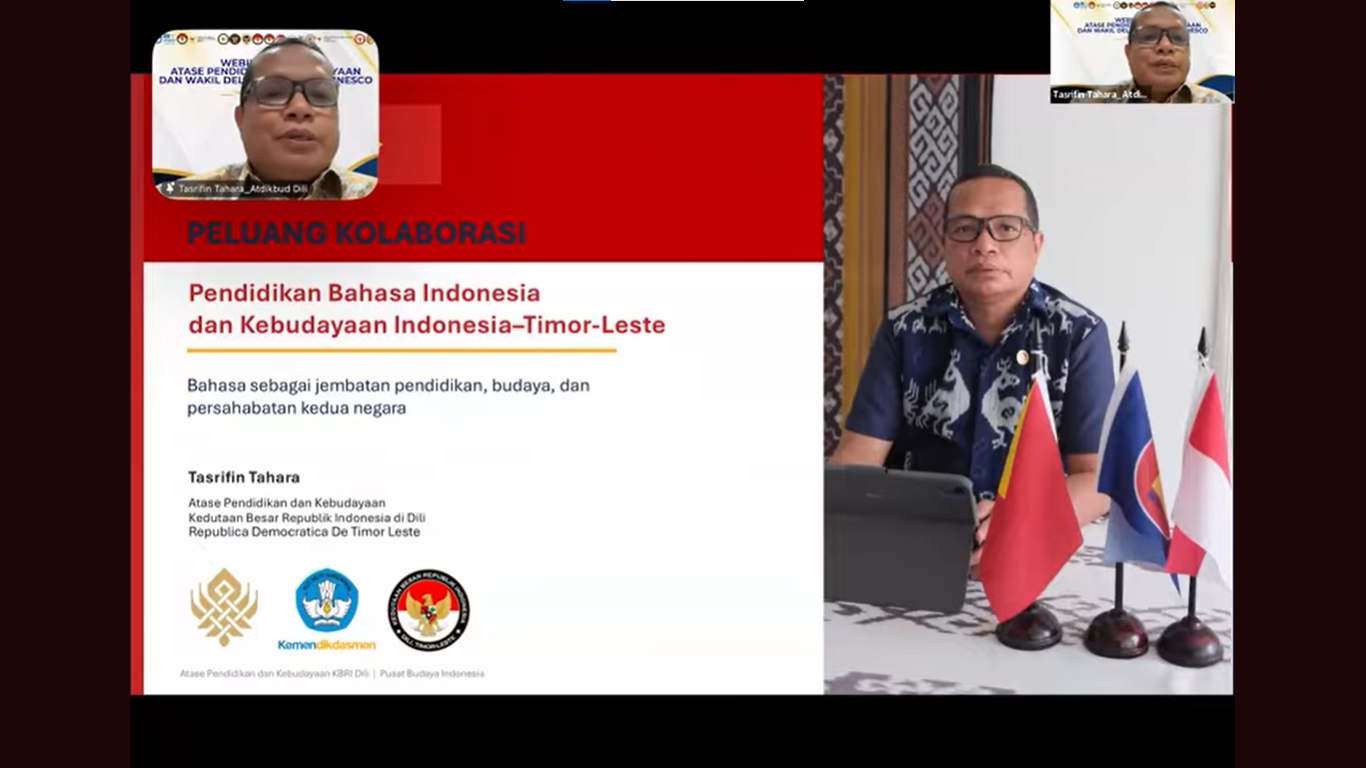
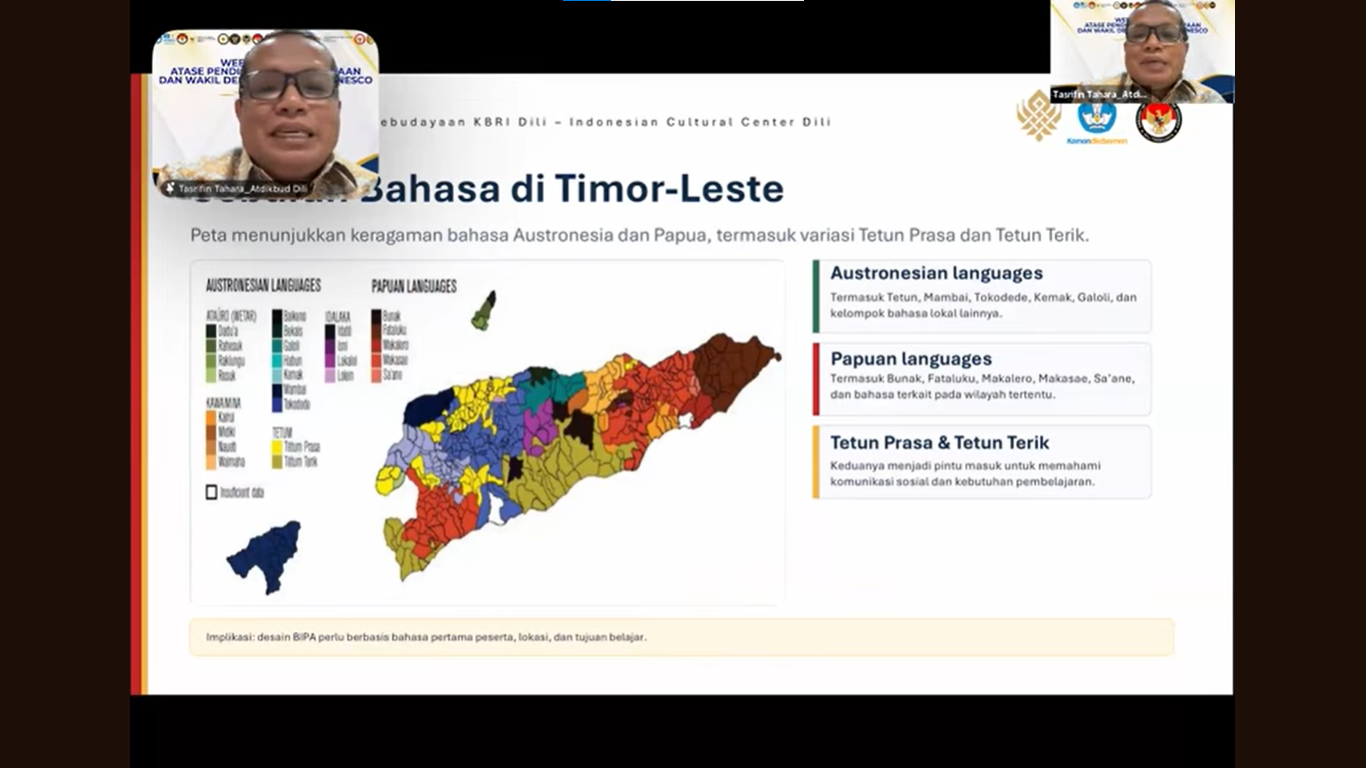
Professor Tasrifin explained that Timor Leste recognizes Tetum and Portuguese as national languages, while Indonesian and English hold the status of working languages. He noted that the biggest legacy of Indonesia's presence between 1975 and 1998 is actually the Indonesian language, because most administrative documents from that period were written in it. Although the local curriculum still labels the subject as Malay, the accession of Timor Leste as the 11th member of ASEAN on 26 October 2025 has strengthened the position of Indonesian in the country. Fellow ASEAN members such as Malaysia and Brunei Darussalam have indirectly reinforced the learning space for Indonesian, while UNESCO recognizes Indonesian rather than Malay as an international language. The two countries also share deep historical and socio-cultural ties as parts of the same island of Timor and members of the same Malay cultural family. These close bonds make Timor Leste feel familiar to Indonesian visitors, as if they have merely crossed an administrative border within one cultural region.
The Indonesian Cultural Center in Dili stands at the heart of these efforts, serving as a space for learning, artistic promotion, literacy, and community encounters. The center is equipped with a library and a home theater that can accommodate fifty participants for screenings of Indonesian films and cultural promotion content. Every day, hundreds of young Timorese visit the center to join regular cultural classes such as dance, traditional music, painting, batik, and culinary workshops.
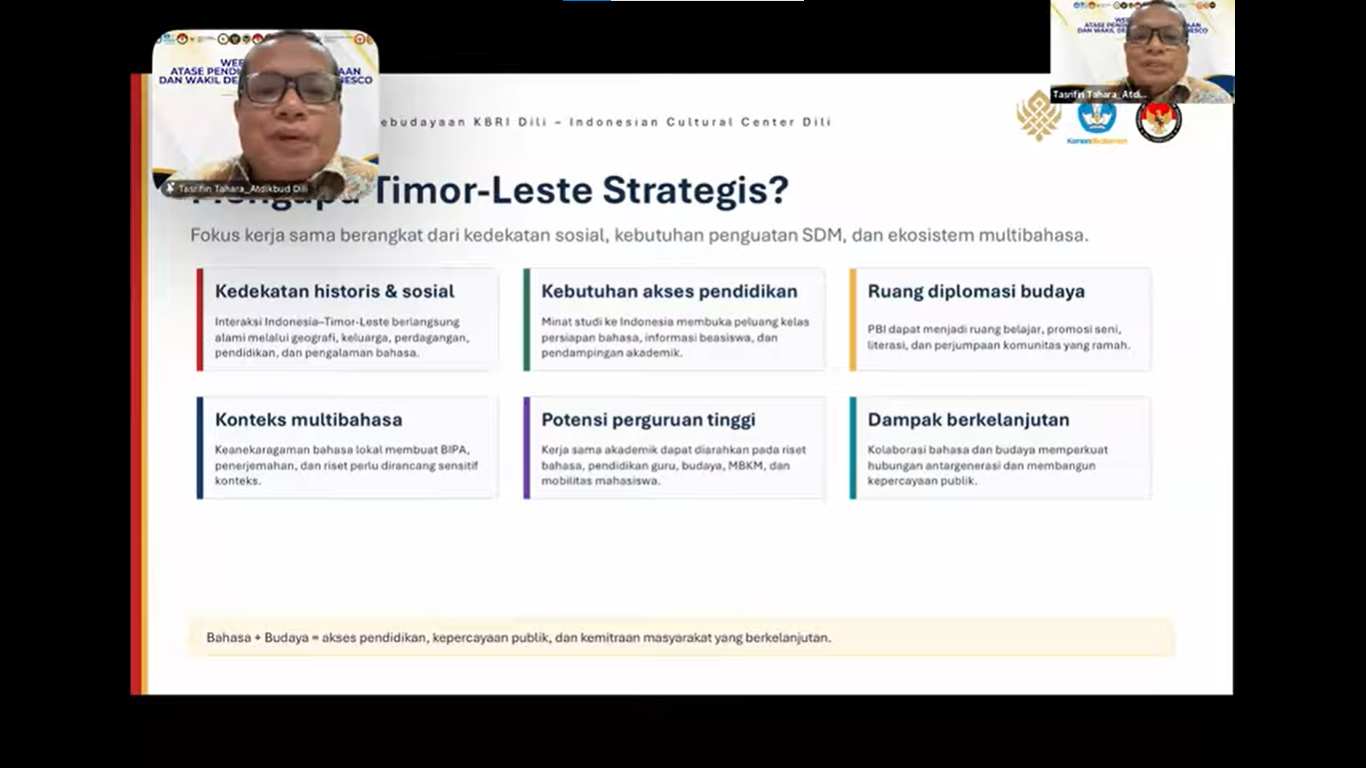
On the language side, the attaché office records more than four thousand BIPA learners and collaborates with roughly forty partner institutions ranging from schools to universities. The teaching force consists of sixteen instructors supported by the National Language Agency and seven teachers from the attaché office, complemented by local graduates trained on Indonesian campuses. Even diplomats from third countries have joined the BIPA classes, showing how the language has become a friendly meeting point in Dili. The cumulative number of Timorese alumni of Indonesian universities has reached nearly forty-nine thousand, with associations such as Kagama, IKA Unas, and the Brawijaya alumni network actively maintaining ties.
In the higher education sector, Professor Tasrifin noted that thirteen universities in Timor Leste are ready to become partners for Indonesian campuses. An education expo scheduled for 7–9 September in Dili has already attracted registration from sixty Indonesian universities, reflecting strong interest on both sides. During the question-and-answer session, a representative of the BIPA study program at Universitas Pendidikan Indonesia shared that seventeen teachers from thirteen districts of Timor Leste have completed master's degrees in BIPA Education under a full scholarship from the university. These graduates have returned home and now teach Indonesian in schools, while one of them is drafting a context-based BIPA curriculum that has been validated by curriculum experts. Professor Tasrifin welcomed the initiative and encouraged the graduates to register in the attaché office's database so they can be prioritized when BIPA teacher recruitment opens. He also mentioned the FDCH, a Timorese scholarship institution similar to Indonesia's LPDP, as a potential funding source for future joint programs.
Despite the enthusiasm, Professor Tasrifin also acknowledged several challenges that need to be addressed carefully by both sides. The limited budget has constrained the teaching force, since only sixteen instructors from the National Language Agency and seven from the attaché office must serve thousands of learners across the country. The high cost of living in Dili makes it difficult for teachers coming from Indonesia, while many schools still allocate only one lesson hour per week for Indonesian.
The difference in academic calendars, with Indonesia starting mid-year and Timor Leste in January, creates a waiting gap that is usually filled with language preparation. Demand for classes and scholarships far exceeds the available quota, as Professor Tasrifin illustrated directly, "Sometimes we offer only six seats, but the applicants can reach sixty to eighty." He added that certain historical memories require teaching materials with Timorese contexts so that the language can be received warmly without resistance. These challenges, however, are seen not as obstacles but as areas where closer institutional collaboration between campuses can provide real solutions.
The session concluded with a strong message that language and culture are the most effective entry points for building reconciliation and long-term partnership between the two countries. Professor Tasrifin described BIPA as the softest form of reconciliation that keeps positive memories of Indonesia alive among the Timorese people. He encouraged Indonesian campuses not to walk alone but to move together through the facilities and networks already available at the Indonesian Cultural Center. The International Office regards this encouragement as an open invitation to design joint programs in BIPA teaching, cultural classes, research collaboration, or student mobility. By participating actively in forums like this, the International Office continues to strengthen its role in connecting the campus with global networks of education and cultural diplomacy.