
Lala Bumela, Ph.D., Opens the Final International Seminar and Workshop of IO UIN SSC in 2025 with a Speech on Returning to the Circle: A Rational, Relational, and Ecologically Grounded Regenerative Pathway Beyond Conventional Sustainable Development Goals
Cirebon, December, 2nd 2025 — The International Office of UIN Siber Syekh Nurjati Cirebon inaugurated its final international seminar and workshop of 2025 with an opening speech by Lala Bumela, Ph.D., Director of IO UIN SSC. The event, themed Returning to the Circle: A Regenerative Pathway Beyond Technocratic Sustainable Development Goals, convened scholars, practitioners, government officials, and international delegates of global repute. Among the distinguished attendees were Rudolf Wirawan, Ph.D. (University of Adelaide, Australia); Ivan Chabibilah, S.S., M.Li. (ICCCM Malaysia); Luqman Baehaqi, Ph.D. (UIN Palangkaraya); Syarifuddin, S.S. (Cirebon Regional Secretariat); and representatives from Hakim Ventural International. Bumela emphasized that modern linear approaches to sustainability are insufficient, and highlighted the relevance of the BIMA Framework, developed by Prof. Wirawan, which bridges intelligence, mindfulness, and awareness in a non-linear, spiral model akin to the universe itself. “Returning to the circle requires us to integrate the non-linear intelligence of our ancestors, the relational knowledge encoded in Carita Pantun and Lutung Kasarung, and contemporary spiral-thinking frameworks like BIMA, to create regenerative pathways that are holistic, adaptive, and enduring,” he stated. His remarks framed the seminar as a convergence of ancestral wisdom and modern non-linear scientific paradigms.
Lala Bumela elaborated on the limitations of conventional, linear, technocratic SDGs, which often isolate ecological, social, and ethical dimensions. In contrast, Sundanese ancestors conceptualized holistic systems in which ethics, social organization, and ecological stewardship were inseparable. Oral narratives such as Carita Pantun functioned as repositories of non-linear intelligence, transmitting lessons on agriculture, resource management, ritualized learning, and communal governance. “The knowledge embedded in these narratives is spiral in nature: learning unfolds through cycles of reflection, practice, and relational awareness,” Bumela noted, drawing a parallel with the BIMA Framework. Such indigenous knowledge demonstrates that sustainability and relational intelligence were operationalized centuries before formalized science emerged.
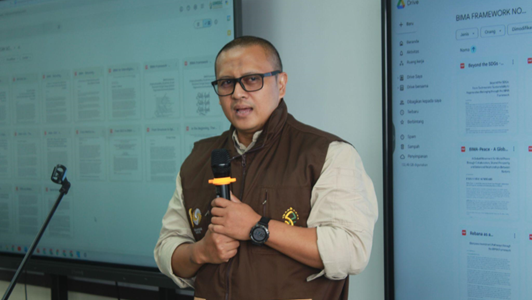
Highlighting IO UIN SSC’s achievements, Bumela stated, “Carita Pantun, like Lutung Kasarung exemplify ancestral systems of spiral learning, relational intelligence, and ecological ethics. Today, IO UIN SSC manifests these principles: in 2025 alone, we have hosted prestigious international seminars and workshops, recruited outstanding international students through the Syekh Nurjati Global e-Scholarship (SN-GES), conducted capacity building programs, developed ecologically grounded curricula, and hosted AsiaCALL 2025. By integrating BIMA’s spiral model with ancestral wisdom, we are creating regenerative pathways that restore Cirebon as a knowledge hub, echoing the vision of our forebears centuries ago, now actualized through UIN Siber Syekh Nurjati Cirebon.” His remarks reinforced the seminar’s central theme: combining non-linear, spiral frameworks with ancestral knowledge to inform contemporary sustainability practices.
Lala Bumela demonstrated how ancestral narratives operate as dynamic educational systems, encoding ecological, ethical, and social intelligence in cyclical, performative learning. Carita Pantun guided behavior, ritual practice, and environmental management in a spiral, iterative manner: repeated engagement with stories and rituals reinforced relational awareness and practical knowledge. By aligning this indigenous spiral pedagogy with the BIMA Framework, participants were encouraged to view learning and sustainability as continuous, interconnected processes rather than linear objectives. This approach underscores that ancestral wisdom and modern frameworks converge in their capacity to foster regenerative, adaptive, and relationally intelligent societies.
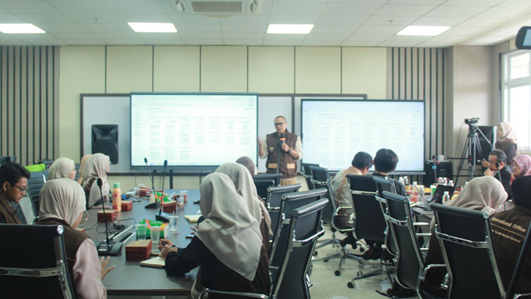
Concluding his address, Bumela emphasized the seminar as a platform to co-create regenerative futures. “By studying the non-linear knowledge encoded in Carita Pantun and Lutung Kasarung, and integrating the spiral intelligence of the BIMA Framework, we gain insights into relational intelligence, ecological ethics, and community governance that remain highly relevant. This seminar empowers us to translate these ancestral and contemporary lessons into actionable strategies for communities and ecosystems,” he stated. He stressed that unlike linear SDG models, spiral approaches enable continuous learning and adaptive regeneration, reflecting the universe’s inherent dynamism. These insights reinforced the seminar’s objective: to integrate ancestral wisdom with modern non-linear frameworks to produce culturally grounded, scientifically robust, and regenerative solutions.
Finally, Bumela left participants with a compelling call to action: “Returning to the circle challenges us to internalize ancestral intelligence, apply relational and ecological awareness, and embrace non-linear, spiral learning in every endeavor. By bridging Carita Pantun and the BIMA Framework, we can design regenerative pathways that honor the past, enrich the present, and sustain future generations. Learning and action are continuous, expansive, and interdependent, just as the universe spirals endlessly—this is the wisdom our ancestors encoded and our contemporary frameworks now echo.” His opening speech inaugurated the seminar with visionary clarity, reinforcing IO UIN SSC’s mission to cultivate global knowledge, ethical leadership, and regenerative practices rooted in the rich legacy of Sundanese ancestors and supported by modern spiral-thinking paradigms.
Author: Muhammad Azkiya Bahtsulkhoir