
International Office UIN Siber Syekh Nurjati Cirebon Participates in Deconstructing Indonesia’s Info Session Featuring Keynote Speaker Hilmar Farid
Cirebon, June 27, 2026 – The International Office of UIN Siber Syekh Nurjati Cirebon is fully committed to continuously expanding global academic horizons based on local wisdom and sovereignty. As a tangible manifestation of this commitment, the International Office of UINSSC had the opportunity to participate in an exclusive guest lecture and info session organized by the academic community Deconstructing Indonesia. This international-scale scientific event, which featured prominent Indonesian historian and cultural thinker, Hilmar Farid as the guest speaker for this particular session in the series, aimed to absorb new paradigms regarding the decolonization of knowledge in order to strengthen Indonesia's academic bargaining position on the international stage.
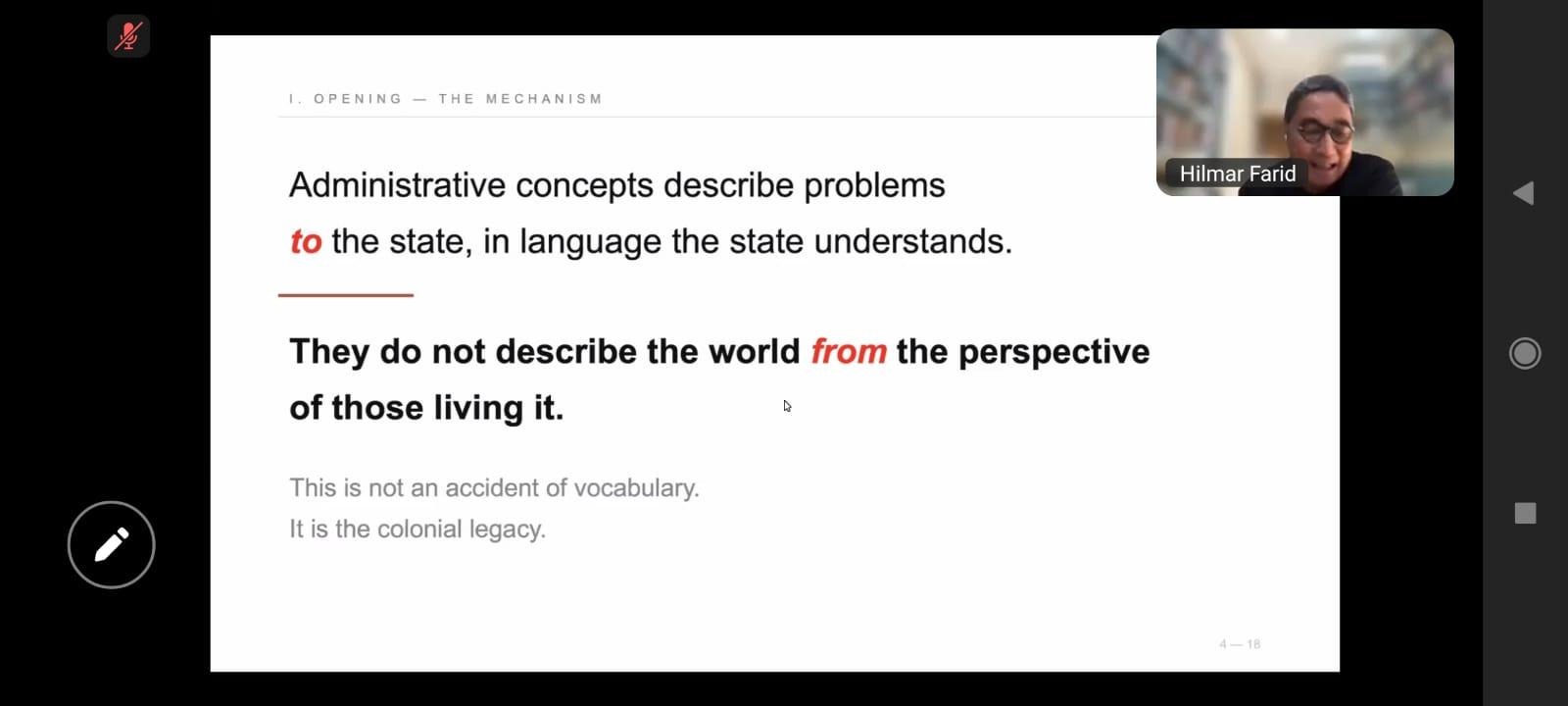
This dynamically unfolding info session thoroughly examined the fundamental challenges of the Indonesian nation, which has been independent for eight decades but still faces the specter of epistemic dependency. In his presentation, Hilmar Farid explained that decolonization is not merely a ceremonial political event, such as the recognition of sovereignty and the raising of the national flag in the mid-1945–1949 period. Beyond that, the cultural and knowledge dimensions are the most crucial foundations determining the success of a nation's political and economic sovereignty. The International Office of UINSSC noted the importance of this reflection so that higher education institutions do not simply blindly adopt Western theories when analyzing local phenomena. A lack of conceptual freedom is considered the root cause of why domestic academics often fail to fully capture the sociological realities of their own society.
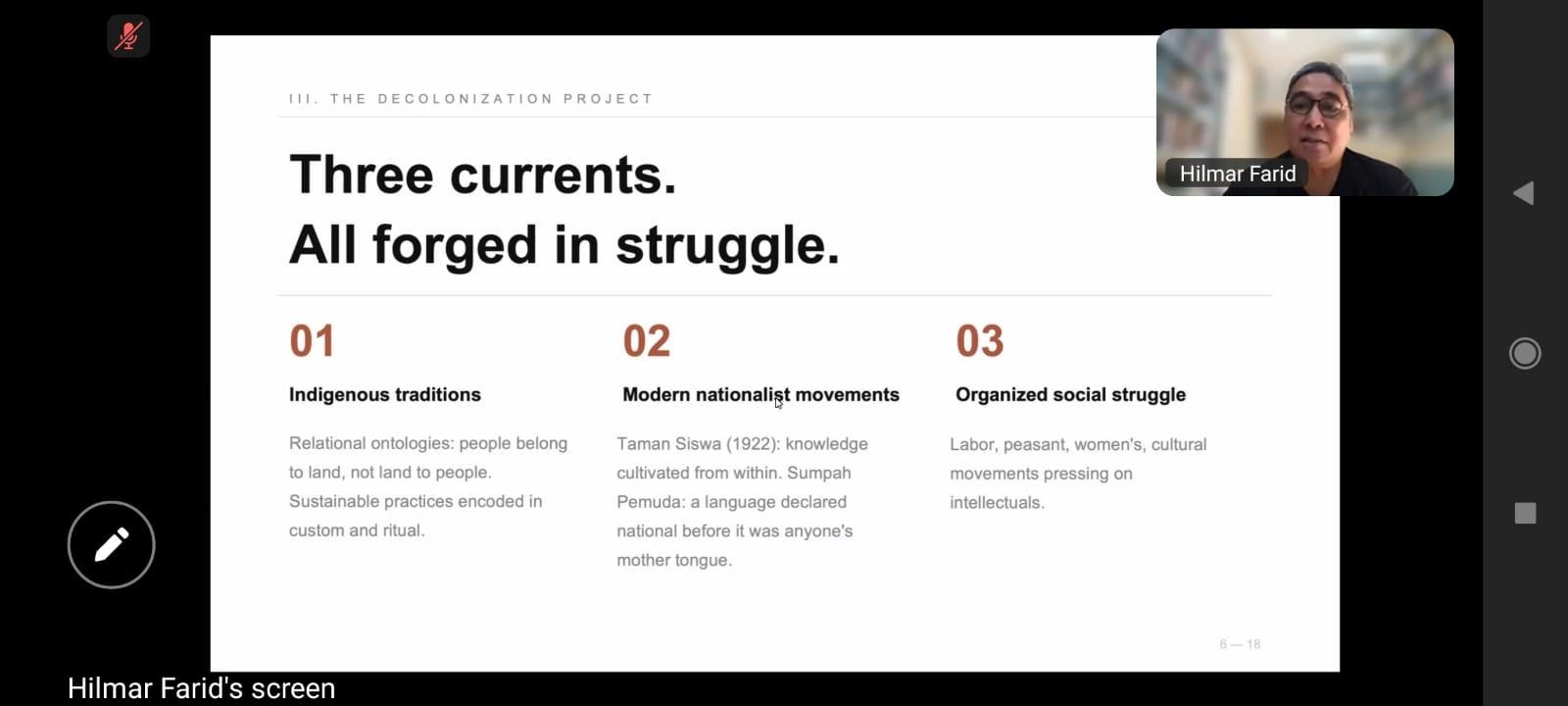
Through the interactive discussion in this edition of the info session series, the speaker also dissected crucial periods in the history of knowledge production in the country, which has experienced ups and downs. In the early independence period until the mid-1960s, Indonesia was recognized for successfully opening up global thinking horizons through transformative initiatives like the 1955 Asian-African Conference (KAA) in Bandung. However, this independent epistemic horizon contracted severely following the political events of 1965, which subsequently institutionalized a technocratic knowledge regime heavily reliant on statistical and utilitarian data.
Hilmar Farid emphasized, "Current conditions demand that we build a conceptual and organizational infrastructure of resistance, where the work of thinking within discussion spaces like this one is an integral part of strengthening the foundation of our shared struggle."
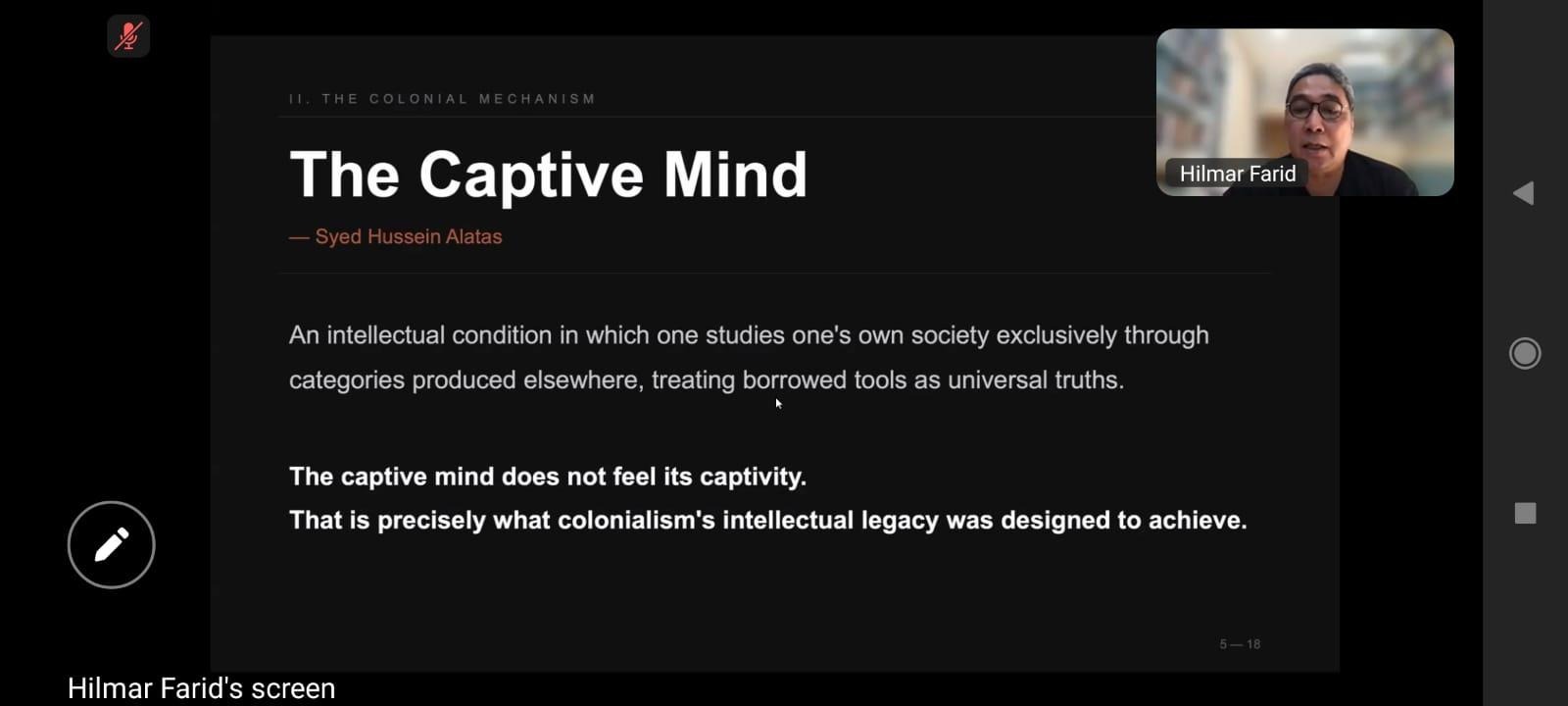
Furthermore, the active engagement of the International Office of UINSSC in this global forum opened up new insights regarding the limitations of the Reformasi era, which tended to get trapped in administrative-technical substitutions. Reformasi was deemed successful in reshaping political institutions but has not yet been able to decolonize knowledge, as it frequently obscured the issue of sovereignty into a mere matter of governance. The phenomenon of the rising "decolonial trend" in various world universities today did not escape sharp criticism either, as it often stops at being an academic syllabus discourse without touching actual changes in social relations on the ground.
As a concrete solution to the specter of intellectual colonialism, the concept of Gotong Royong (mutual cooperation) was offered not merely as a traditional cultural value, but as a robust epistemology and scientific method. This method rests on four interconnected core principles: collective work, a relational bond between the researcher and the subject, a practical orientation in the field, and a dynamic, recursive evaluation. Implementing gotong royong as a scientific method is believed to be capable of generating original concepts rooted directly in the historical and sociological experiences of Indonesian society. This somatic and trust-based approach is expected to liberate academics' minds from the shackles of the captive mind.
This ongoing epistemic movement aligns perfectly with the research focus of Lala Bumela Sudimantara, Ph.D. (Director of International Office), on local wisdom and critical language awareness. In continuity with this series, Lala Bumela Sudimantara, Ph.D. will step forward as the next guest speaker on Monday, June 29, 2026, to deliver a presentation on decolonizing English Language Teaching (ELT).