
Nusantara–Pacific Ties through Language and Culture: Indonesian Language Education and Cultural Diplomacy in Papua New Guinea
Cirebon, August 03, 2026 – Continuing the Seminar of the Education and Cultural Attachés and the Deputy Permanent Delegate of the Republic of Indonesia to UNESCO, the Monday session explored the unique dynamics of promoting Indonesian language and culture in the Pacific region. Arif Kusdwiannanto, the Education and Cultural Attaché of the Indonesian Embassy in Port Moresby, explained that his office covers two countries of accreditation, namely Papua New Guinea and the Solomon Islands. He described Papua New Guinea as Indonesia's closest neighbor, sharing the island of Papua along an eight-hundred-ten-kilometer border stretching from Jayapura in the north to Merauke in the south. From the International Office's perspective, this session opened our eyes to the immense strategic value of Melanesian solidarity in Indonesia's broader cultural diplomacy.
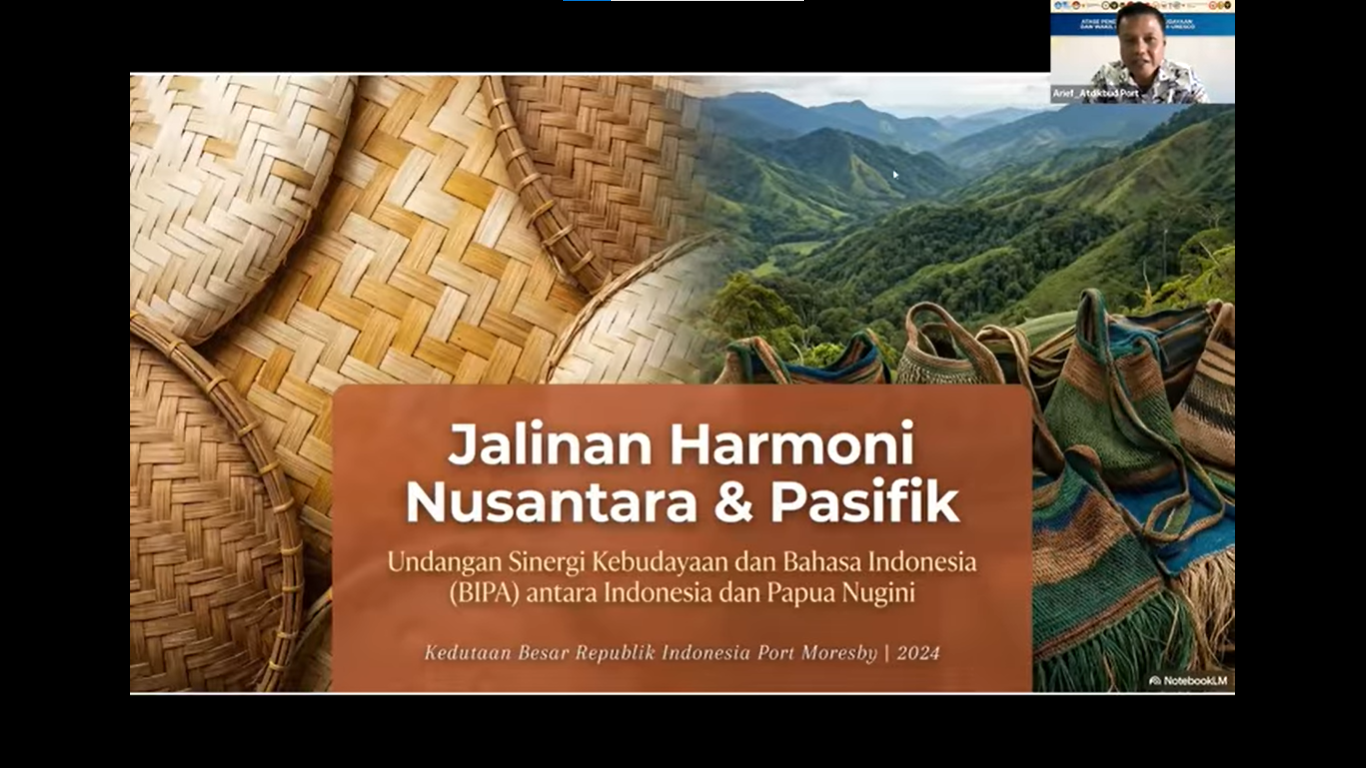
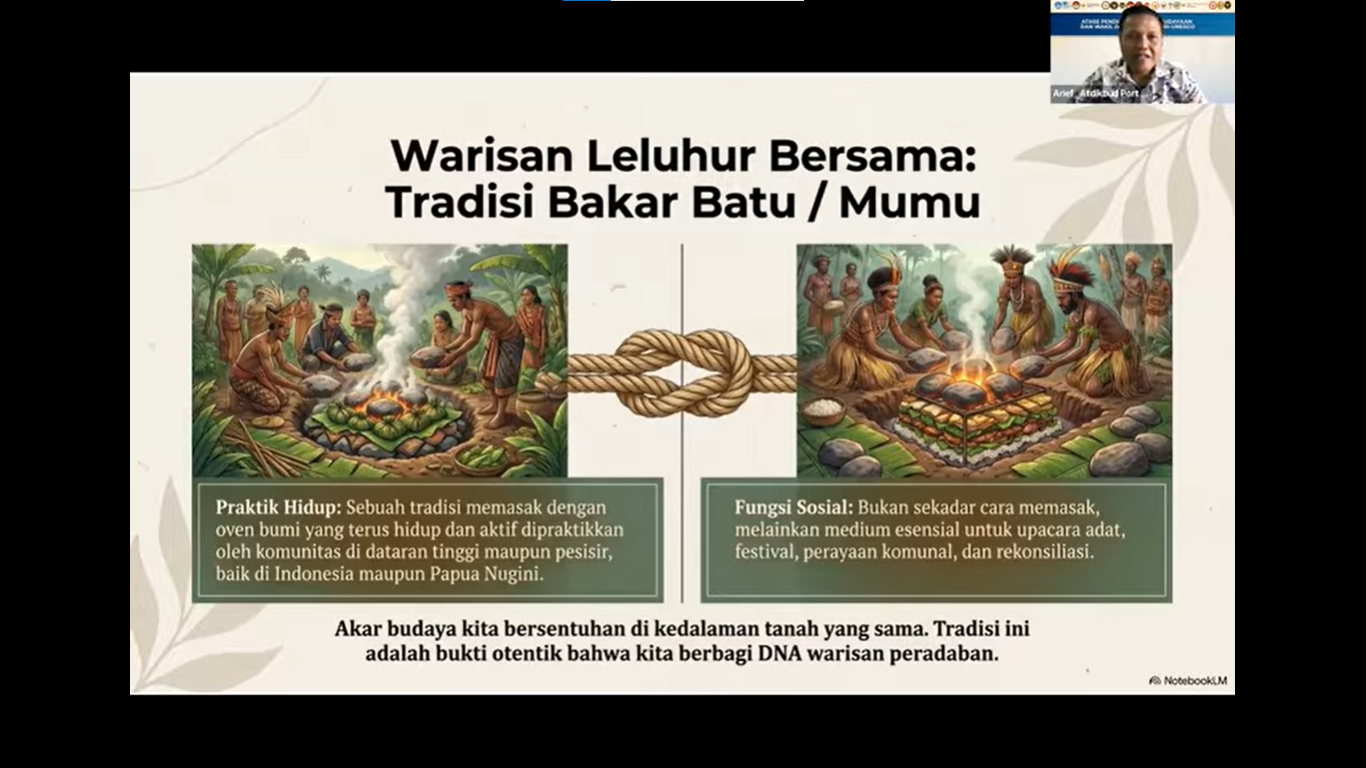
Arif highlighted that Papua New Guinea possesses around eight hundred local languages, representing the highest linguistic diversity in the world, with Indonesia following in second place with around seven hundred. Although border communities on both sides remain one extended family with similar cultures, they often cannot communicate with each other because of this massive language difference. Shared traditions such as the bakar batu or stone-cooking ritual are now being prepared for a joint nomination to UNESCO as an intangible cultural heritage. Indonesia has previously nominated the noken bag, and Papua New Guinea plans to join through an extension mechanism with its equivalent bag known as the bilum. These common cultural roots provide a strong foundation for people-to-people diplomacy that effectively complements formal state relations in the Pacific. For campuses engaged in cultural studies, this shared heritage offers rich topics for joint research, documentation, and community engagement projects.
On the language education front, the embassy in Port Moresby currently manages ten Indonesian language class locations, doubled from the initial five centers, with around eight hundred enrolled students. The classes are strategically held at the University of Goroka, the University of Papua New Guinea, the University of Natural Resources and Environment, a secondary school with around four hundred students, and even the Ministry of Defence. The defence class was opened after the visit of President Prabowo, during which Indonesia offered scholarships for Papua New Guinean soldiers to attend military courses in Indonesia. With only around eight teachers, the attaché office empowers alumni of Indonesian universities and Catholic priests from Nusa Tenggara Timur and Central Java to serve as instructors. Two of the teachers are funded by the National Language Agency, while the rest are supported by the attaché office's own limited budget. At the University of Papua New Guinea, taking a foreign language course, including Indonesian, has become a graduation requirement, which significantly boosts student motivation. Scholarship opportunities such as Indonesian Aid and Dharma Siswa further encourage learners, since proficiency in Indonesian adds considerable value to their applications.
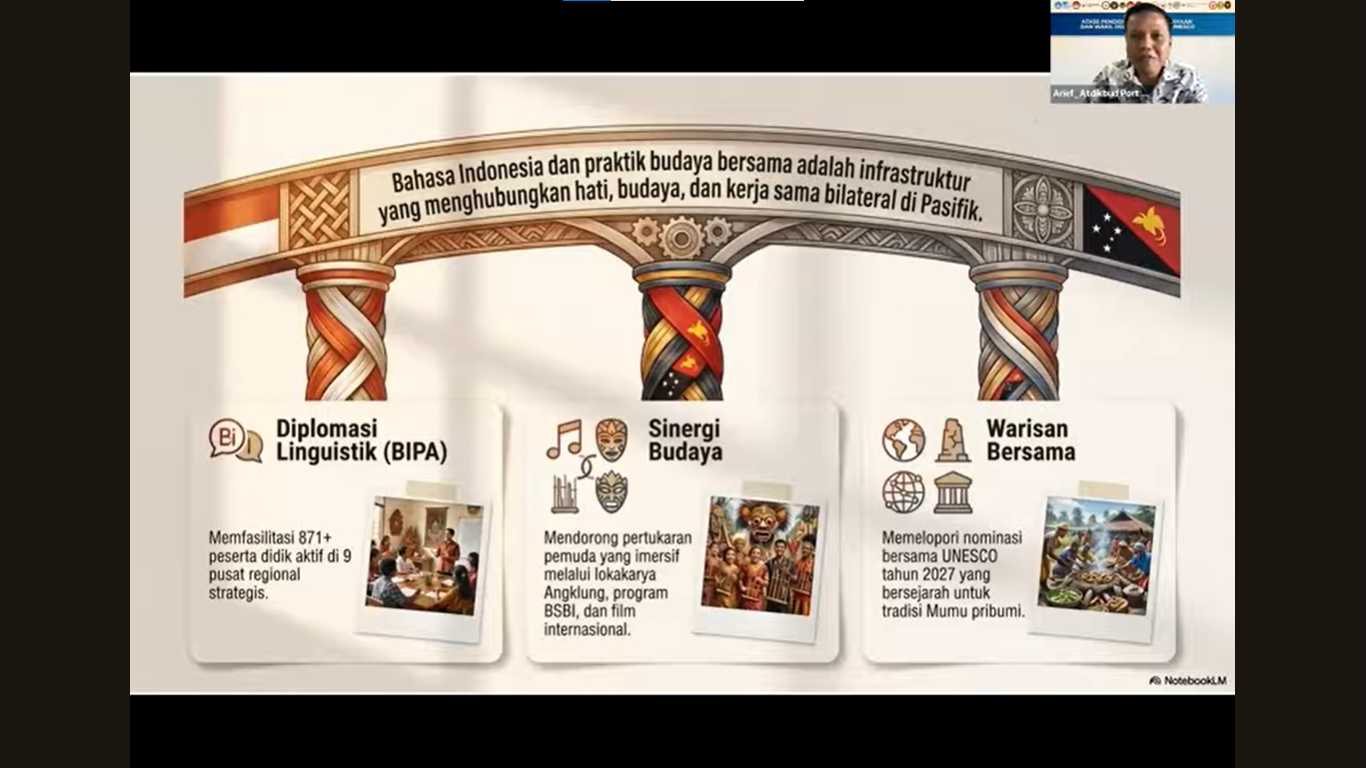
Addressing the practical realities of operating in the region, Arif acknowledged several distinct challenges that Indonesian institutions must navigate carefully. The attaché office operates with a very minimalist budget, relying heavily on local alumni and religious figures to sustain the language programs across the country. Partner institutions that request classes must provide their own accommodation, since the embassy can only supply teachers and limited allowances. Furthermore, Papua New Guinea carries a widespread reputation for high crime rates, requiring strict security awareness from any visiting academics or staff members. To mitigate these risks, the Indonesian embassy is uniquely supported by escort teams from three military branches, a privilege maintained only in Papua New Guinea and Afghanistan. Despite the limited capacity, local enthusiasm for Indonesian education keeps growing, as Arif noted directly, "They are very thirsty for higher education." This strong demand confirms that the challenges should be read as invitations for Indonesian campuses to step in with creative and sustainable partnership schemes.
Beyond these constraints, the attaché office runs creative programs that directly empower local communities while promoting Indonesian culture. A group of mothers from Vanimo, the town closest to the Jayapura border, was sent to learn Indonesian culinary skills at a vocational school in Jayapura. The women learned to cook pisang goreng, nasi kuning, and nasi goreng, and upon returning home they immediately practiced and promoted Indonesian food in their local market. Cultural diplomacy also took the form of an angklung workshop conducted by the Rumah Angklung community for junior and senior high school students. Plans are already in place to introduce kolintang and gamelan in the following stages of the program. Such initiatives demonstrate that language and culture can directly improve local economies while strengthening friendship between the two countries.
The presentation was enriched by the testimony of Frutto Kandam, a Papua New Guinean teacher with Jayapura ancestry who has been teaching Indonesian at the University of Goroka from 2024 through 2026. He expressed pride that Indonesian has been registered as a credit-bearing subject, so students' grades now appear on their official academic transcripts. Although teaching materials are still distributed in photocopied form, the university leadership has consistently supported the program and monitored its progress over three years. Arif added that Indonesian at the University of Goroka has become one of the elective subjects that students must choose to fulfill their language requirements. Looking ahead, the embassy in Port Moresby plans to hold an education expo at the end of September, providing exhibition space for up to ten Indonesian universities. Campuses willing to cover their own travel and accommodation costs are invited to promote education, handicrafts, and traditional products at the event.
In his closing remarks, Arif emphasized that Papua New Guinea is the largest Melanesian country in the Pacific, whose friendship is crucial for Indonesia's diplomatic position in the region. Through language and cultural education, Indonesia can counter misleading narratives about Papua by showing genuine brotherhood and mutual respect to its Pacific neighbors. He also pointed out that business opportunities remain wide open, as entrepreneurs from other countries currently dominate sectors that Indonesian actors could potentially enter. The International Office sees the session as a reminder that cultural proximity in Melanesia is an asset that can be converted into academic and community partnerships. Lecturers and students interested in collaboration may directly contact the Education and Cultural Attaché office in Port Moresby to propose joint programs in language, culture, or trade. By following this comprehensive seminar series, the International Office reaffirms its commitment to expanding the campus's global engagement through the diplomacy of language and culture.