
Operationalizing Spiral Learning and Ecological Ethics: The International Office of UINSSC Translates Sundanese Oral Traditions and the BIMA Framework into a Living Curriculum Through the Seminar “Returning to the Circle: A Regenerative Pathway Beyond Technocratic Sustainable Development Goals”
Cirebon, December 2, 2025 – The International Office of UIN Siber Syekh Nurjati Cirebon inaugurated its final international seminar and workshop of 2025 with an opening speech by Lala Bumela Sudimantara, Ph.D., Director of the International Office. Themed "Returning to the Circle: A Regenerative Pathway Beyond Technocratic Sustainable Development Goals," the event convened scholars, practitioners such as Luqman Baehaqi, Ph.D. (UIN Palangkaraya), government officials Syarifuddin, S.S. (Cirebon Regional Secretariat); and international delegates including Rudolf Wirawan, Ph.D. (University of Adelaide, Australia); Ivan Chabibilah, S.S., M.Li. (ICCCM Malaysia); and representatives from Hakim Ventura International Aries Endri Susanto, S.T., M.E. (Business Executive, Hakim Ventura International) who expressed particular enthusiasm for the seminar's unique integration of ancestral knowledge and contemporary frameworks. Global Engagement Team (student staff of International Office) also actively engage both as a committee and participant in this event.
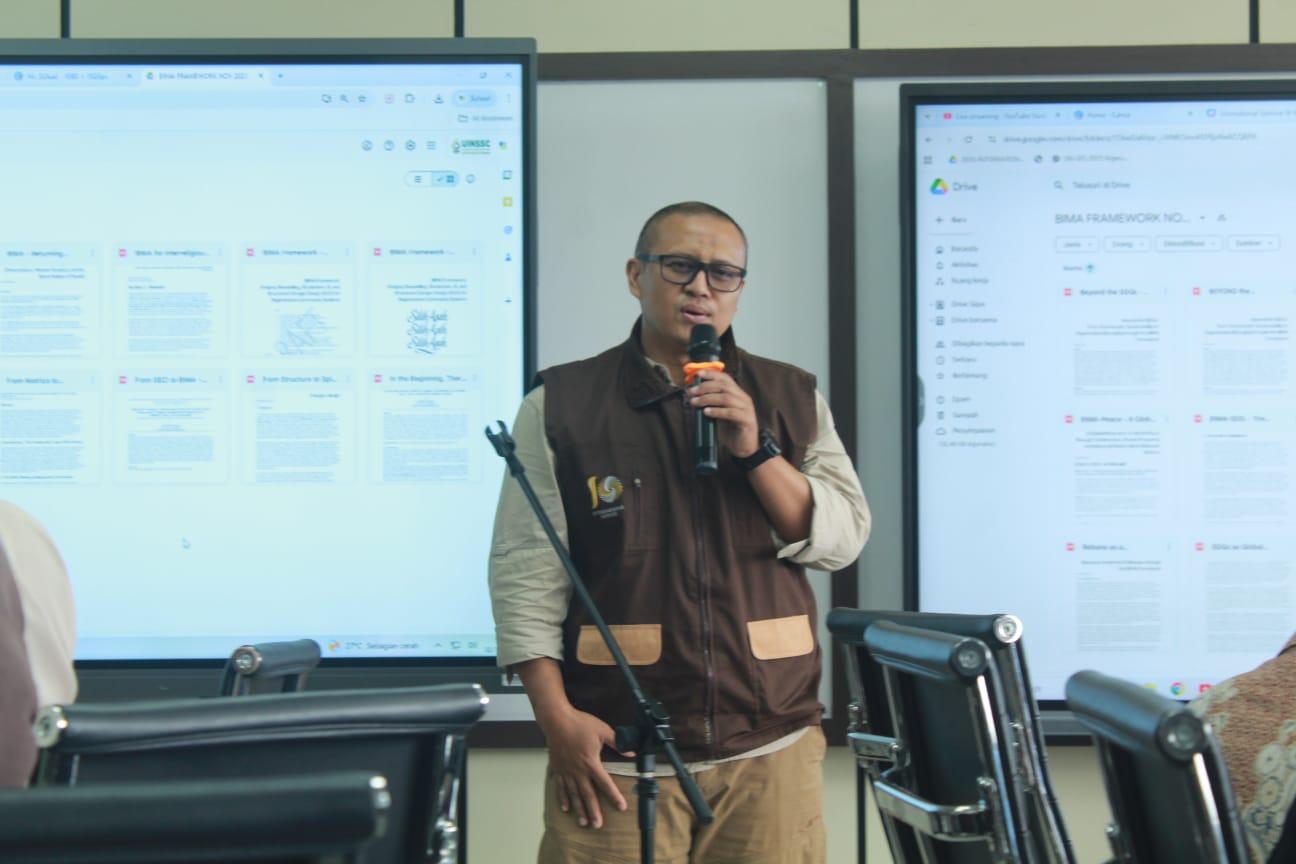
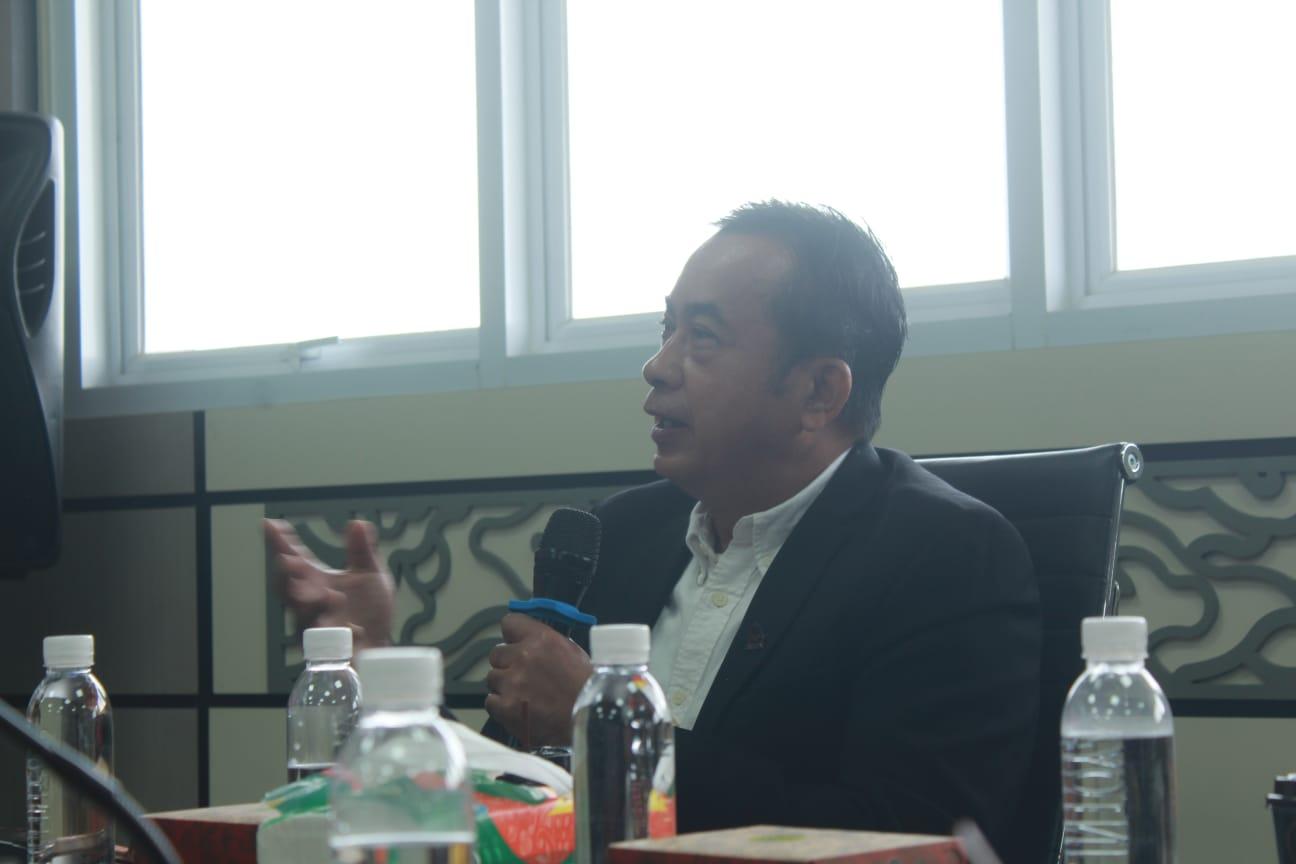
Lala Bumela Sudimantara, Ph.D. positioned the seminar at the intersection of ancestral Sundanese knowledge systems and contemporary non-linear frameworks, particularly the BIMA Framework developed by Prof. Rudolf Wirawan. His address established the intellectual foundation for examining how spiral, cyclical models of sustainability could transcend the limitations of conventional linear SDGs. This gathering exemplified UINSSC's strategic commitment to positioning Cirebon as a global knowledge hub where indigenous wisdom informs modern challenges.
Lala Bumela Sudimantara, Ph.D. directly challenged the prevailing technocratic approach to sustainability, contrasting it with holistic ancestral systems embedded in Sundanese oral traditions. He articulated a transformative vision: "Returning to the circle requires us to integrate the non-linear intelligence of our ancestors, the relational knowledge encoded in Carita Pantun and Lutung Kasarung, and contemporary spiral-thinking frameworks like BIMA, to create regenerative pathways that are holistic, adaptive, and enduring." His remarks highlighted how oral narratives like Carita Pantun functioned as repositories of non-linear intelligence, transmitting lessons on agriculture, resource management, ritualized learning, and communal governance.
Lala Bumela Sudimantara, Ph.D. contextualized the seminar within UINSSC's institutional achievements, noting that "Carita Pantun exemplify ancestral systems of spiral learning and ecological ethics. Today, IO UINSSC manifests these principles through this international seminar." Following the sessions, Aries Endri Susanto, S.T., M.E. shared his amazement at the convergence of ancient wisdom and modern applications, stating emphatically that "Seminars like this must be conducted frequently across Indonesia. The integration of traditional ecological knowledge with contemporary frameworks offers precisely the perspective we need in addressing today's sustainability challenges." His endorsement underscored the event's cross-sectoral relevance.
The seminar's intellectual depth expanded significantly through the presentation of Didin Mishbahuddin, a cultural expert on Sundanese oral traditions. He revealed how Carita Pantun functions as a dynamic knowledge architecture that encodes ecological and social intelligence through performative narrative. Mr. Didin explained that these stories operate through carefully crafted repetition and ritual context: "When stories are repeated over and over with kecapi music and specific vocal techniques, they stick unconsciously to listeners without requiring deliberate memorization." He demonstrated how these narratives serve as educational systems that encode practical knowledge about agriculture, environmental management, and community governance. Most significantly, Mr. Didin contextualized Lutung Kasarung within specific geographic locations, noting that "The Lutung Kasarung story I referenced earlier by Mr. Lala is set in Dharma District, particularly in Sagarahiang Village, Puncak Village, and Gunung Sirah Village." His presentation transformed abstract cultural concepts into tangible pedagogical frameworks with practical applications for contemporary sustainability challenges. This segment highlighted UINSSC's commitment to preserving living knowledge systems through rigorous academic engagement.
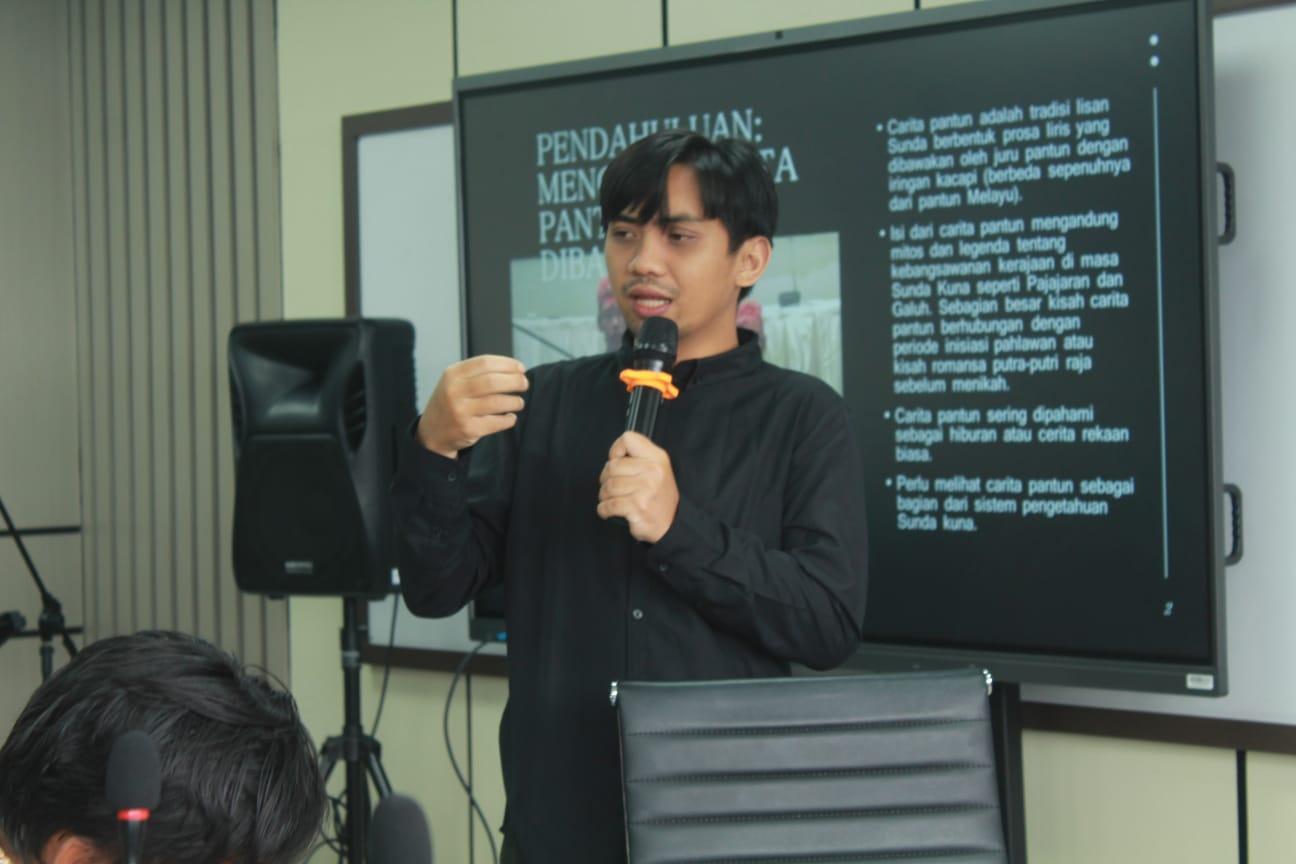
A profound exploration of Sundanese prophecies (uga-uga) revealed how ancestral communities encoded environmental predictions within oral traditions. Mr. Didin shared specific examples including the uga Kebon Awi, which predicted that when a bayam tree in southern areas falls, a white snake would move northward—a prophecy that preceded the 2019 floods in Celedug, Cirebon. He documented how these predictions weren't mere superstitions but sophisticated environmental monitoring systems: "The 'uga' isn't superstition but ancestral calculation that can be verified with reality. We can rationalize that the 'white snake moving north' refers to river movements." Most strikingly, he connected these prophecies to geological knowledge, noting that "Throughout the Ciremai Belt and along the Cisanggarung River, these prophecies often relate to disasters. When I spoke with elders in 2018 about Cisanggarung returning to its origins and spreading fragrance, the 2019 floods validated this prediction." It positioned Sundanese oral traditions as sophisticated early-warning systems that contemporary environmental management could learn from. The International Office documented these connections for curriculum development across environmental studies and cultural preservation programs.
Mr. Sukad, Spiritual Elder and Guardian of the Saragahiang from Kuningan, Indonesia, grounded the discussion in practical ecological wisdom tied to Mount Ciremai's sacred geography. He articulated the mountain's tripartite division: larangan (forbidden zone), tutupan (protected zone), and baladahan (cultivation zone), as a sophisticated resource management system. Standing before visual aids, Mr. Sukad explained: "At the highest point of this mountain is what we call Ibu Pertiwi (Earth Mother), the highest water source that must be protected.”
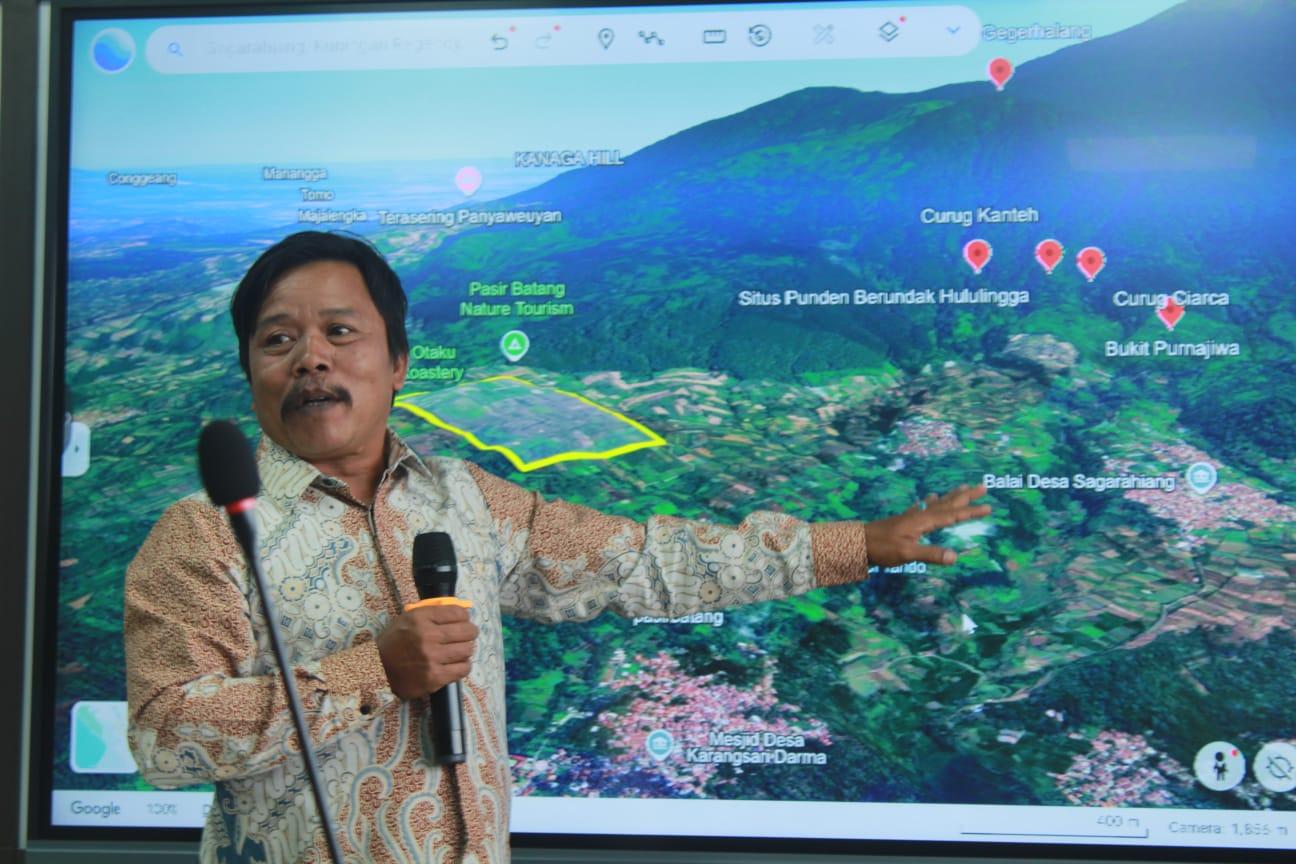
He detailed precise conservation methods used by ancestors: "Traditional calculations measure the mountain's slope in degrees, divided by seven then multiplied by nine. From any water source upward approximately 100 meters is protected territory where nothing can be disturbed, not even cigarette butts." His testimony connected physical geography to spiritual responsibility, emphasizing that "When we were created by Allah from soil and water, we will definitely return to soil and water. While alive, we need this nature that sustains us." This segment transformed abstract ecological principles into actionable conservation frameworks with scientific validity.
Mr. Sukad further contextualized Pasir Batang Anugirang (the Land of Joy) as evidence of successful ancestral sustainability models. When asked about this region mentioned in Lutung Kasarung by Lala Bumela Sudimantara, Ph.D., Mr. Sukad explained its geographical and cultural significance: "Pasir Batang Anugirang refers to the western edge of Kuningan's eastern region. At the foot of the mountain in Sagarahiang Village, evidence of the Pasir Batang kingdom exists, while upstream water sources lie Citampian spring where Guru Minda Kahiyangan was first received in this world." He contrasted this with today's environmental challenges, noting how protected zones that once maintained abundant water sources now face threats from development. Mr. Sukad demonstrated how ancient ecological calculations remain scientifically valid: "The Ibu Pertiwi spring serves as a natural barometer measuring the mountain's water capacity in millions of cubic meters. When these systems are disrupted, communities downstream in Cirebon and Indramayu will face water crises." His testimony bridged spiritual stewardship and practical resource management, offering concrete methodologies for contemporary conservation efforts.
During the vibrant Q&A session, Lala Bumela Sudimantara, Ph.D. synthesized the day's insights into a compelling call for institutional transformation. When reflecting on the cultural-ecological discussions, he expanded his vision: "Returning to the circle challenges us to internalize ancestral intelligence, apply relational and ecological awareness, and embrace non-linear, spiral learning in every endeavor. By bridging Carita Pantun and the BIMA Framework, we can design regenerative pathways that honor the past, enrich the present, and sustain future generations."
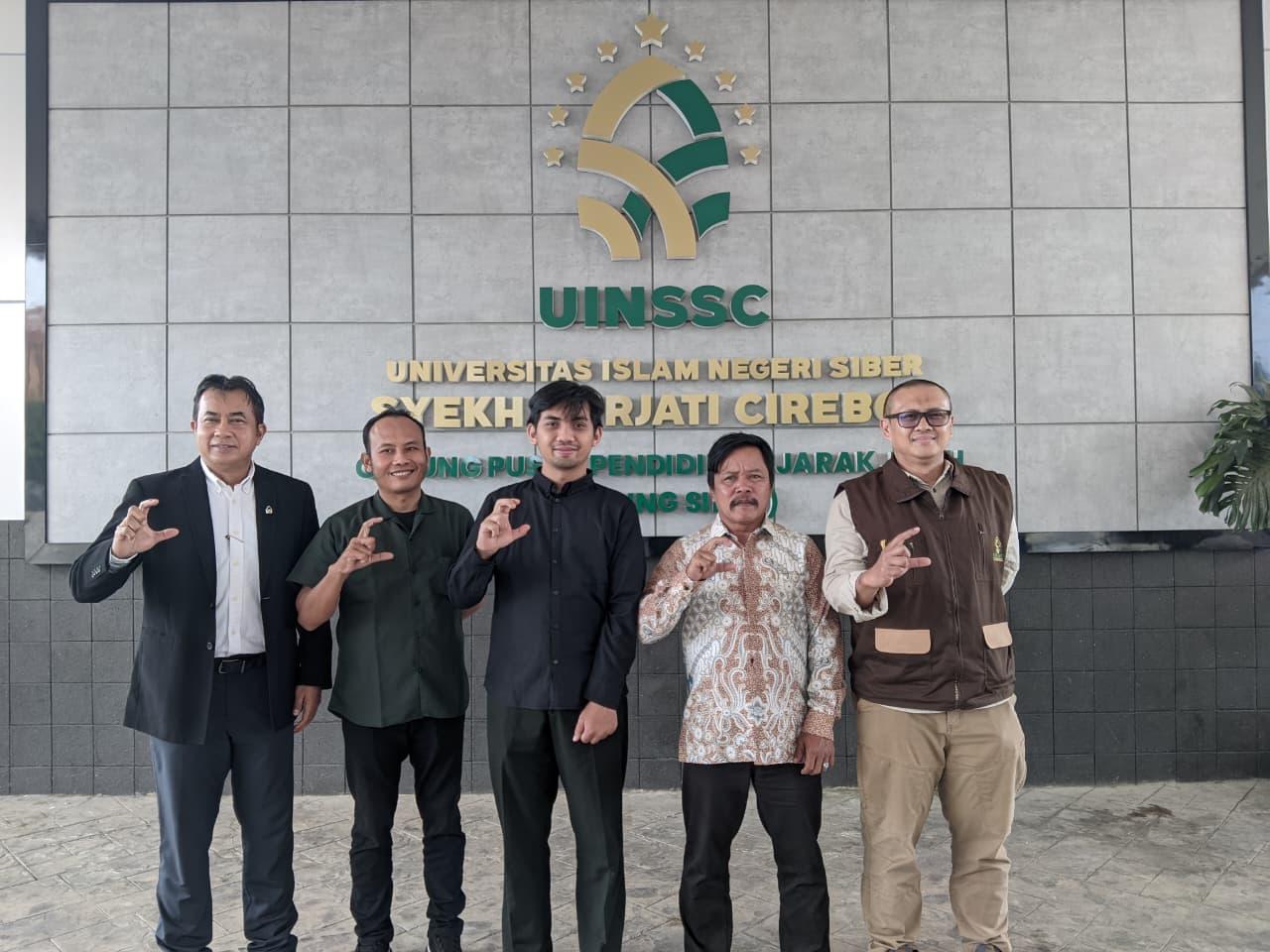
The ceremony concluded with certificate presentations to Mr. Didin Mishbahuddin and Mr. Sukad as honored knowledge keepers, followed by group documentation and a collective recitation of "Alhamdulillahi rabbil 'alamin." Reflecting on the day's significance, Lala Bumela Sudimantara, Ph.D., reaffirmed the university's commitment to living knowledge systems: "International Office of UINSSC manifests ancestral principles of spiral learning and ecological ethics through concrete programs that restore Cirebon as a knowledge hub, echoing our forebears' vision now actualized through UIN Siber Syekh Nurjati Cirebon." His words captured how the seminar transcended academic exercise to become a living embodiment of cultural continuity.
As participants gathered for informal dialogue, the corridors buzzed with interdisciplinary connections. UINSSC had not merely hosted another seminar but had reignited a vital conversation about how ancestral wisdom can inform humanity's most pressing challenges. This milestone proved that when preparation meets purpose, even the smallest Indonesian city can redirect global currents of knowledge, where every heartbeat matters in the pursuit of regenerative futures.
Author: Resa Diah Gayatri