
Participating in the 2026 ATDIKBUD Seminar: Strategic Insights into Strengthening Indonesia's Soft Power and Cultural Diplomacy
Cirebon, August 01, 2026 – The seminar series for Education and Culture Attachés (ATDIKBUD) and the Deputy Permanent Delegate of the Republic of Indonesia to UNESCO was officially opened on Friday, 1 August 2026. The event, held entirely online, brought together 16 ATDIKBUD representatives from various countries as well as the Deputy Permanent Delegate to UNESCO. The seminar, scheduled to run for eight days from 1 to 8 August 2026, aimed to map the progress of cultural activities and the Indonesian Language for Foreign Speakers (BIPA) programme across multiple countries. This forum also served as a platform for sharing best practices, challenges, and innovations in strengthening Indonesia's cultural diplomacy at the international level. The opening ceremony began with all participants singing the national anthem, Indonesia Raya, from their respective locations around the world.
Prof. Dr. Yuli Rahmawati, Ph.D., ATDIKBUD at the Indonesian Embassy in Canberra, delivered the opening remarks on behalf of all ATDIKBUD representatives and the Deputy Permanent Delegate to UNESCO. She explained that the seminar would discuss various cultural activities and Indonesian language programmes that had been carried out in each accredited country. The countries presenting their reports included France, Germany, Papua New Guinea, Timor-Leste, Egypt, Saudi Arabia, the Netherlands, Thailand, South Korea, Malaysia, Singapore, China, Japan, Russia, Vanuatu, Australia, and the United States. Prof. Yuli expressed her hope that the event would provide valuable input for strengthening Indonesia's diplomacy in education, language, and culture at the global level. She also conveyed her sincere gratitude to the Ministry of Culture and the Ministry of Primary and Secondary Education for their full support in organising this seminar.
The Head of the Language Development and Cultivation Agency, Hafiz Muhsin, S.Sos., M.Si., stated in his address that the Indonesian language constitutes an essential part of Indonesia's diplomacy. He revealed that the BIPA programme had been implemented in 62 countries as of 2026, with the number steadily increasing each year. The programme is carried out in collaboration with universities, language course institutions, schools, cultural organisations, communities, and Indonesian diplomatic missions abroad. Hafiz also noted that the recognition of Indonesian as one of the official languages at the UNESCO General Conference in 2023 marked a significant milestone in the internationalisation of the language. In addition, the Language Agency also conducts programmes to translate Indonesian literary works into foreign languages and facilitates writers' residencies abroad. The Indonesian Friends Festival this year was attended by 542 participants from 79 countries, demonstrating the growing global interest in learning the Indonesian language.
The Secretary-General of the Ministry of Primary and Secondary Education, Ir. Suharti, M.A., Ph.D., expressed her appreciation for the webinar initiated by the ATDIKBUD representatives and the Deputy Permanent Delegate to UNESCO. She emphasised that each country presents vastly different opportunities and challenges in the development of the Indonesian language. For instance, in Australia, Indonesian has become an elective language from the primary education level, whereas in other countries it remains limited to language courses organised by Indonesian embassies. Suharti also highlighted the strategic role of the Deputy Permanent Delegate to UNESCO as a multilateral liaison who brings experiences and aspirations from various countries to international forums. She hoped that the information shared by the ATDIKBUD representatives would serve as a foundation for strengthening programme planning, avoiding duplication, filling gaps, and expanding collaboration among countries. Coordination between the Ministry of Primary and Secondary Education, the Ministry of Culture, the Ministry of Higher Education, and Indonesian representatives abroad must become increasingly planned and measurable.
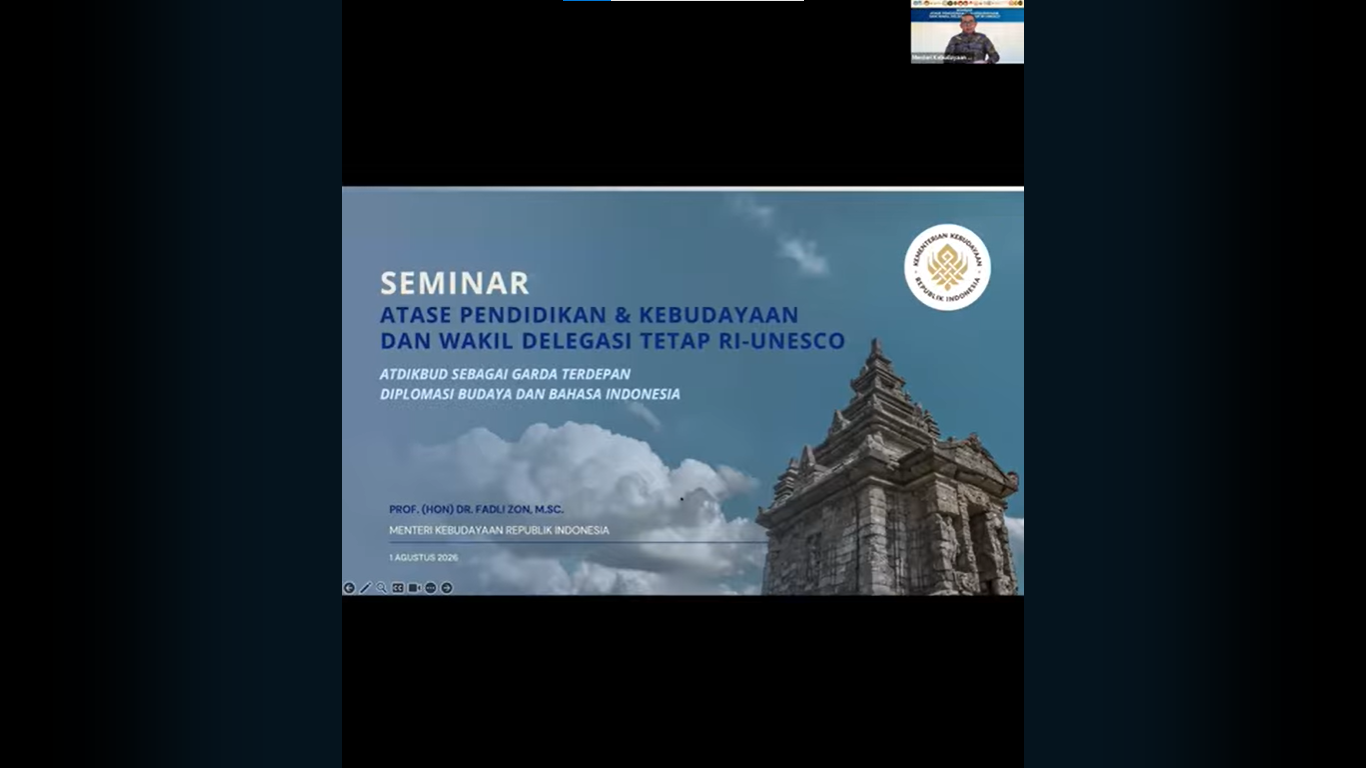
The Minister of Culture of the Republic of Indonesia, Prof. Dr. Fadli Zon, M.Sc., officially opened the seminar and delivered the keynote address. He affirmed that culture serves as the foundation of national identity and soft power, while education provides a platform for long-term relationships, and language opens access to a nation's way of thinking. Fadli Zon outlined four strategic positions of the Ministry of Culture's policy: culture as a binding force, as a source of national identity and character, as an engine of economic growth, and as an instrument of diplomacy and soft power. He also highlighted Indonesia's wealth as a nation with mega cultural diversity, comprising 1,340 ethnic groups and 718 regional languages. The Minister mentioned that Indonesia has recorded 2,727 intangible cultural heritage items at the national level, as well as 16 elements inscribed by UNESCO. Furthermore, he reported notable achievements in the national film industry with a 67 per cent market share and the establishment of the Indonesia Raya Endowment Fund worth IDR 6 trillion to support cultural communities.
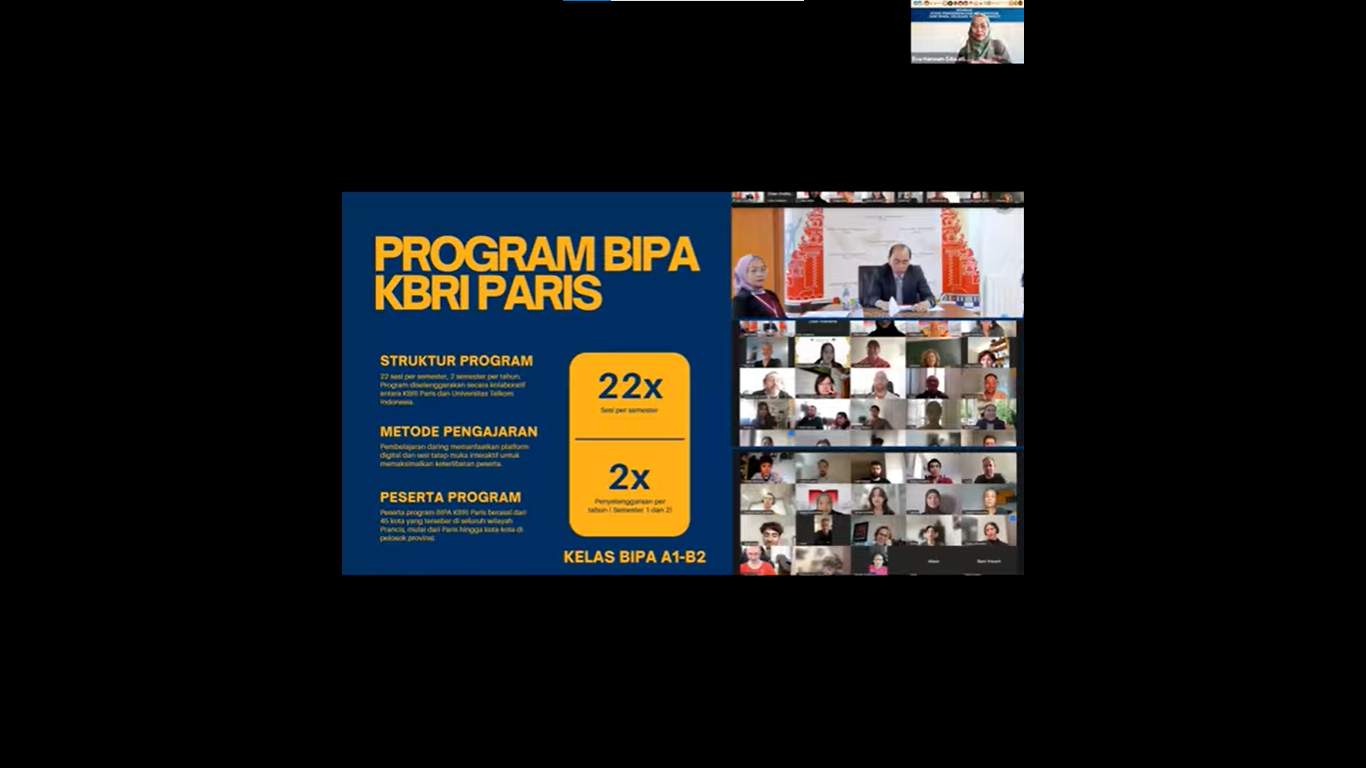
Entering the core session, the first day of the seminar featured presentations from ATDIKBUD at the Indonesian Embassy in Paris and ATDIKBUD at the Indonesian Embassy in Berlin, moderated by Prof. Yuli Rahmawati. The ATDIKBUD representative in Paris, who had only been in post since February 2026, presented the development of the BIPA programme and cultural diplomacy in France. She was accompanied by Kadek Puspasari, an Indonesian dance artist and choreographer who has been based in Paris since 2010. Meanwhile, the ATDIKBUD representative in Berlin, Ronius Marjunus, presented information about the Indonesian Cultural House and various cultural and language promotion activities in Germany. Both presentations provided a comprehensive overview of the challenges and opportunities facing Indonesian cultural diplomacy in Europe.
The ATDIKBUD representative in Paris explained that the BIPA programme at the Indonesian Embassy in Paris has now been developed using a Learning Management System (LMS) with levels A1, A2, B1, and B2. The medium of instruction is French, as the programme is designed for native French speakers, including participants from Belgium, the French-speaking part of Switzerland, and several North African countries. The BIPA programme is conducted online each semester to reach participants across 45 cities throughout France. At the university level, the Indonesian language is taught at three institutions: INALCO, La Rochelle University, and Le Havre University. In addition, the Indonesian Student Association in France (PPI) has initiated an informal programme called Café Delang, which combines language exchange with Indonesian culinary culture. The ATDIKBUD representative also noted that bilateral relations between Indonesia and France have grown significantly stronger since the celebration of 75 years of diplomatic relations, marked by reciprocal presidential visits.
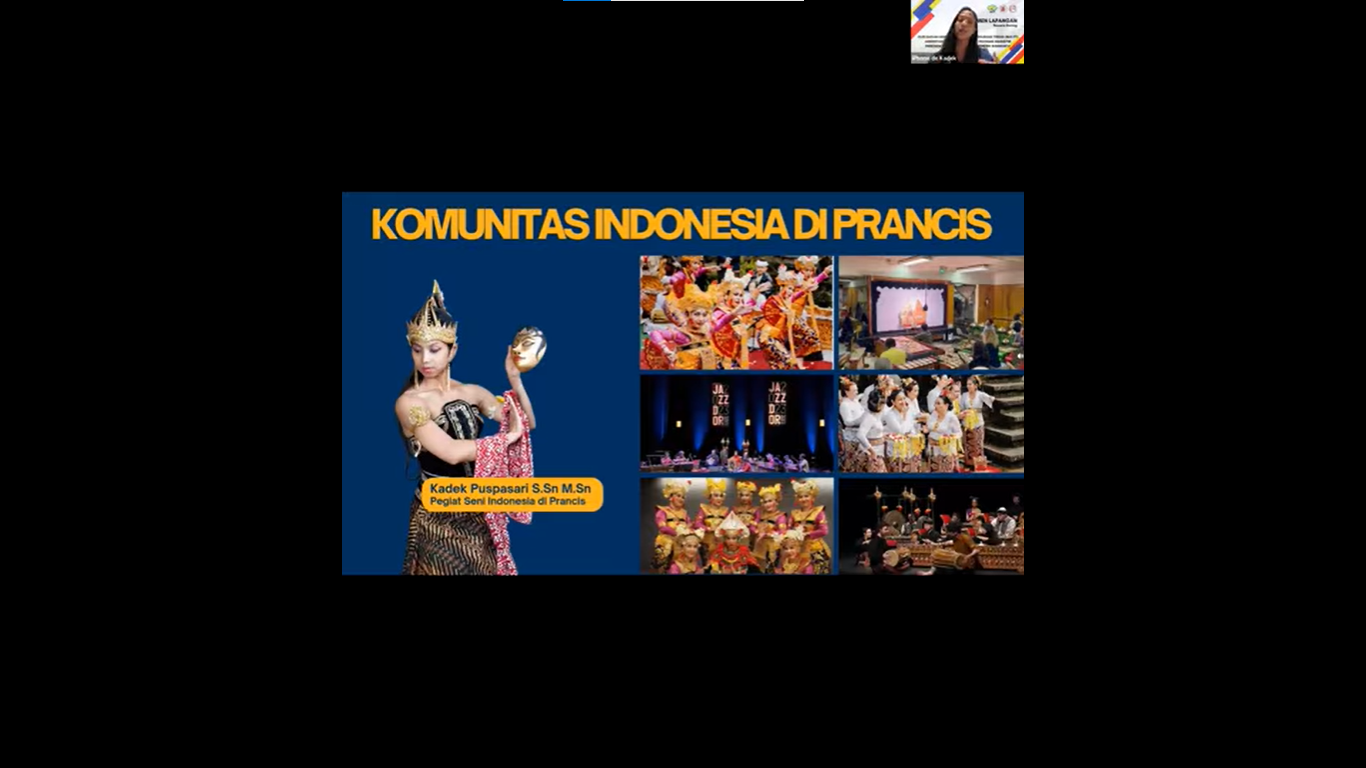
In the field of cultural diplomacy in France, Kadek Puspasari presented her work as the founder of the arts company Panca Indra, established in Paris in 2012. Panca Indra currently has approximately 80 members, the majority of whom are French nationals, offering four Javanese gamelan programmes and two Balinese gamelan programmes at Paris Nanterre University. Kadek emphasised the importance of introducing Indonesian arts and culture not merely as entertainment but as a cultural ecosystem rich in philosophy, history, and artistic value. She also pointed out that, to date, there is no Indonesian Cultural House in Paris, which remains a significant gap in cultural diplomacy in the country. The ATDIKBUD representative in Paris added that dozens of Indonesian cultural associations are scattered across various regions of France and actively perform at international events. Currently, a project is also underway to catalogue Indonesian collections held in approximately 200 to 400 museums throughout France.
The ATDIKBUD representative in Berlin, Ronius Marjunus, presented the Indonesian Cultural House (RBI) at the Indonesian Embassy in Berlin as the centre for Indonesian culture in Germany, located in the Tempelhof area of South Berlin. The 800-square-metre building was re-inaugurated in October 2017 by the Indonesian Ambassador Fauzi Bowo and remains a leased property with funding support from the Ministry of Primary and Secondary Education. The RBI in Berlin oversees several arts groups, including two Javanese gamelan ensembles named Lindu Laras and Manunggal Laras, a Balinese gamelan group called Saptawarna, and an angklung ensemble known as Orkesta Berlin. The BIPA programme in Germany is not only held at the RBI but also at the Indonesian Consulates General in Frankfurt and Hamburg, as well as at 12 universities that offer Indonesian language classes. The RBI in Berlin regularly participates in the Fête de la Musique, held every 21 June in Berlin, showcasing various Indonesian performing arts. Ronius also mentioned that the number of RBI newsletter subscribers has steadily increased to 1,482, indicating the growing appreciation of German society towards Indonesian culture.
The question-and-answer session was dynamic, with questions ranging from opportunities for inter-school collaboration, the integration of culture with small and medium enterprises, to strategies for introducing specific regional cultures in Europe. A secondary school teacher from Asahan Regency, North Sumatra, inquired about the possibility of a student exchange programme to introduce local culture such as Sinandong Asahan to schools in Germany. A representative from Rumah Angklung Indonesia asked about the mechanism for Indonesian arts communities to participate in cultural diplomacy activities abroad. In response, the ATDIKBUD representative in Berlin explained that funding support could be obtained through the Indonesia Raya Endowment Fund at the Ministry of Culture; however, proposals must originate from communities or the Indonesian diaspora in the host country, not from Indonesian diplomatic missions. The ATDIKBUD representative in Paris added that communities wishing to collaborate in France should first contact the Indonesian Embassy in Paris to be matched with suitable cultural association partners. The first day of the seminar concluded with hopes that the entire eight-day series would produce concrete ideas to strengthen Indonesia's diplomacy in education, language, and culture on the international stage.