
Professor Dr. Andrew Lian Taught the World to Listen Differently: The AsiaCALL International Conference 2025 Symposium at UIN Siber Syekh Nurjati Cirebon Affirmed that True Innovation is not New Technology but the Courage to Remember Why We Began
Cirebon, November 16, 2025 – The AsiaCALL International Conference 2025 reached a pivotal moment as UIN Siber Syekh Nurjati Cirebon hosted a symposium on “AI in Language Education: Opportunities, Challenges, and Future Directions.” The session convened distinguished scholars including Assoc. Prof. Dr. Pham Vu Phi Ho, Ph.D. (Chair/Vice President for Administrative Affairs and Publication, AsiaCALL/Industrial University of Ho Chi Minh City, Vietnam), Professor Dr. Andrew Lian, Ph.D. (President of AsiaCALL/Suranaree University of Technology, Thailand and University of Canberra, Australia), Ania Lian, Ph.D. (Vice President of AsiaCALL/Charles Darwin University, Australia), Prof. Dr. Jeremy White (Vice President for International Relations, AsiaCALL/Ritsumeikan University, Japan), Lala Bumela Sudimantara, Ph.D. (Director of International Office and Conference President, UINSSC), and Luqman Baehaqi, Ph.D. (UIN Palangka Raya). Assoc. Prof. Dr. Pham Vu Phi Ho opened the dialogue by acknowledging Professor Dr. Andrew Lian’s decades-long contributions to technology in language education. He posed a foundational question about AI’s relationship to historical CALL frameworks, setting the stage for a transformative scholarly exchange. The auditorium, filled with educators from fourteen nations, reflected AsiaCALL’s growing influence under Indonesian intellectual leadership. This gathering positioned Cirebon as the epicenter of human-centered technological discourse in language education.
Assoc. Prof. Dr. Pham Vu Phi Ho directed his first critical inquiry to Professor Dr. Andrew Lian: “You have worked with technology in language education for many years. How do you see today's AI developments in relation to earlier forms of CALL? What is genuinely new and what is a continuation of older ideas?” Prof. Ho contextualized the question by highlighting Prof. Dr. Andrew Lian’s pioneering role in CALL evolution, noting how his early work with blogs and collaborative platforms laid groundwork for today’s AI-driven landscape. This framing underscored the symposium’s mission to bridge historical scholarship with contemporary innovation. Prof. Lian received the question with visible appreciation, commending the high-caliber discourse fostered at AsiaCALL 2025. He observed that undergraduate participants’ thoughtful engagement signaled a revitalization of scholarly culture. The exchange exemplified UINSSC’s commitment to creating spaces where global experts and emerging scholars co-create knowledge. This moment crystallized the conference’s role as a catalyst for intergenerational academic continuity.
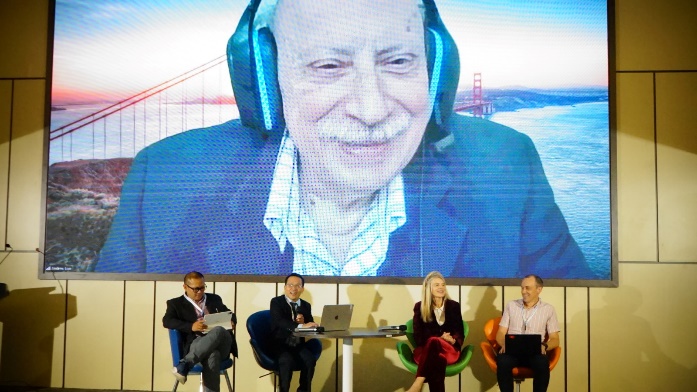
Professor Dr. Andrew Lian began his response by distinguishing between recycled methodologies and genuine innovation in AI language tools. He explained that early CALL systems were rigidly programmatic, constrained by technological limitations that produced mechanistic, scripted feedback. For decades, educators dreamed of conversational robots for language practice—a vision now realized through AI chatbots, though optimal pedagogical integration remains evolving. Prof. Lian identified functional comprehension as AI’s breakthrough contribution: the capacity to process language contextually for meaningful communication, surpassing superficial grammar checks. He emphasized that this capability, once requiring complex proprietary algorithms, is now freely accessible, democratizing advanced language support. However, he cautioned that functional comprehension does not equate to human understanding but serves as a practical scaffold for communication. This nuanced perspective positioned AI not as a replacement for teachers but as a collaborator enhancing human pedagogical capacity.
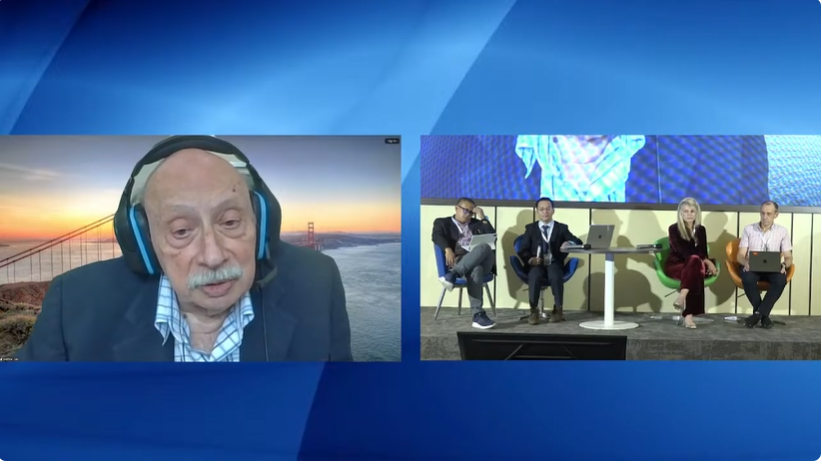
Prof. Lian then addressed systemic limitations in current educational technology infrastructure. He clarified misconceptions about Learning Management Systems (LMS), predicting their transformation as they fail to harness AI’s adaptive potential. He argued that traditional LMS platforms, designed for linear content delivery, cannot accommodate AI’s dynamic capabilities for personalized learning pathways. Prof. Lian stressed that the critical challenge lies not in technology itself but in designing meaningful connections between learners and AI systems. He endorsed the view that students cannot be merely directed to chatbots without guided pedagogical support. His analysis extended to academia’s fixation on academic writing, drawing historical parallels to medieval scholarly exercises often discarded after completion. Prof. Lian questioned today’s disproportionate emphasis on polished outputs, suggesting AI should support focused, meaningful writing development rather than mass production. This critique resonated deeply with educators reevaluating assessment priorities in AI-integrated curricula.
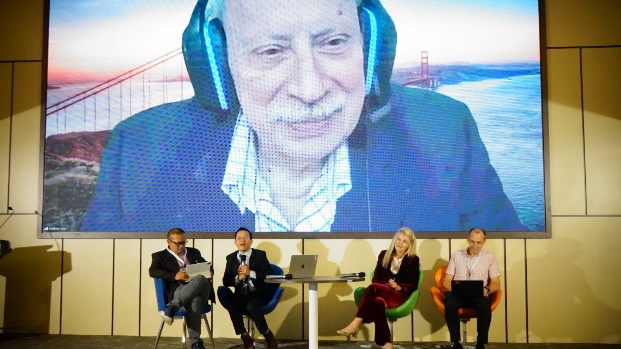
The professor further dismantled false dichotomies between humanistic values and AI, asserting that technology originates from human design and thus reflects pedagogical intentions. He declared pedagogy as the foundation of education, echoing Willie Renandya’s decades-old wisdom. Prof. Lian warned that educators who neglect deep inquiries into learning and knowledge risk relying on stereotypes perpetuated by poorly designed AI systems. He championed verbotonalism’s principles, emphasizing awareness at the intersection of perception and learning as critical yet neglected dimensions. His vision prioritized creativity, aesthetics, and sensory engagement over rote replication. Prof. Lian argued that future AI policies must center on teaching principles rather than technical ethics alone. This reframing positioned technology as an extension of human educational vision rather than an external disruptor. The International Office documented his insights for immediate curriculum reform initiatives across Indonesian partner universities.
Prof. Lian concluded with a paradigm-shifting perspective on academic ownership and value. He critiqued excessive fixation on authorship, proposing instead a focus on the intrinsic value of scholarly work. He revealed his own reliance on ChatGPT while preparing his keynote, describing AI as a collaborative partner enriching human output through expansive knowledge synthesis. “AI looks backward but connects better than we do,” he observed, urging educators to thoughtfully engage with this historic inflection point. Prof. Lian characterized current advancements as evolutionary rather than revolutionary, building upon CALL traditions while introducing unprecedented accessibility. His synthesis emphasized that AI’s true potential emerges only when guided by clear pedagogical frameworks and ethical reflection. This holistic view transformed abstract debates about technology into actionable strategies for human-centered implementation.
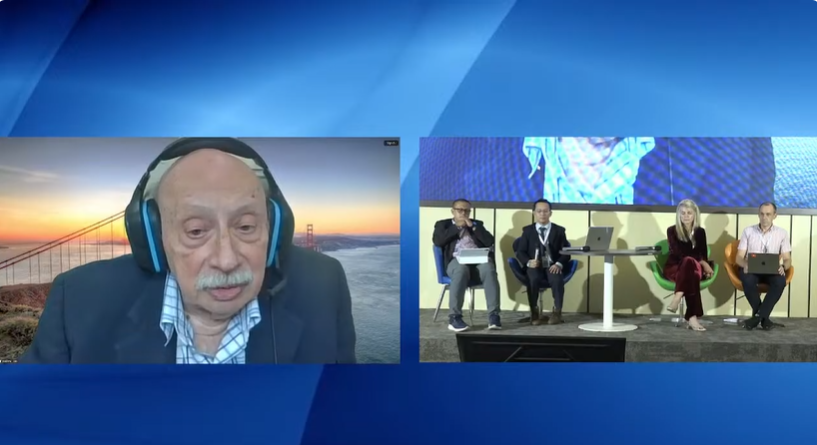
Assoc. Prof. Dr. Pham Vu Phi Ho synthesized Prof. Lian’s insights, highlighting three transformative imperatives: prioritizing functional comprehension over mechanistic feedback, designing intentional human-AI learning connections, and reevaluating academic writing priorities through value-based assessment. He positioned these principles as antidotes to superficial AI adoption plaguing global education systems. Ho emphasized that Prof. Lian’s historical perspective provides crucial grounding amid technological hype, reminding educators that innovation without pedagogical purpose risks amplifying existing inequities. The discussion crystallized that AI’s greatest contribution lies not in automating tasks but in liberating educators to focus on higher-order mentorship.
UIN Siber Syekh Nurjati Cirebon ignited a movement to reclaim technology’s purpose in service of human flourishing. Today’s dialogue had already rewritten the future of language education, proving Cirebon’s wisdom is both local heritage and global necessity.
Author: Resa Diah Gayatri