
Ready or Not: Prof. Shameem Rafik-Galea, Ph.D. Insightful Analysis on AI-Driven Shifts in English Language Teaching Takes Center Stage at AsiaCALL International Conference 2025
Cirebon, November 15, 2025 — The first day of the 22nd AsiaCALL International Conference gathered distinguished participants and keynote speakers, led by Lala Bumela Sudimantara, Ph.D., Director of the International Office UIN Siber Syekh Nurjati Cirebon and President of AsiaCALL 2025, who served as a distinguished keynote speaker, together with Prof. Shameem Rafik-Galea, Ph.D., the keynote speaker of the session, and accompanied by Ivo Dinasta Yanuar, S.S., M.Appling, Secretary of the International Office and moderator of the session. A strong lineup of international academic leaders also enriched the event, including Prof. Dr. Andrew Lian, President of AsiaCALL; Ania Lian, Ph.D., Vice President of AsiaCALL; Assoc. Prof. Dr. Pham Vu Phi Ho, Vice President for Administrative Affairs and Publication of AsiaCALL; and Prof. Dr. Jeremy White, Vice President for International Relations of AsiaCALL, all serving as executive keynote speakers. The conference further featured distinguished keynote speakers such as Assoc. Prof. Hassan Khosravi, Ph.D., Vice President for Administrative Affairs of AsiaCALL; Made Hery Santosa, Ph.D.; and Luqman Baehaqi, Ph.D. Additionally, prominent Indonesian scholars including Prof. Dr. Hj. Ria Yulia Gloria, M.Pd., representing the Rector of UIN Siber Syekh Nurjati Cirebon, and representatives from Hakim Ventura International, together with presenters from Japan, Saudi Arabia, Malaysia, Vietnam, the Netherlands, the Philippines, and universities across Indonesia, further strengthened the international atmosphere. The event was also supported by Ghina Amaliyah Sholihah, S.Sos., Staff of the International Office. Hundreds of students from the English Language Teaching Department also attended as enthusiastic participants, adding vibrant academic energy to the conference. This diverse participation showcased the International Office’s strong commitment to global academic collaboration and elevated the international profile of UIN Siber Syekh Nurjati Cirebon.
Among these accomplished scholars, Prof. Shameem Rafik-Galea, Ph.D., stood out prominently, as her presence drew significant anticipation from participants across countries. Serving as one of the distinguished keynote speakers, Prof. Shameem emerged as the intellectual anchor of the session, with attendees expressing strong interest in her long-standing expertise in AI readiness and English language education. Her distinguished reputation in Southeast Asian ELT scholarship, combined with her pioneering work on AI-enhanced pedagogical design, brought a uniquely authoritative dimension to the conference. As she prepared to deliver her keynote, the atmosphere in the hall noticeably shifted—the audience leaned in with heightened attention, recognizing that her insights would define one of the conference’s most pivotal conversations.
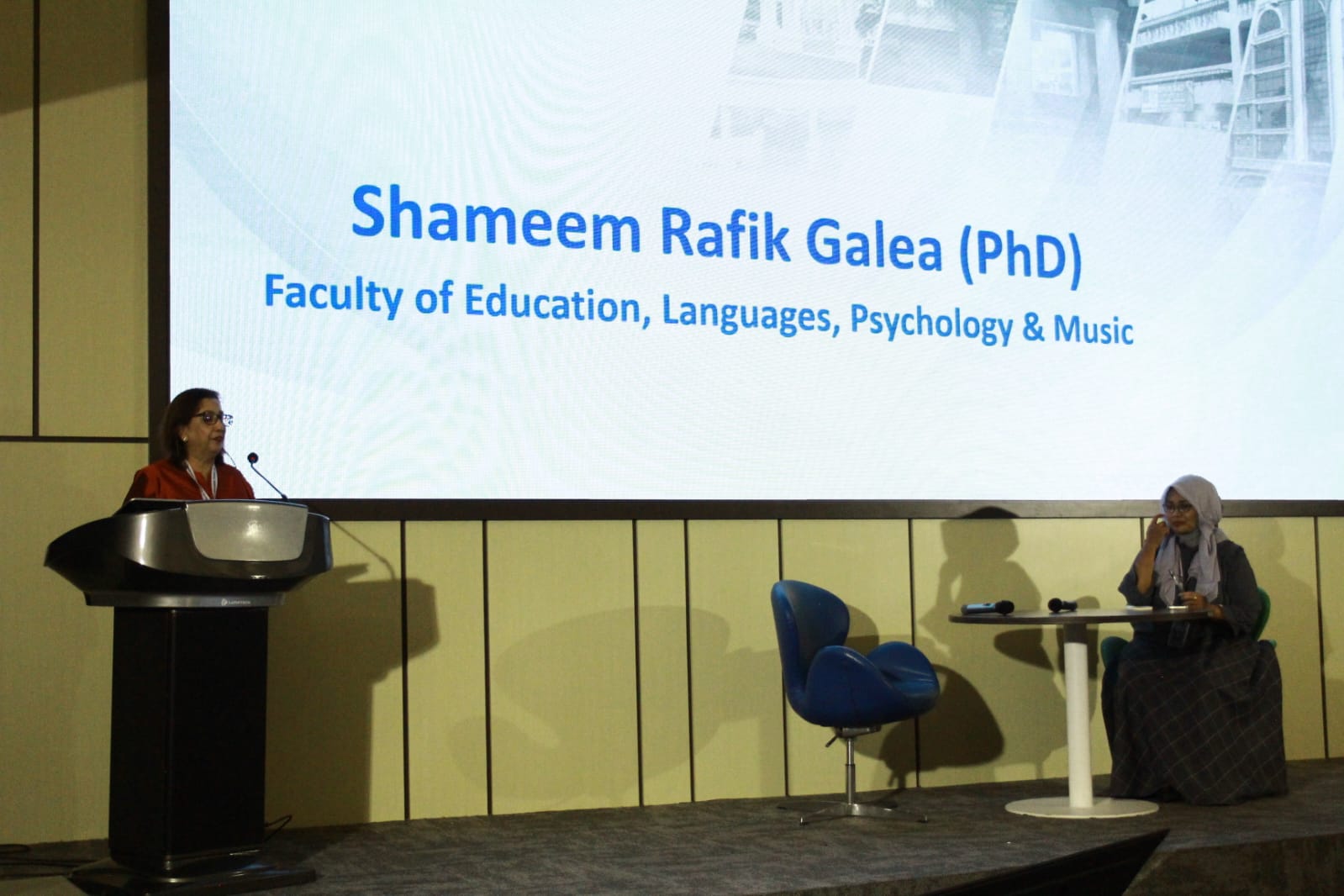
During her highly anticipated session, Prof. Shameem Rafik-Galea, Ph.D., presented an in-depth examination of English language instructors’ readiness for AI-enhanced tasks and material development. Her presentation, titled “Ready or Not? English Language Instructors’ Readiness for AI-Enhanced Tasks and Material Design,” explored how rapidly evolving technologies are reshaping teachers’ responsibilities. She highlighted that English proficiency is a national priority in the Malaysian Education Blueprint (2013–2025), which further intensifies the urgency of AI integration. According to her, while AI offers unprecedented speed in generating teaching content, effective use still depends on teachers’ pedagogical and cultural judgment. This perspective resonated strongly with participants, particularly those concerned with balancing innovation and classroom practicality.
Prof. Shameem reminded the audience that traditional material design relied heavily on authenticity, contextual relevance, and learner engagement. These principles ensured that teaching materials were culturally sensitive and educationally purposeful, but they also required significant time and professional expertise. With generative AI, instructors can now produce CEFR-aligned tasks, differentiated texts, and lesson plans within minutes—yet these outputs are often generic. She cautioned that AI tools may overlook cultural nuances such as religious practices, food taboos, and local celebrations. “AI can draft the material, but teachers must make it meaningful,” she stated, emphasizing the irreplaceable human role.
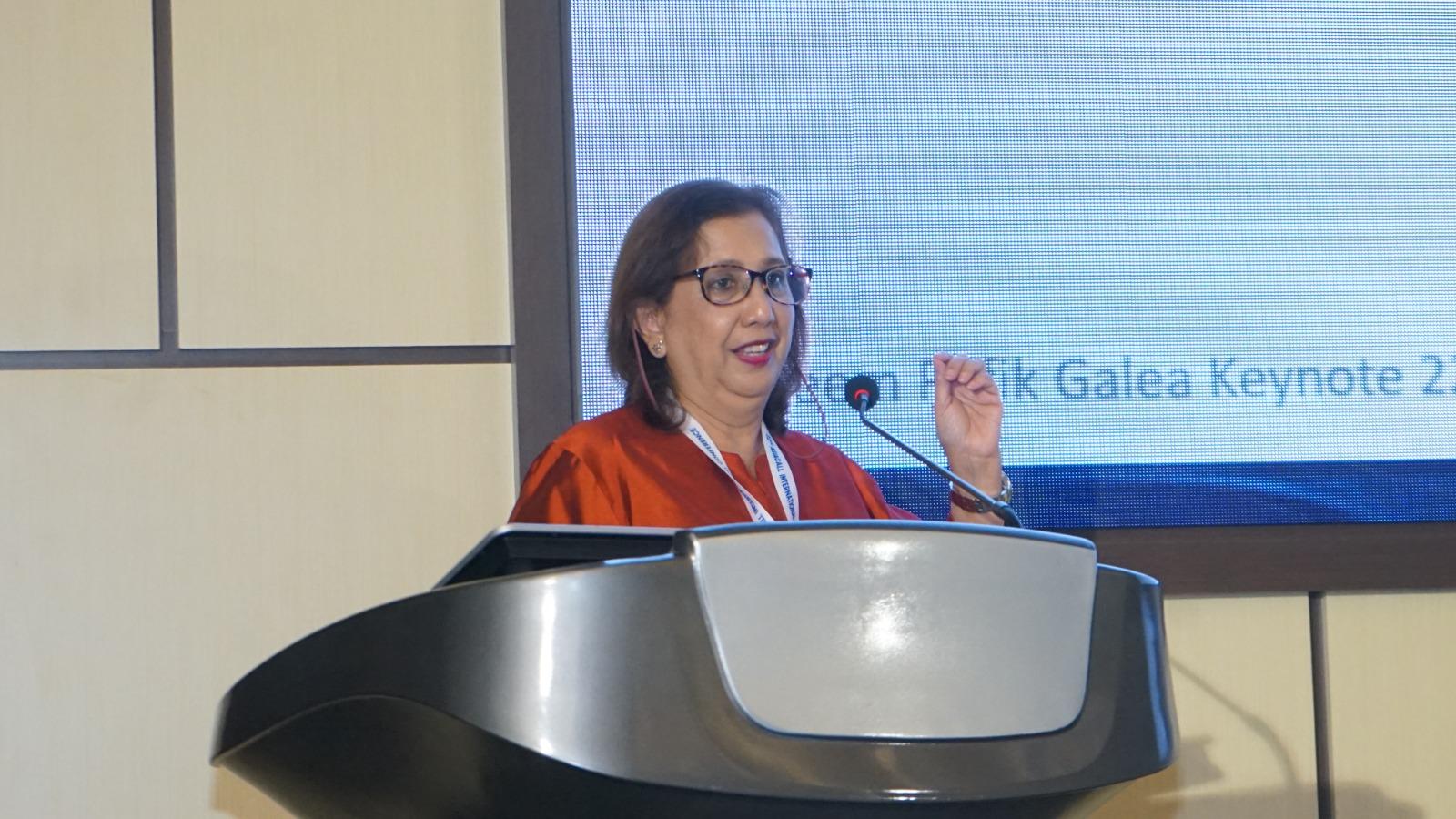
Her presentation also explored the emotional challenges teachers face when adapting to AI-driven expectations. Many instructors report feeling overwhelmed, anxious, or intimidated by students who are more digitally fluent—a trend she refers to as the rise of the “gadget-generation.” These emotional pressures have begun influencing teachers’ confidence and even their decisions about preferred teaching locations. She clarified that this hesitation is not a sign of incompetence but a natural response to the unprecedented speed of technological change. Participants acknowledged that emotional readiness is as crucial as technical proficiency in AI adoption.
Prof. Shameem’s empirical findings from Malaysian educators revealed uneven levels of readiness. While many teachers appreciate AI’s ability to reduce preparation time, they still struggle with evaluating AI-generated content and lack formal training to integrate tools into classroom activities. Some teachers experiment independently but rarely share insights with colleagues, creating isolated pockets of innovation. Others express concerns about students becoming overly dependent on AI for learning. These findings sparked productive discussions among conference attendees about how institutions can better support their teaching staff.
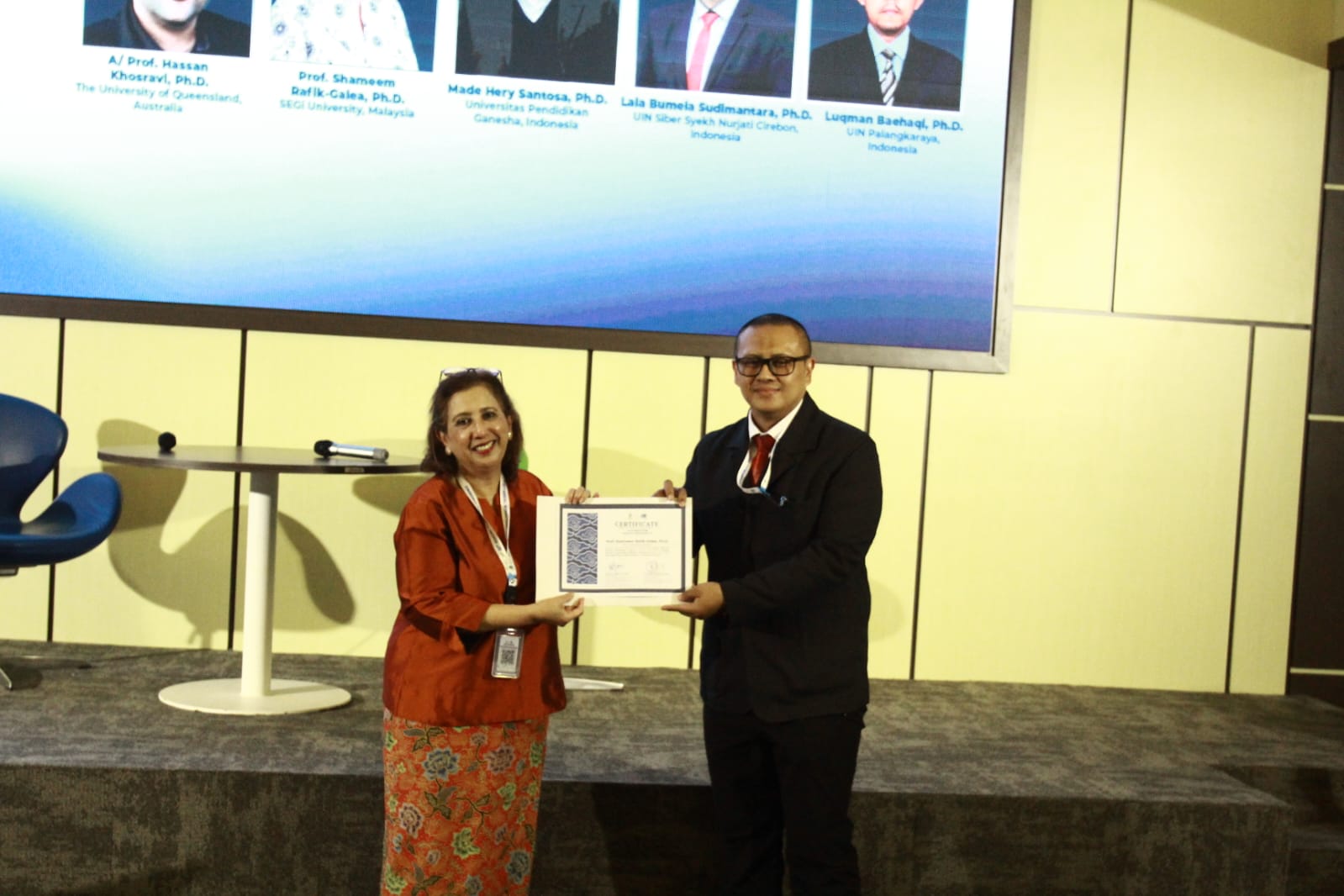
A significant part of her session focused on distinguishing “ready” from “not-yet-ready” teachers. Ready teachers actively experiment with AI, adapt outputs to local contexts, critically assess content quality, and collaborate through shared prompts and strategies. In contrast, teachers who are not ready often avoid using AI due to fear of errors, limited technical confidence, or insufficient support. Prof. Shameem highlighted that readiness is not fixed but shaped by training, environment, and mindset. This systematic framework allowed participants to reflect on their own institutional readiness, especially within international academic networks coordinated by the International Office.
In closing, Prof. Shameem presented a set of essential competencies that educators must develop to integrate AI effectively and ethically. These competencies include the ability to design clear prompts, fact-check AI-generated outputs, and localize materials to ensure cultural relevance. She emphasized that AI literacy must be strengthened through continuous teacher training and solid institutional support. Her multidimensional readiness model—which encompasses critical awareness, technical proficiency, professional autonomy, and supportive work environments—serves as a practical guide for educational institutions across Asia. Ultimately, the conference reminded us that while technology may advance rapidly, the future of education still relies on reflective and adaptable human character, grounded in the belief that every innovation should contribute meaningfully to learning and humanity.
Author: Cindi Aulia