
Rebalancing Historical Cultural Influence: The Dynamics of BIPA Programs and Indonesian Cultural Promotion in the Kingdom of Saudi Arabia in the Modern Era
Cirebon, August 04, 2026 – The Tuesday session of the Seminar of the Education and Cultural Attachés and the Deputy Permanent Delegate of the Republic of Indonesia to UNESCO also presented the unique dynamics of Indonesian language and culture in Saudi Arabia. Professor Muhammad Irfan Helmi, the Education and Cultural Attaché of the Indonesian Embassy in Riyadh, explained that the relationship between the two countries in language and culture is rooted in centuries of interaction. Between the thirteenth and sixteenth centuries, maritime traders from Hadhramaut and Makkah brought not only commodities but also the Arabic language and Islamic traditions to the archipelago. In the following centuries, Indonesian scholars such as Syekh Yusuf al-Maqassari and Syekh Nawawi al-Bantani traveled in the opposite direction to study in the holy cities.
Professor Irfan noted that historically Saudi Arabia influenced Indonesia more than the reverse, as seen in Arabic loanwords in Indonesian, religious traditions, manuscripts, architecture, and calligraphy. Almost every Islamic educational institution in Indonesia teaches Arabic, while until recently no Saudi institution taught Indonesian. Only in the modern era, with the establishment of the United Nations and equal state relations, could Indonesia begin to play a cultural role in the kingdom.
The shared religion, the memory of Arabic as a language of science, and the brotherhood between the two peoples now serve as strong foundations for this new diplomacy. Under Vision 2030, the kingdom has mandated its universities to become venues for international cultural encounters, opening a fresh space for Indonesian promotion. Cultural festivals are now regularly held at King Saud University, Taif University, the Islamic University of Madinah, Qasim University, and Al-Imam Muhammad bin Saud University.
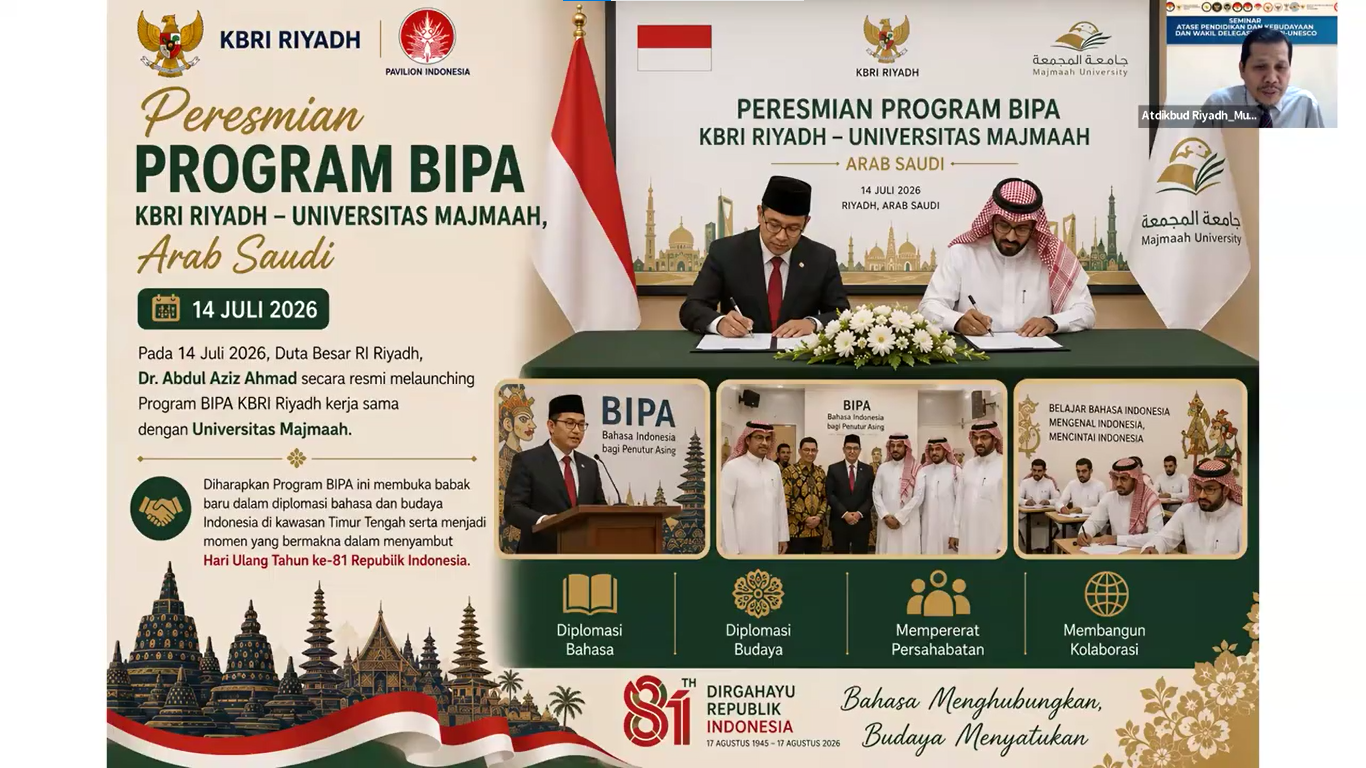
One of the most strategic collaborations is pencak silat, because Saudi Arabia was appointed to initiate the establishment of the silat federation in the Middle East and North Africa region. This initiative is part of the global effort to make the martial art an Olympic sport, which requires active organizations in at least ninety countries. On the language front, 2026 has become a historical milestone, as the BIPA program is now run collaboratively between the embassy and Majmaah University, three hours from Riyadh. The program, whose memorandum of understanding was signed in 2023, also includes the development of a trilingual application in Arabic, English, and Indonesian. Its participants come from the university's academic community, whose students represent more than ten countries.
BIPA classes are also held at Sekolah Indonesia Riyadh, especially for children of mixed marriages whose Indonesian proficiency needs strengthening. The Indonesian cultural team at the Islamic University of Madinah even won the overall champion title at the International Cultural Festival for two consecutive years, in 2025 and 2026.
Despite these achievements, Professor Irfan acknowledged that promoting culture in Saudi Arabia requires intelligence and selectivity. Not all Indonesian cultural expressions are perceived fairly, so whatever is presented must remain in line with the Islamic values upheld by the kingdom. The orientation of Saudi students also leans more toward Western countries, China, and Russia, and within the region toward Malaysia and Singapore rather than Indonesia. The segments that can be attracted to Indonesia therefore remain limited, particularly non-STEM fields such as language, culture, tourism, arts, and agriculture.
Bureaucratic continuity is another obstacle, because agreements often have to be restarted whenever a dean or rector is replaced. Emphasizing the need for proactive and consistent follow-up, he stated directly, "If we simply wait like a maiden waiting to be proposed to, our cooperation with Saudi Arabia will never materialize." This candid message reminds Indonesian campuses that opportunities exist only for those who pursue them persistently.
Nevertheless, the kingdom offers substantial opportunities that Indonesian campuses can tap strategically. Today nearly thirty Indonesian lecturers teach at Saudi universities as assistant, associate, and full professors, forming a valuable bridge for institutional partnerships. Indonesian researchers and professionals also work in Saudi companies in the fields of petroleum technology, information, and telecommunications. For prospective students, the Saudi Ministry of Education manages the Study in Saudi portal for online applications to bachelor, master, and doctoral programs. The academic calendar, with a summer holiday from mid-June to 23 August, provides a predictable window for visiting professor programs and joint activities. Professor Irfan also highlighted the enthusiasm of the King Faisal Center for Research and Islamic Studies, which holds around thirty thousand manuscripts and wishes to present Indonesian history, arts, and literature through Indonesian scholars.
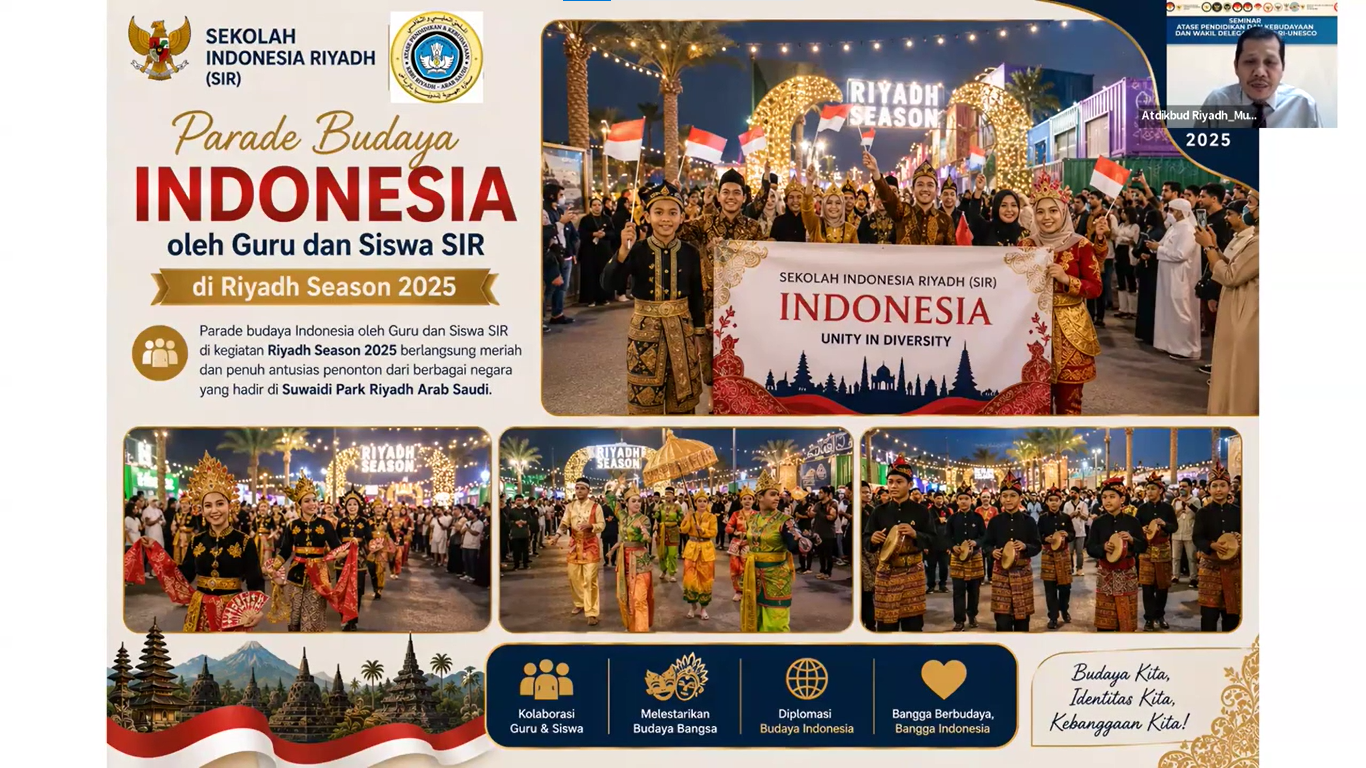
The cultural presence of Indonesia is also strongly felt through the three overseas Indonesian schools in Riyadh, Jeddah, and Makkah, which hold the status of embassy schools. At the International Children Festival in Riyadh, Sekolah Indonesia Riyadh presented Jaipong and Saman dances and received an award as the best performer. The school also participated in the Riyadh Season cultural parade, performing for a full week every night before different audiences. Professor Irfan emphasized that all communication regarding partnerships should be channeled through the embassy in Riyadh, which will coordinate them with the attaché office. The International Office sees this guidance as a clear pathway for our campus to propose cooperation in language, culture, agriculture, and marine sciences. By maintaining consistent and respectful engagement, Indonesian institutions can transform centuries of cultural kinship into modern academic partnerships with the kingdom.