
Reclaiming Indigenous Epistemologies: Lala Bumela, Ph.D., Director of the International Office, Positions UIN Siber Syekh Nurjati Cirebon at the Forefront of Ecological and Emotion-Based Creative Writing Pedagogy through Lutung Kasarung
Cirebon, December, 5th 2025 — Anchored in a visionary commitment to the development of an ecology-based curriculum, Lala Bumela, Ph.D., Director of the International Office of UIN Siber Syekh Nurjati Cirebon (UIN SSC), once again asserts his intellectual leadership by integrating emotion-centered pedagogy with the BIMA Framework—Bridging Intelligence, Mindfulness, and Awareness—conceptualized by Prof. Rudolf Wirawan of the University of Adelaide, Australia. This pedagogical initiative is embedded within the Final Semester Examination (Ujian Akhir Semester) of the Creative Writing course for third-semester students of the English Education (Tadris Bahasa Inggris) Department. Notably, this marks the second time Lala Bumela, Ph.D. has explored a circular, ecologically grounded pedagogical approach in his teaching, reaffirming his consistency and depth in educational experimentation. By selecting Kuningan—specifically Pasir Batang in the Mount Ciremai area—as the learning setting, he situates academic inquiry within a living ecosystem. Through the recognition of Carita Pantun Lutung Kasarung, a revered Sundanese epic, the narrative is elevated beyond folklore into a multidimensional epistemic reference, offering philosophical, ecological, emotional, and cultural knowledge that resonates with the curriculum of life itself. During a strategic coordination meeting with the Creative Writing Persons-in-Charge (PICs), Lala Bumela, Ph.D. articulated detailed instructions and comprehensive guidelines for this ambitious and visionary agenda, emphasizing mental readiness, spiritual resilience, logistical discipline, and ethical responsibility throughout the journey. As he firmly stated, “This is not merely an academic excursion; it is a holistic intellectual pilgrimage that demands preparedness of the mind, the soul, and the body, because true learning begins when we are fully present.”
This pedagogical momentum emerges in the aftermath of an international workshop and seminar organized by the International Office itself, entitled Returning to the Circle: A Regenerative Pathway beyond Technocratic Sustainable Development Goals. The forum critically unpacked the limitations of SDGs when approached solely through technocratic, linear paradigms, instead advocating for circular, regenerative, and non-linear perspectives rooted in indigenous wisdom. Within this intellectual climate, Lutung Kasarung re-emerges as an allegory of authentic education—one that transcends metrics and outcomes, and instead nurtures meaning, balance, and consciousness. This initiative unfolds during a period of heightened academic pressure, as students navigate Final Semester Examinations across courses. Yet, within the Creative Writing UAS, Lala Bumela, Ph.D. deliberately reorients assessment away from stress-inducing rigidity toward mental and cognitive equilibrium. By relocating the final assessment to a natural environment, students are invited to engage in deep reflection, channeling abstraction and imagination through interdisciplinary knowledge inherited from past civilizations—knowledge that traverses temporal and spatial boundaries, and challenges modern epistemic fragmentation.
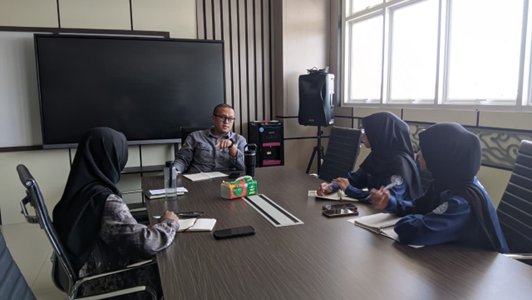
The Creative Writing PICs expressed profound enthusiasm and intellectual resonance with this approach, recognizing that such inclusive, place-based education directly responds to the urgent needs of contemporary learners. Learning in nature, they believe, carries students toward a liminal space where the essence of life, the philosophy of existence, and the ethics of being converge into a single axis of understanding. This environment allows education to function not merely as skill acquisition, but as a transformative life journey. Responding to this shared excitement, Lala Bumela, Ph.D. affirmed, “Education must return to its original purpose—to help learners encounter life itself. When students learn in nature, they are not escaping theory; they are entering its deepest and most honest form.”
Despite the poetic and philosophical orientation of this initiative, Lala Bumela, Ph.D. consistently grounds the program in pragmatic responsibility. He repeatedly underscores that while substance and meaning remain central, meticulous preparation is non-negotiable. The journey to Pasir Batang is physically demanding, mentally taxing, and emotionally immersive, requiring parallel engagement of intellect, endurance, and awareness. For him, readiness is not a procedural formality, but an ethical imperative directly linked to safety and sustainability. As he cautioned with clarity and care, “Romanticizing learning in nature without discipline is a mistake. Preparation is the gateway to safety, and safety is the foundation of meaningful knowledge production.”
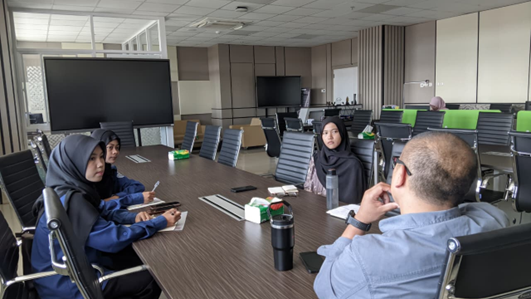
The meeting concluded with a resolute sense of optimism and collective responsibility. Lala Bumela, Ph.D. articulated his deep hope for the smooth execution and intellectual success of this scholarly endeavor. He envisions this initiative not as an isolated academic experiment, but as a concrete, value-driven contribution toward realizing the deeper spirit of the Sustainable Development Goals—particularly those related to quality education, cultural preservation, mental well-being, and environmental consciousness. In his view, this pedagogical model exemplifies how SDGs can be embodied through lived practice rather than abstract compliance.
Through the implementation of this innovative pedagogy and learning methodology, Lala Bumela, Ph.D. invites students to rediscover a fundamental truth: Indonesia is profoundly rich in intellectual treasures that stand on equal footing with global knowledge traditions. Indigenous narratives such as Lutung Kasarung are not relics of the past, but dynamic epistemological sources capable of informing contemporary science, education, and ethics. The continuous spiral of knowledge—rooted, reflective, and regenerative—ensures that wisdom remains alive and enduring. As Lala Bumela, Ph.D. powerfully concluded, “We do not need to look far to find great knowledge. Our land, our stories, and our ancestors have already mapped a spiral of wisdom—our task is to read it, feel it, and carry it forward.”
Author: Muhammad Azkiya Bahtsulkhoir