
Revolutionizing Language Learning: AI Takes Center Stage at the 22nd AsiaCALL Pre-Conference Workshops
Cirebon, November 14, 2025 — Wulan Rahmatunissa, M.Pd., from Universitas Kuningan delivered the first session of the Pre-Conference Workshop of The 22nd AsiaCALL International Conference 2025 at the auditorium on the eighth floor of the Cyber Building, UIN Siber Syekh Nurjati Cirebon. The session was attended world-class distinguished speakers who will participate in the conference, including Made Hery Santosa, S.Pd., M.Pd., Ph.D.; Professor Shameem Rafik-Galea, Professor of Applied Linguistics at SEGi University; Assoc. Prof. Dr. Hassan Khosravi from The University of Queensland, Australia; and Assoc. Prof. Dr. Pham Vu Phi Ho from the Faculty of Foreign Languages, Industrial University of Ho Chi Minh City, Vietnam. The audience also included enthusiastic students from the English Language Teaching Department. Wulan, M.Pd., opened the session by expressing hope that the workshop would provide meaningful insights and prepare participants for the main conference tomorrow. The session immediately engaged participants through its relevance to current trends in AI and language education.
Wulan, M.Pd., emphasized that artificial intelligence is rapidly transforming language education by providing personalized feedback, adaptive practice routines, and engaging content tailored to individual learners. She highlighted that generative AI helps teachers reduce preparation time while increasing student motivation and learning outcomes. Wulan, M.Pd., explained that AI can streamline lesson planning, material adaptation, and assessment creation, allowing educators to focus on meaningful interaction and creative pedagogy. She also noted that understanding AI’s ethical implications—such as plagiarism and data privacy—is crucial for responsible implementation. The workshop’s discussions encouraged educators to adopt a balanced approach, integrating innovation while maintaining academic integrity. The session highlighted that this workshop is directly connected to the broader themes of The 22nd AsiaCALL International Conference 2025, making the learning experience highly relevant.
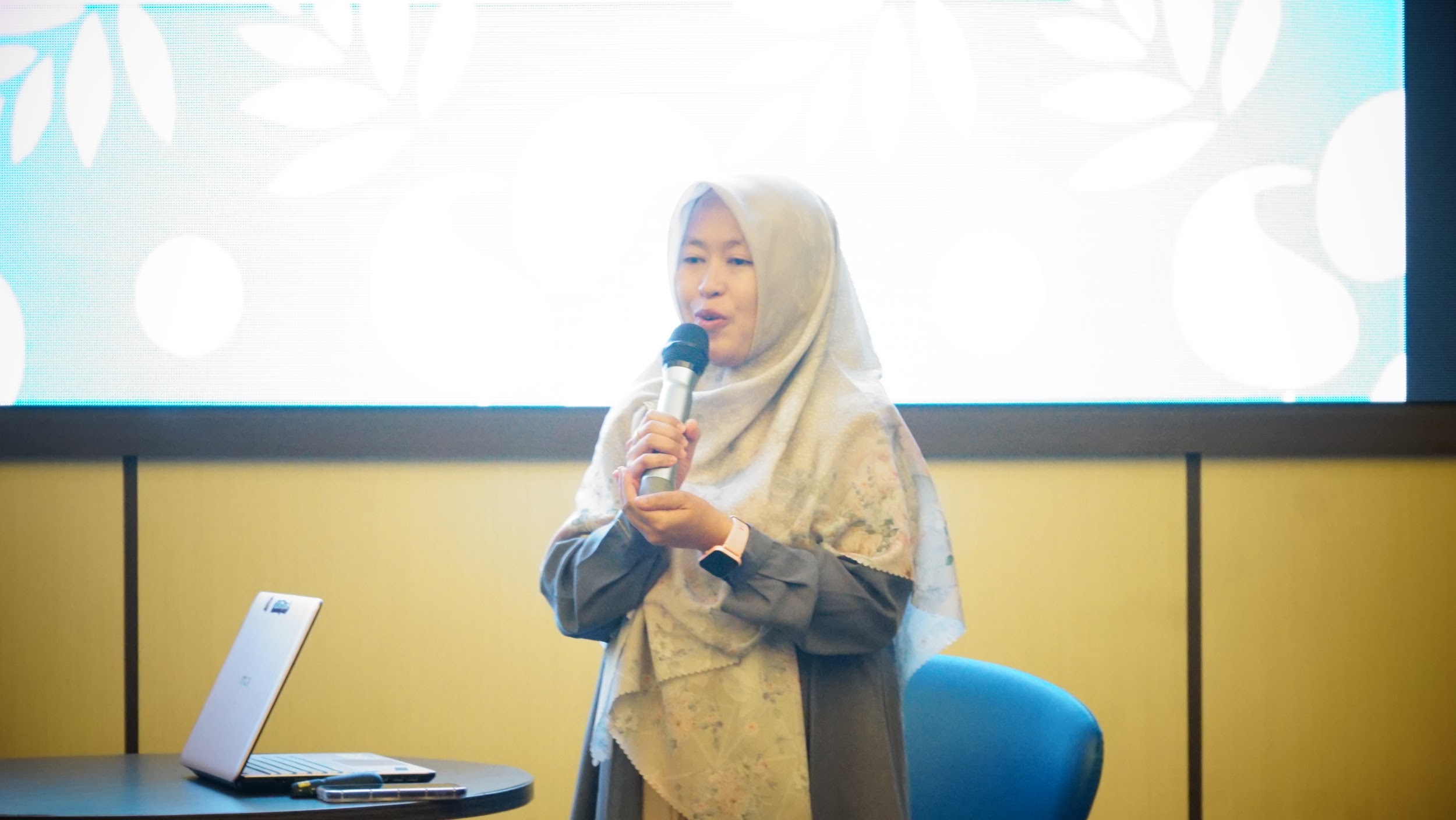
To guide responsible AI integration, Wulan, M.Pd., introduced an AI Literacy Framework consisting of four components: functional literacy (how to use AI), ethical literacy (responsible use), rhetorical literacy (critical understanding of AI-generated content), and pedagogical literacy (enhancing teaching effectiveness). She stressed that teachers must maintain control of AI usage because students often adapt quickly to these technologies. The framework equips educators to apply AI in ways that support student learning while aligning with curriculum objectives. Practical tools such as Google Gemini, Perplexity, and NotebookLM were introduced to support lesson scaffolding, multilingual learning, and research workflows. Participants responded enthusiastically to hands-on demonstrations of these tools. The session emphasized experimentation, adaptation of materials, and collaborative sharing of best practices.
Wulan, M.Pd., also addressed challenges in the language classroom, particularly students’ hesitation to participate in speaking activities. Many learners fear being labeled as slow after receiving feedback from teachers, which can hinder engagement. AI-powered practice environments can provide low-pressure opportunities for learners to improve their confidence. She discussed future-focused teaching strategies, including custom AI tools aligned with institutional curricula and learner profiles, as well as retrieval-augmented generation to support content creation. These approaches reflect the conference’s emphasis on innovation and the professional growth of language educators. The audience actively engaged with questions, demonstrating interest in integrating AI into real classroom contexts.
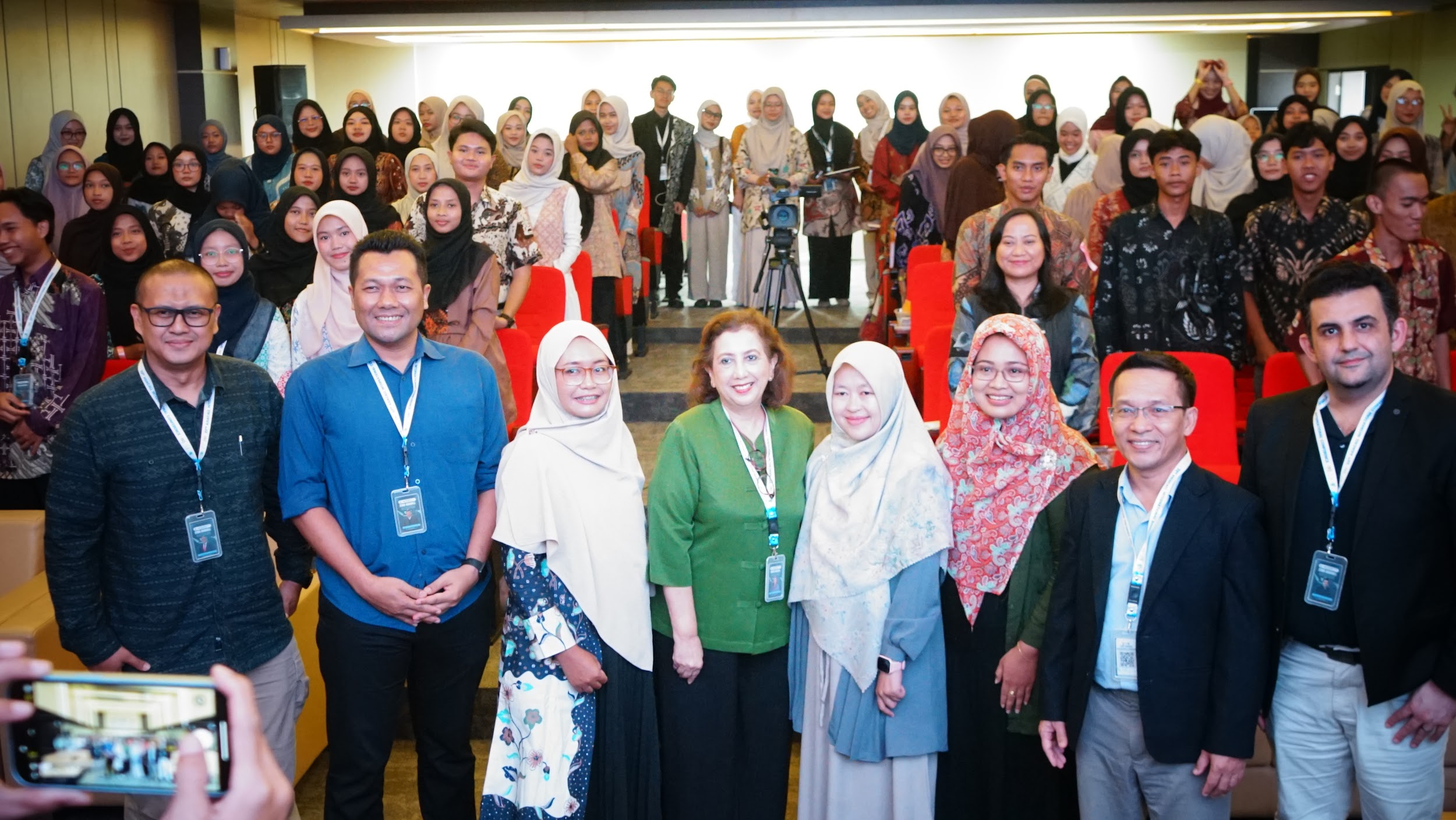
The session underscored the workshop’s role as a prelude to The 22nd AsiaCALL International Conference 2025, allowing participants to explore emerging technologies and pedagogical approaches before the main event. Assoc. Prof. Dr. Hassan Khosravi, Assoc. Prof. Dr. Pham Vu Phi Ho, and Professor Shameem Rafik-Galea contributed additional perspectives, enriching discussions on AI, ethics, and classroom application. Their engagement strengthened collaboration between local and international scholars. Lala Bumela Sudimantara, Ph.D., the Director of the International Office, noted that the workshop highlights UIN Siber Syekh Nurjati Cirebon’s commitment to excellence in international academic collaboration and innovation in language teaching.
As the session concluded, Wulan, M.Pd., encouraged educators to view AI as a collaborative partner rather than a replacement for teaching expertise. She urged participants to continue learning, experiment with AI tools, adapt materials creatively, and share experiences with colleagues. The workshop reinforced the importance of lifelong learning, professional development, and staying current with technological advancements. Participants left the auditorium prepared, motivated, and confident to engage fully in The 22nd AsiaCALL International Conference 2025. The combination of theoretical insights, practical demonstrations, and high-level discussions promised a productive and world-class conference experience.
Author: Salsabilla