
Shaping Global Discourse on AI and Assessment: Insightful Perspectives from Prof. Jeremy White, Ph.D., at the AsiaCALL 2025 International Conference Symposium
Cirebon, November 16 2025 — UIN Siber Syekh Nurjati Cirebon became a center of global academic attention as the AsiaCALL International Conference 2025 hosted the symposium “AI in Language Education: Opportunities, Challenges, and Future Directions.” From the outset, Prof. Jeremy White, Ph.D. (Ritsumeikan University, Japan), emerged as a central voice whose perspectives shaped the academic tempo of the discussion. Scholars and practitioners from various countries gathered in the auditorium, underscoring AsiaCALL’s expanding reach in the realm of technology-enhanced pedagogy. The symposium united prominent figures including Assoc. Prof. Dr. Pham Vu Phi Ho, Ph.D. (Industrial University of Ho Chi Minh City, Vietnam), Prof. Andrew Lian, Ph.D. (Suranaree University of Technology, Thailand & The University of Canberra, Australia), Ania Lian, Ph.D. (Charles Darwin University, Australia), and Lala Bumela Sudimantara, Ph.D. (UIN Siber Syekh Nurjati Cirebon). Their collective presence highlighted Indonesia’s growing leadership in global conversations about AI-driven educational transformation. Amid this distinguished lineup, Prof. White’s contributions stood out prominently. His insights set the tone for a rich and thought-provoking dialogue on the future of language education.
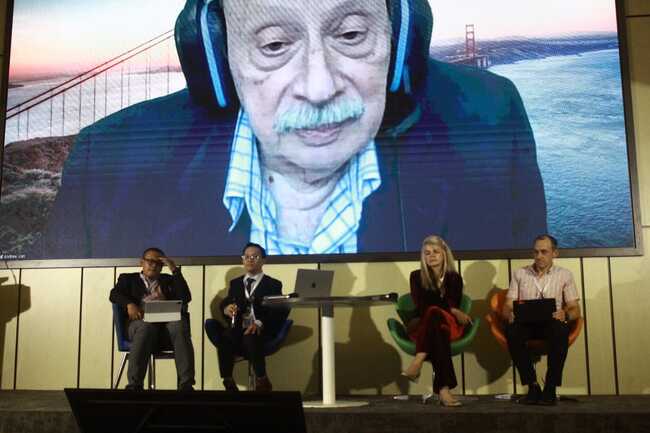
The session opened with remarks from Assoc. Prof. Dr. Pham Vu Phi Ho, who emphasized the urgency of examining AI’s evolving role in educational systems. He remarked that “AI is not just a tool, it's becoming a framework that influences how institutions think about teaching and learning.” Prof. Ho encouraged participants to evaluate both the opportunities and the uncertainties that come with rapid technological change. His introduction positioned the symposium as a space for critical and responsible inquiry. This perspective was well received by attendees, who were eager to explore AI from a balanced, ethically aware standpoint. The initial framing helped shape an environment where complex issues could be examined with nuance. This intellectual foundation set the stage for the deeper insights that would follow. His opening remarks effectively set a reflective tone that guided the dialogue throughout the entire symposium.
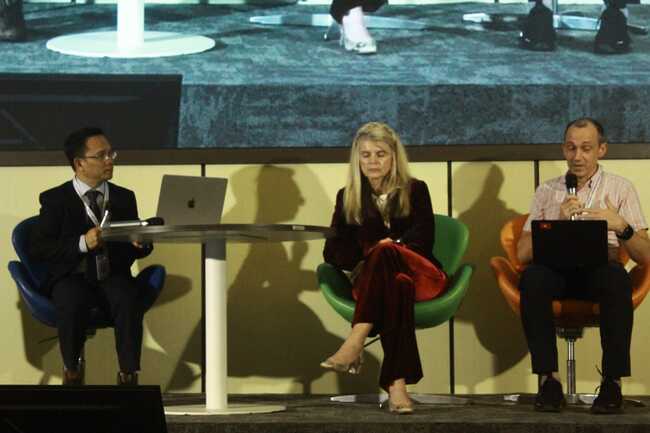
Momentum heightened when Prof. Ho invited Prof. Jeremy White to address the transformative potential of AI in language assessment. Responding to the question, Prof. White stated, “AI gives us the chance to move from judging final products to understanding the entire learning process.” He explained that AI tools can track drafts, revisions, and spoken performances over time, providing a more complete picture of student development. This approach, he argued, represents a meaningful shift from traditional assessment models. Prof. White also emphasized that AI could support long-desired individualized assessment tasks that reflect students’ differing proficiency levels. However, he cautioned that the next five years will be critical in determining how fully these ideas can be realized. His measured optimism drew strong interest and thoughtful reflection from the audience. This exchange positioned Prof. White as a key voice in articulating the practical implications of AI for future assessment design.
The discussion deepened when Prof. Ho raised concerns about fairness, transparency, and accuracy in AI-generated feedback and scoring. Prof. White acknowledged that many institutions lack structured frameworks for guiding AI use, resulting in inconsistent practices across educational settings. He stressed the need for institutions to calibrate AI systems using educator-designed rubrics and expert human raters. Such calibration, he argued, would help align AI outcomes with established assessment principles. Prof. White also emphasized the importance of recognizing the types of errors that AI can produce. This awareness is necessary to prevent misinterpretation and misuse. His comments highlighted a growing need for institutional responsibility and oversight. He reminded participants that without such frameworks, AI risks amplifying inequities rather than solving them.
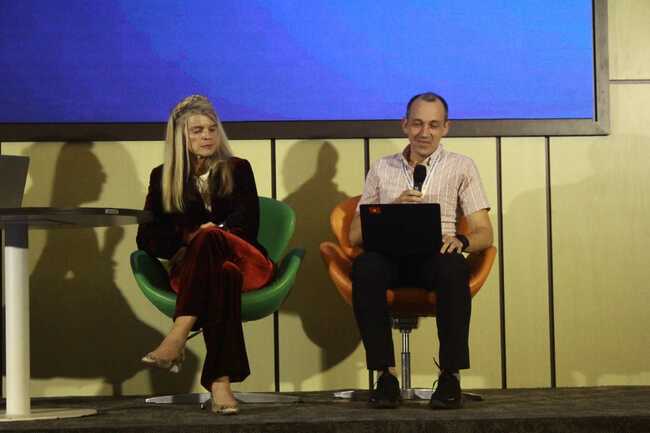
To illustrate the real-world implications of AI misjudgment, Prof. White shared a striking example concerning automated detection systems. He described a case in which a student was incorrectly flagged as using 40 percent AI-generated content despite having produced all the work independently. The incident demonstrated the risks of over-reliance on automated tools without contextual understanding. Prof. White cautioned that “AI should never be the sole authority in high-stakes decisions—human judgment must remain central.” He urged institutions to train educators to critically interpret AI feedback rather than accepting automated outputs unquestioningly. This approach, he argued, would help safeguard students against unfair assessments. His example resonated with attendees who had observed similar inconsistencies in AI detection tools. This cautionary anecdote underscored the urgent need for thoughtful policy development in the age of AI.
In his concluding remarks, Prof. White encouraged institutions to adopt a balanced and ethically grounded approach to AI integration. He reminded participants that AI should serve as an extension—not a replacement—of human expertise. Prof. White called for long-term strategies that include continuous professional development and transparent monitoring of AI tools. He also emphasized the importance of collaboration among institutions to refine AI-based assessment practices. As he noted, the landscape of AI remains in constant evolution, demanding adaptability and critical awareness from all stakeholders. His reflections added depth and clarity to the symposium’s broader themes. His final message served as a strong reminder that responsible AI integration requires both vision and vigilance.
Author: Salsabilla