
Smart Finance, Global Future: International Students at UIN SSC Discuss GoPay Integration to Support Everyday Mobility
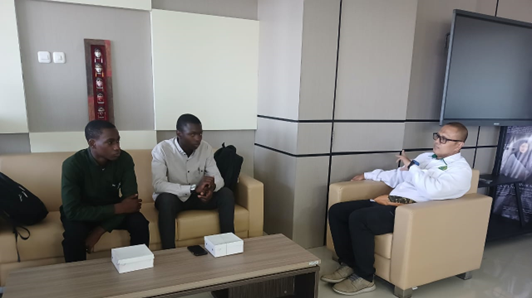
Cirebon, October, 13th 2025 — The atmosphere inside the International Office and Partnership (IOP) room on the 5th floor of the Cyber Building at UIN Siber Syekh Nurjati Cirebon was filled with lively discussions and activity. Alongside the ongoing AsiaCALL 2025 preparation meetings that covered a wide range of administrative matters, the office also welcomed several international students—recipients of the Syekh Nurjati Global Excellent Scholarship (SN-GES) 2025—from Nigeria. These students came to consult about one essential aspect of adapting to life in Indonesia: financial mobility. In a country where most transactions—from public transport to food purchases—are conducted digitally, they sought guidance on how to integrate local financial applications such as GoPay into their daily routines. Lala Bumela, Ph.D., Director of the International Office and Partnership, personally welcomed and advised them. “Being part of a global community also means adapting to local systems,” he explained. “Understanding Indonesia’s digital economy is part of your learning journey.” His words reflected both mentorship and care, embodying UIN SSC’s dedication to nurturing globally competent and well-supported students.
However, the process was far from simple. Many international students faced significant challenges during the initial setup—ranging from issues in verifying identification documents to difficulties linking their bank accounts to the GoPay platform. Some encountered language barriers while navigating the app interface, while others struggled with filling out online forms that required an Indonesian ID number. These obstacles created a sense of confusion and dependency, as students found themselves unable to make simple payments for daily necessities. “Even small tasks like topping up balance or paying for meals became complicated,” one student shared. The International Office team quickly realized that what might seem like a routine adjustment for locals could be an overwhelming experience for new arrivals navigating a foreign digital landscape.
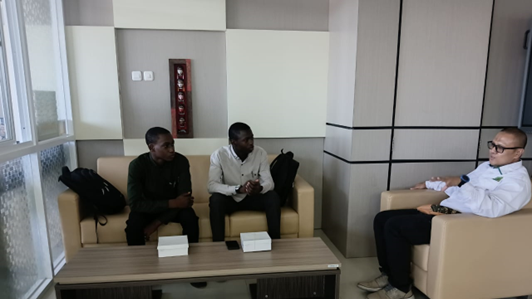
Responding to their concerns, Lala Bumela, Ph.D. addressed the group with patience and empathy. “Financial mobility is part of your independence,” he told them. “You’re not just learning about digital payment systems—you’re learning how to live confidently in a new environment.” His message resonated deeply with the students, many of whom were experiencing culture shock for the first time. He guided them step by step, explaining the security measures, transaction features, and advantages of Indonesia’s digital payment ecosystem. By framing financial adaptation as a learning process rather than a technical hurdle, he encouraged them to see technology as an empowering tool rather than a barrier.
To further assist the students, the International Office collaborated with UIN SSC’s IT Support and the campus financial unit to organize a hands-on demonstration session. During this session, staff helped the students install and activate digital wallets, link them with international cards, and practice simulated transactions in real time. The room was filled with laughter and excitement as students successfully made their first digital payments—buying snacks, booking rides, and even transferring small amounts to friends. The event quickly evolved from a technical workshop into a bonding experience that highlighted intercultural understanding and community support. This collaboration also marked a step toward UIN SSC’s broader goal of digital inclusion, ensuring that international students could participate fully in Indonesia’s tech-driven society.
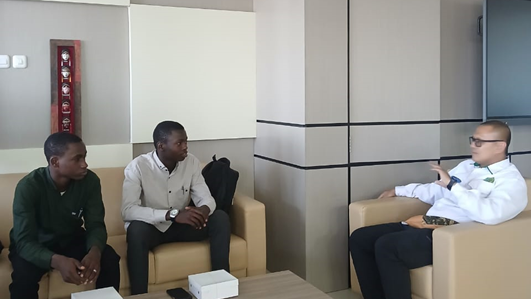
Gradually, what began as confusion turned into confidence. The students reported greater ease in managing their finances, from paying rent and ordering meals to navigating public transport using QR-based payment systems. The initiative not only improved their day-to-day convenience but also deepened their appreciation of Indonesia’s progress in digital transformation. The International Office continued to provide follow-up assistance and translated user guides to ensure sustainability of the effort. The successful integration of GoPay and similar platforms became a symbol of how small, practical solutions could foster global mobility and inclusivity within the UIN SSC academic community.
In closing the consultation, Lala Bumela reminded the students of a larger lesson behind the technical guidance. “Integration is not only about systems,” he said, “but about people—about how we learn, adapt, and grow together.” His statement captured the essence of UIN SSC’s international vision: education that extends beyond classrooms into the real experiences that shape character and understanding. Through these initiatives, the International Office continues to embody its mission—building bridges between cultures, advancing global literacy, and ensuring that every student, regardless of origin, finds both competence and comfort in their academic journey in Indonesia.
Author: Muhammad Azkiya Bahtsulkhoir