
Strengthening Academic Branding and International Institutional Communication, the Web Administrator Team of the International Office of UIN Siber Syekh Nurjati Cirebon Produces Official Press Release Documentation for the International ELT Seminar Organized by the English Education Department in Collaboration with Charles Darwin University
Cirebon, May 20, 2026 – Under the visionary leadership of Lala Bumela Sudimantara, Ph.D., Director of the International Office of UIN Siber Syekh Nurjati Cirebon, a meaningful international academic collaboration was successfully established between UIN Siber Syekh Nurjati Cirebon and Charles Darwin University, Australia, in support of the International ELT Seminar organized by the English Education Department on 20 May 2026 at the Postgraduate Auditorium, Room 3. Carrying the theme “Hidden Curriculum for Sustainable Learning in ELT: Deep Learning & Love-Based Curriculum,” the seminar brought together scholars, educators, and students in a dynamic academic forum dedicated to innovative approaches in English Language Teaching. As a keynote speaker, Lala Bumela Sudimantara, Ph.D. presented “Regenerative Multisensory CALL: A Framework for Deep Learning that Honors Brain, Culture and Ecology,” while also facilitating international collaboration through the invitation of Jian Wu, a doctoral student from Charles Darwin University, who delivered a presentation entitled “Emotional and Neuroaesthetic Approaches to Evaluating and Teaching Abstract Reasoning of Pre-Service Teachers.” The seminar was further enriched by the participation of Ginawati Samari, S.Pd.I., a teacher from MTsN 1 Cirebon and an alumna of UIN Siber Syekh Nurjati Cirebon, while the opening remarks were delivered by Dra. Hj. Amroh Umaemah, M.Pd., Head of the English Education Department. Attended by approximately 200 students from the 2023, 2024, and 2025 cohorts, the event also became an important platform for the Student Internship Team of the International Office Web Administrator Division, including Muhammad Azkiya Bahtsulkhoir, Resa Diah Gayatri, Salsabilla, Laily Dwi Islami, Cindy Afriana, Nurhusni Yusriyyah, and other team members, to carry out professional responsibilities in institutional communication through press release writing, news reporting, academic minute-taking, website publication management, and international media dissemination. Reflecting on the broader purpose of the collaboration, Lala Bumela Sudimantara, Ph.D. stated, “International collaboration is not only about academic exchange but also about creating meaningful channels through which knowledge, innovation, and institutional values can be communicated to wider communities.”
Despite the enthusiasm surrounding the event, the process of transforming a large-scale international seminar into a professionally documented institutional publication presented a significant challenge for the internship team. Beyond attending the seminar sessions, members of the Web Administrator Division were expected to capture complex academic discussions, accurately summarize keynote presentations, verify speaker information, prepare official meeting minutes, and convert academic content into publication-ready press releases suitable for institutional websites and public communication platforms. The responsibility demanded not only strong writing skills but also a deep understanding of academic discourse, institutional branding standards, and international communication practices. Furthermore, because the seminar involved both national and international speakers, the team needed to ensure that every report reflected professionalism, accuracy, and credibility while preserving the significance of the academic collaboration itself. These challenges transformed the internship experience into a practical learning environment where students were required to apply communication skills within a real-world institutional setting.
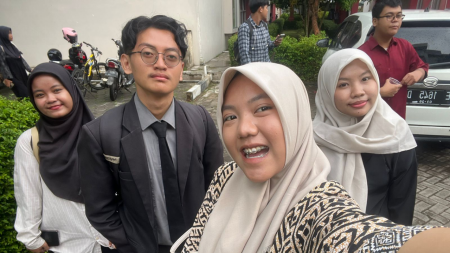
Throughout the seminar, meaningful intellectual dialogue emerged among speakers, lecturers, and students regarding sustainable learning, emotional dimensions of education, deep learning frameworks, and the future of English Language Teaching. Students actively engaged with questions concerning how emotions, culture, neuroscience, and technology could contribute to more meaningful learning experiences. Simultaneously, members of the International Office internship team engaged in a different yet equally important form of dialogue: the dialogue between academic knowledge and public communication. Through discussions with organizing committees, presenters, and participants, the team gathered essential information needed to produce accurate institutional reports and media publications. This process allowed them to understand that effective communication is not merely about recording events but about translating academic achievements into narratives that can inspire broader audiences and strengthen the university’s reputation both nationally and internationally.
As the seminar progressed, the role of the International Office Web Administrator Team became increasingly significant. While speakers shared innovative educational concepts and research findings, the internship team worked behind the scenes to ensure that those valuable ideas would continue to reach audiences long after the event concluded. Drafting press releases, organizing publication materials, preparing institutional news articles, and coordinating communication outputs required meticulous attention to detail and a strong commitment to quality. The experience demonstrated how strategic communication serves as an essential pillar of university internationalization efforts. Academic achievements gain greater impact when they are effectively communicated to stakeholders, prospective partners, students, and the wider public. Emphasizing this vision, Lala Bumela Sudimantara, Ph.D. remarked, “Every international partnership should create a lasting impact. Through professional communication and academic dissemination, we ensure that collaborative achievements become part of our institution’s global narrative and future growth.”
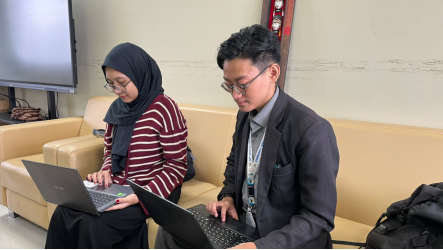
The seminar concluded successfully not only as an academic gathering but also as an institutional communication initiative that strengthened the international visibility of UIN Siber Syekh Nurjati Cirebon. Through the dedication of the Student Internship Team within the International Office Web Administrator Division, the event was transformed into a collection of official institutional outputs, including press releases, news reports, publication materials, and meeting minutes that documented the significance of the collaboration. Their work ensured that the insights shared by speakers and participants would remain accessible beyond the seminar venue, contributing to the university’s academic archives and public engagement efforts. More importantly, the experience highlighted the value of involving students directly in international communication practices, allowing them to gain practical skills while contributing meaningfully to the university’s institutional development and global outreach.
The success of the International ELT Seminar demonstrates that internationalization extends beyond formal agreements and academic events; it also depends on the ability of institutions to communicate their achievements effectively to the world. Through their involvement in press release production, academic reporting, website publication, and institutional communication, the Student Internship Team of the International Office Web Administrator Division has shown how students can become active contributors to academic branding and global engagement. Their efforts reflect the growing importance of communication literacy in higher education, particularly in an increasingly interconnected world where visibility, credibility, and collaboration are closely linked. Concluding the event, Lala Bumela Sudimantara, Ph.D. emphasized, “Students are not merely observers of internationalization; they are partners in shaping it. When they learn to communicate academic achievements professionally and responsibly, they help build the reputation, influence, and future of the university itself.”
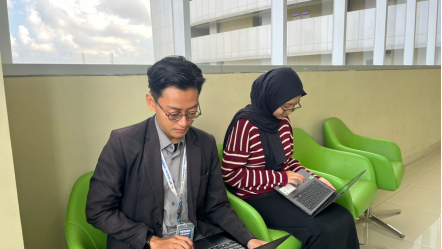
Author: Muhammad Azkiya Bahtsulkhoir