
Strengthening Scholarly Foundations: IO UIN SSC Hosts Academic Writing Workshop for 2025 Syekh Nurjati Global Excellent Scholarship (SN-GES) Recipients
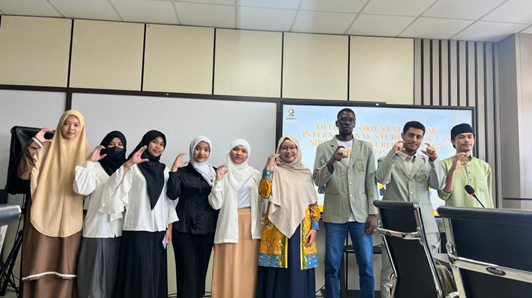
Cirebon, September, 12th 2025 — The International Office of Universitas Islam Negeri Siber Syekh Nurjati Cirebon (UIN SSC) under the leadership of Lala Bumela, Ph.D., reaffirmed its vision for global academic engagement by organizing a comprehensive Academic Reading and Writing Workshop on Friday, 12 September 2025. This program formed an integral part of the structured orientation for the 2025 Syekh Nurjati Global Excellent Scholarship (SN-GES) recipients. The workshop welcomed eight international students currently on campus: Arif Yeekajik (Constitutional Law, Thailand), Babou Seck (Islamic Economics, Senegal), Hamdi Mujeb Thabet Sharaf (Islamic Economics, Yemen), Jadene Querod Zainal, Nadja Querod Cabuayo, and Paojia Cabuayo Sucatan (all English Education, Philippines), Maja Asleah Lindongoan Salisipan (Biology Education, Philippines), and Tasneem Wado (Qur’anic and Tafsir Studies, Thailand). Several Nigerian awardees, though officially selected, were unable to attend due to immigration delays stemming from ongoing conflict in their country. Also present were the International Office staff—Ivo Yanuar Dinasta, S.S., M.Appling., and Gina Amalia Sholihah, S.Sos.—alongside the Global Engagement Team (GET) who served as facilitators ensuring an inclusive, supportive, and collaborative learning environment from the outset. “This workshop is not just about teaching academic techniques; it is our way of opening wider doors for intercultural learning and preparing our scholarship recipients to thrive in an international academic environment,” said Lala Bumela, Ph.D., Director of the International Office, in his opening remarks. “We are proud to see students from across Asia and Africa joining our academic family.” His words set a tone of warmth and ambition, situating the workshop within UIN SSC’s wider mission to cultivate a community of scholars who are globally minded yet locally grounded.
The workshop itself was led by Sirniawati, S.Pd.I., M.A., a lecturer from Universitas Kuningan known for her expertise in academic literacy. She framed the session as more than a technical crash course: it was an introduction to the culture of academic knowledge—how ideas are generated, validated, and communicated systematically in higher education. “Academic reading and writing are not rigid rules but disciplined ways of thinking and communicating. By mastering them, you become active contributors to the global scholarly community,” emphasized Sirniawati during her presentation. This direct message resonated with participants whose educational journeys now span multiple languages, cultures, and academic traditions.
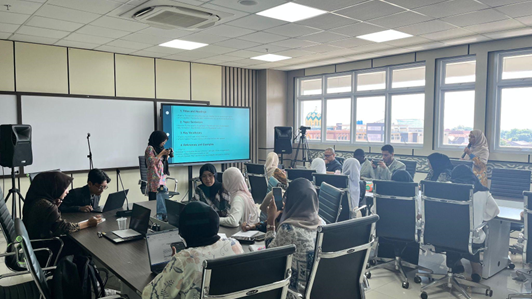
The session began with dynamic ice-breaking activities such as “Find Someone Who…,” prompting students to interact across national and disciplinary lines. While appearing simple, these tasks held deeper objectives: helping students explore their reading habits, study preferences, energy conservation, and even recycling practices as metaphors for academic discipline and sustainability. Through this exercise, Sirniawati introduced values—responsibility, autonomy, and cooperation—that underpin success in higher education but are often left implicit. The students’ enthusiastic participation demonstrated both their eagerness to adapt and the workshop’s effectiveness in creating a safe yet challenging space for learning.
Moving beyond warm-up activities, participants were guided through structured exercises that deconstructed academic texts into their component parts. They learned to identify topic sentences, extract key terms, recognize supporting references, and locate examples within model readings. Rather than passive note-taking, students engaged in small-group tasks: reading assigned texts (A, B, or C), highlighting central ideas, creating visual posters, and presenting their findings to peers. This collaborative approach mirrored real academic practice where ideas are tested, critiqued, and refined through dialogue—a practice essential for developing the confidence and autonomy needed for university success.
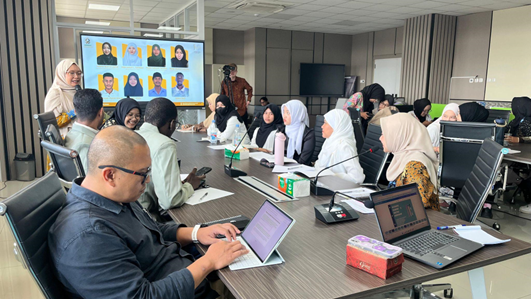
The workshop concluded with a reflective segment where each participant articulated one new insight, one academic term they had mastered, and one skill they wished to develop further. This closing ritual transformed abstract concepts into personal commitments, signaling that the workshop was not an endpoint but a catalyst for ongoing growth. By framing academic reading and writing as learnable, transferable skills grounded in evidence and structure rather than innate talent, the International Office and the Global Engagement Team empowered SN-GES scholars to approach their studies with confidence and independence.
In hosting this Academic Reading and Writing Workshop, UIN SSC’s International Office has demonstrated how orientation activities can be leveraged to build scholarly foundations, not just offer logistical guidance. The collaboration between Lala Bumela, the GET team, and Sirniawati, coupled with the active participation of students from Yemen, Senegal, Thailand, and the Philippines, has created a living example of what a globally engaged academic community can look like. Even with the absence of the Nigerian awardees due to immigration issues, the workshop underscored the university’s commitment to inclusivity and resilience. “We will continue to ensure that every SN-GES scholar, regardless of background or circumstance, receives the academic support needed to flourish at UIN SSC,” reiterated Lala Bumela, Ph.D., in his closing statement. “This workshop is just the beginning of a long journey of growth and collaboration.”
Author:
Muhammad Azkiya Bahtsulkhoir