
The Final Day of the International Seminar and Workshops 2025 Highlights Regenerative Visions and Circular Futures at UIN Siber Syekh Nurjati Cirebon
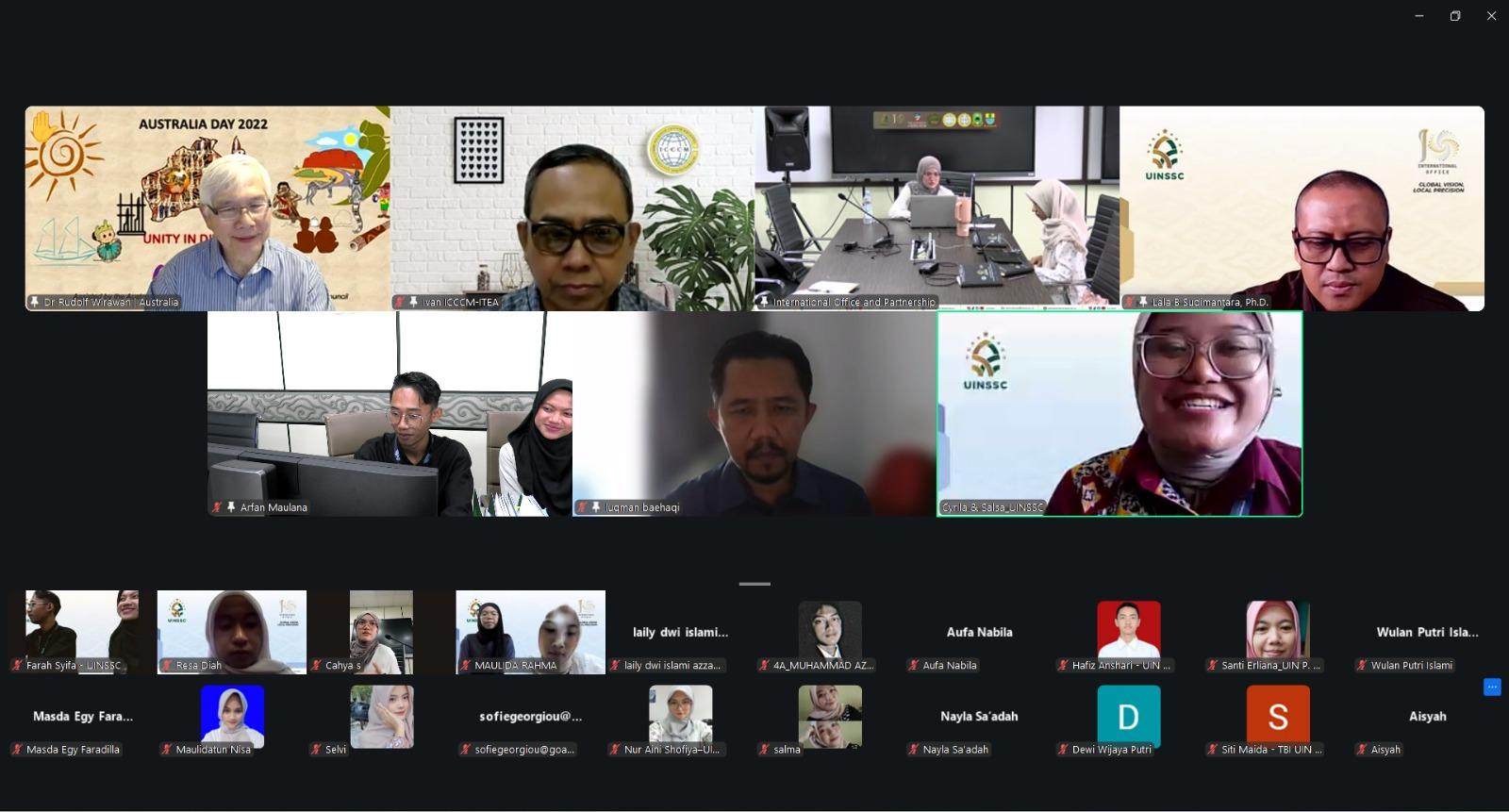
Cirebon, December 4, 2025 — The International Office of UIN Siber Syekh Nurjati Cirebon successfully held the third and final day of the International Seminar and Workshops 2025 under the theme “Returning to the Circle: A Regenerative Pathway Beyond Technocratic Sustainable Development Goals.” Taking place at the International Office on the 5th floor of the Cyber Building in hybrid mode, the event brought together the Director of the International Office, Lala Bumela Sudimantara, Ph.D., the keynote speakers Prof. Rudolf Wirawan from Adelaide University, Australia, and Luqman Baehaqi, Ph.D., from UIN Palangka Raya, along with Ivan Chabibillah, M.Li., joining virtually from the International Cultural Communication Center Malaysia (ICCCM). Members of the Global Engagement Team also attended and supported as an audience and committee. Before the keynote sessions began, Lala Bumela, Ph.D. delivered warm welcoming remarks that expressed his appreciation to the today’s speakers, Prof. Rudolf Wirawan, Ph.D. and Luqman Baehaqi, Ph.D., who will address the importance of regenerative approach to learning, economics, and governance. Concluding his remarks, Lala Bumela, Ph.D. emphasized the transformative vision of the program, “This gathering is not merely a simple webinar, but I really wish to transform the ideas we are collecting today into a form of movement.”
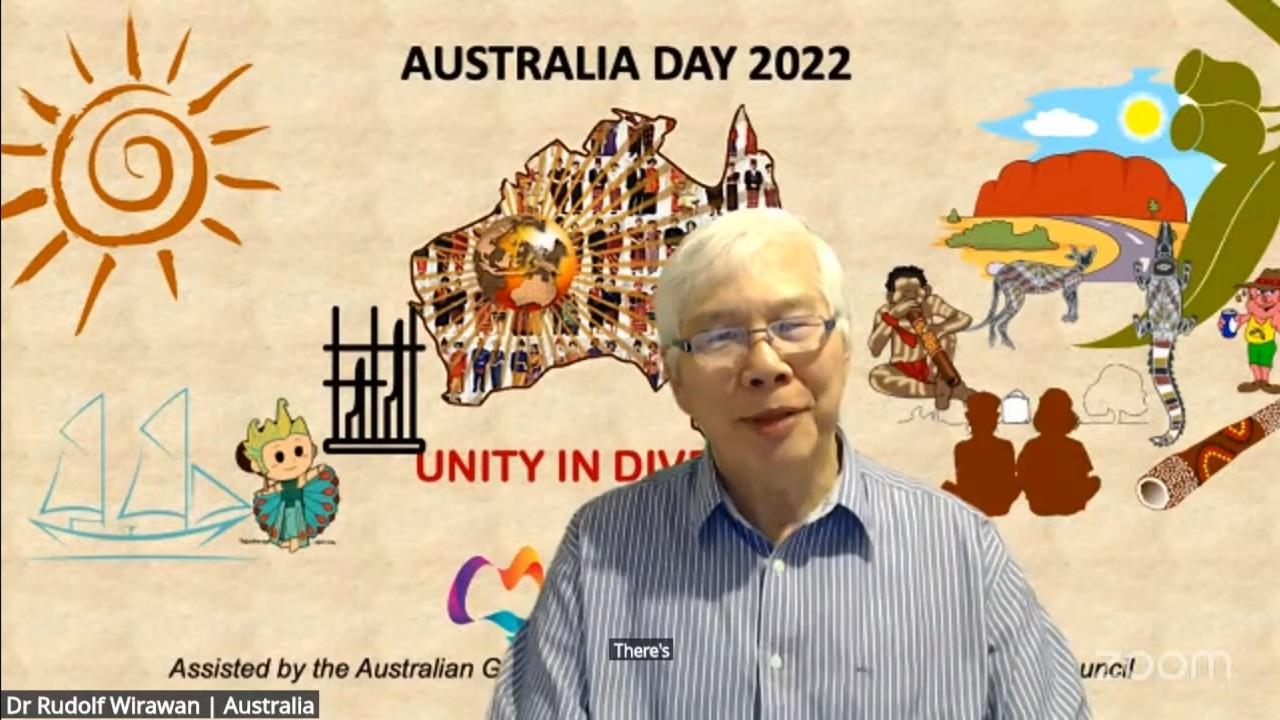
The first keynote session was delivered by Prof. Rudolf Wirawan, Ph.D., moderated by Nurhusni Yusriyyah Yumna from the Global Engagement Team. His presentation, titled “Returning to the Circle: A Regenerative Pathway Beyond Technocratic Sustainable Development Goals,” presented a critical reflection on current global development paradigms, particularly the increasingly technocratic tendencies of the SDGs. In his opening, he clarified, “My presentation is not to attack SDGs, but to understand why they become technocratic, why they produce an intended extraction, and how we can return to the ancient, natural, and universal principles of balance.” Prof. Rudolf highlighted the importance of shifting sustainability discussions away from rigid measurement systems and toward natural principles and relational harmony. He introduced circular thinking as a key method for building generative and restorative systems within contemporary governance and development. To illustrate this, he presented the BIMA framework, Bridging Intelligence, Mindfulness, and Awareness as a holistic alternative that remains sensitive to cultural and ecological contexts. The interactive session prompted thoughtful questions and reflections from participants, demonstrating strong engagement with the ideas presented.
Prof. Rudolf deepened the theoretical foundation of the BIMA framework by linking it to the Yin–Yang philosophy, illustrating how regeneration and transformation work in dynamic balance. Yin, he explained, represents renewal, sustainability, and the restorative qualities necessary for ecological and social wellbeing, whereas Yang symbolizes action, movement, and the implementation of sustainable practices. This philosophical lens enabled participants to rethink sustainability not as a checklist of targets but as a living, relational process. He also discussed several SDG traps that illustrate the systemic challenges embedded in issues such as poverty, food security, education, gender equality, water management, energy transition, economic growth, and climate action. According to him, these issues cannot be addressed solely through technical solutions but require deeper cultural wisdom and ecological sensitivity. Participants were encouraged to reflect on how development efforts often overlook indigenous knowledge and natural cycles. The session concluded with an active dialogue as attendees exchanged perspectives shaped by their academic backgrounds and local experiences.
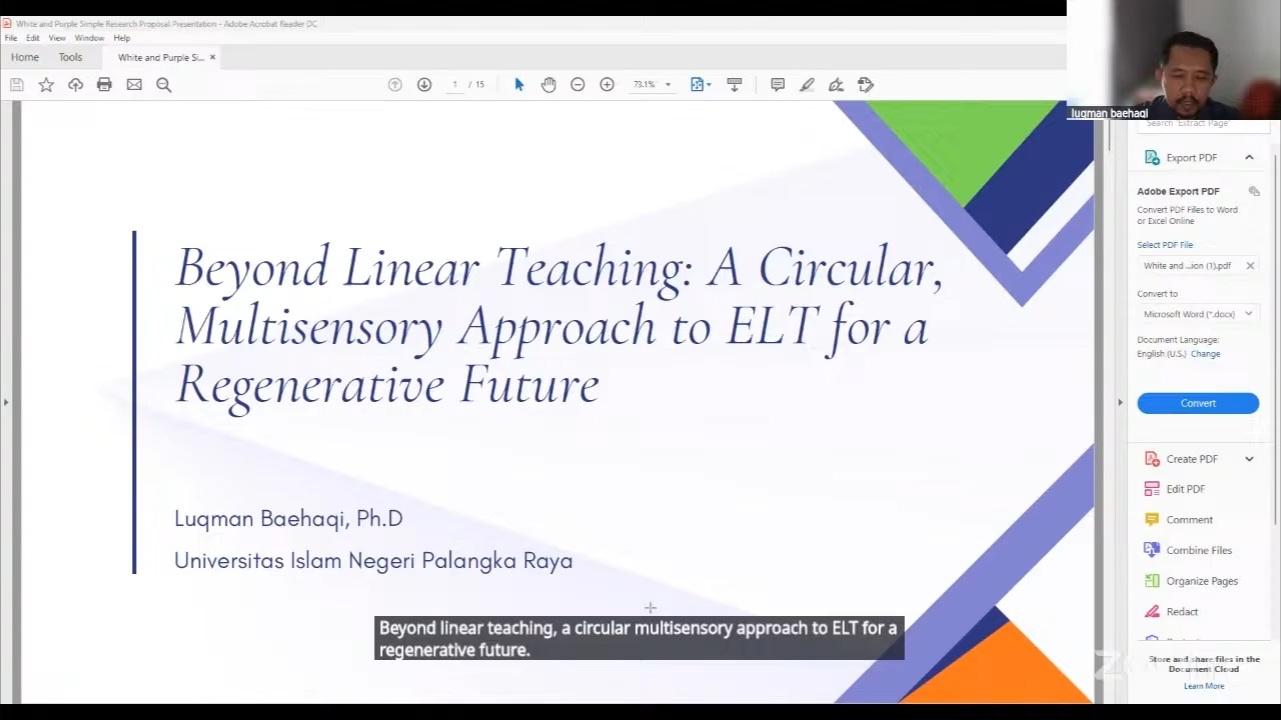
The second keynote session was delivered by Luqman Baehaqi, Ph.D., moderated by Cahya Salsabilla from the Global Engagement Team. His presentation, “Beyond Linear Teaching: A Circular, Multisensory Approach to ELT for a Regenerative Future,” aimed to reimagine English Language Teaching (ELT) through a regenerative and interconnected lens. Early in his talk, he expressed appreciation for the ideas introduced earlier, stating, “My presentation was inspired by BIMA framework by Prof. Rudolf Wirawan. I found that BIMA is really interesting, spiritual, and applicable to many aspects of knowledge, in this case, from the perspective of English Language Teaching.” He described conventional ELT as linear and heavily target-based, often assuming that learning is predictable and easily measurable. Such linearity, he argued, isolates language skills, relies too much on textbooks, and risks erasing local identities through rigid standardization. A regenerative approach instead views learning as a process that revitalizes creativity, relationality, and curiosity within students. The audience responded enthusiastically to his proposal of a more holistic and adaptive teaching model for the future of education.
Luqman introduced the Circular Learning Cycle, consisting of Experience, Reflection, Meaning-Making, Application, and Re-experience, allowing students to deepen understanding through repeated and embodied engagement. He highlighted the importance of multisensory learning, which integrates visual, auditory, kinesthetic, and tactile modes to strengthen memory and comprehension. Through examples such as Sensory Story Circles, Spiral Vocabulary Learning, Walking Dialogues, and Multisensory CALL activities, he demonstrated how teachers can transform classrooms into dynamic, regenerative learning spaces. He explained that such designs resonate with natural learning processes, where knowledge emerges through experience, interaction, and reflection. Participants showed great interest in how these ideas could be adapted to diverse educational contexts, particularly in multilingual and multicultural regions. The session closed with active discussion, with many attendees expressing curiosity about integrating circular and multisensory models into their own teaching practices. The interactive exchanges highlighted a shared desire to move beyond conventional pedagogies toward more meaningful and regenerative approaches.
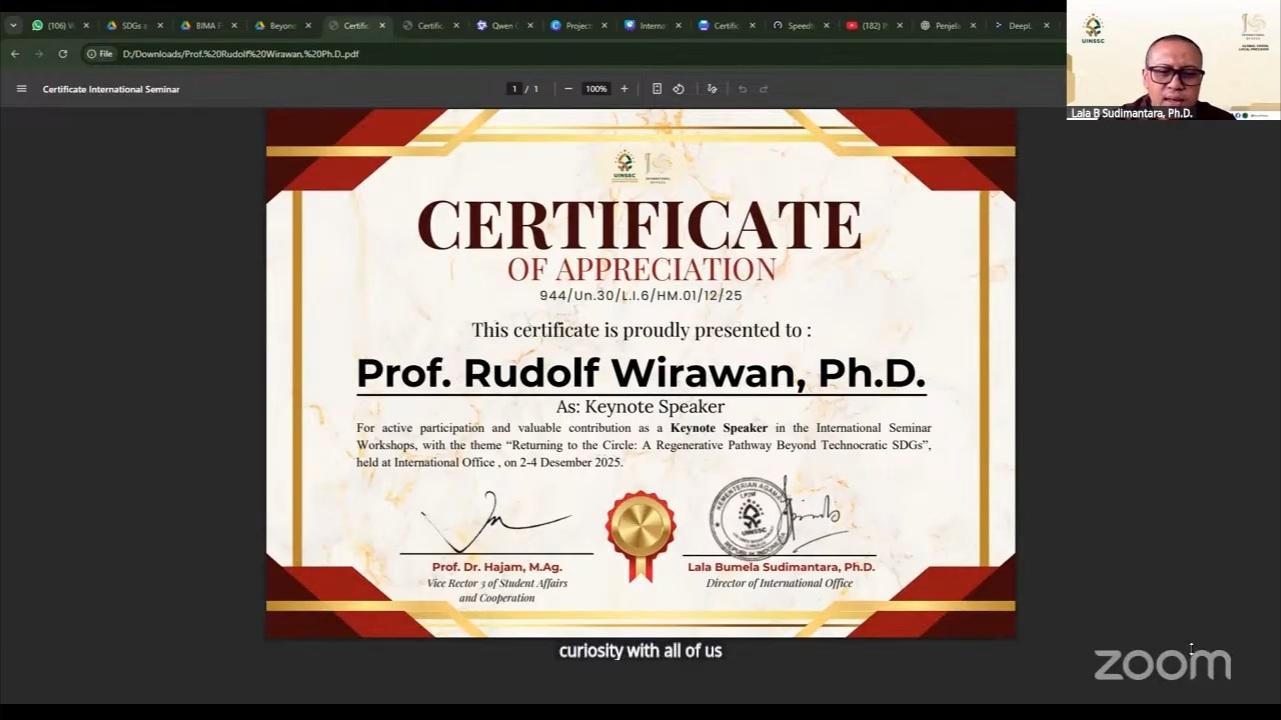
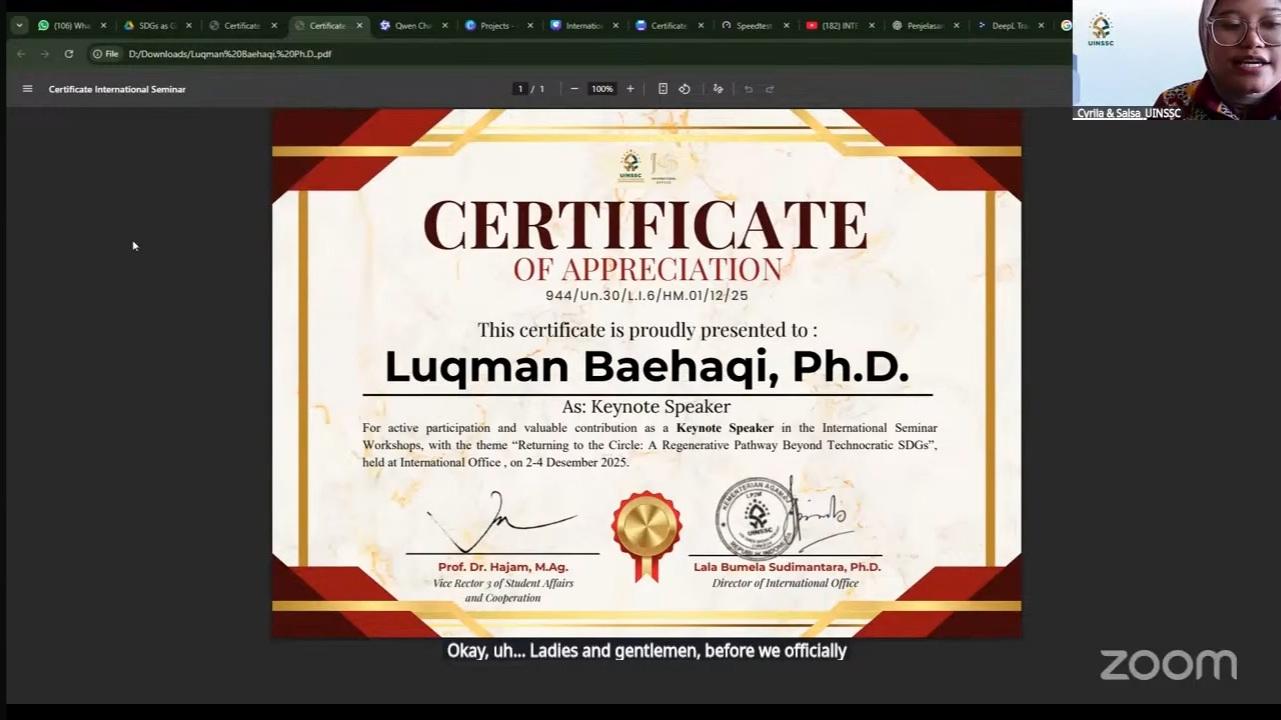
The event concluded with the online presentation of certificates to Prof. Rudolf Wirawan, Ph.D., and Luqman Baehaqi, Ph.D., awarded by the Director of the International Office, Lala Bumela, Ph.D., as a gesture of appreciation for their contributions. A brief documentation session followed, capturing the collaborative atmosphere of the entire program. In their closing remarks, the Masters of Ceremony, Cyrila Zahra Tsania and Salsabilla, highlighted the smooth execution of the fully online event and noted that the final-day discussions continued ideas explored earlier in the seminar. This continuity had been established from the start, beginning with reflections on Carita Pantun and ecological guardianship presented on the first day. The second day then deepened these themes through sessions on Wasathiyah and environmental ethics. Across its three days, the seminar offered participants an integrated and meaningful learning experience, reaffirming UIN Siber Syekh Nurjati Cirebon’s commitment to regenerative thinking, cultural wisdom, and sustainable futures.
Author: Salsabilla