
The International Office of UIN Siber Syekh Nurjati Cirebon Convenes a Transformative Scholarly Exchange: Reflection, Dialogue, and Embodied Cognition in the Q&A Session with Luqman Baehaqi, Ph.D. on Circular Multi-Sensory Learning and the Soul of Language Education
Cirebon, December 3, 2025 – The third day of the International Office of UIN Siber Syekh Nurjati Cirebon's landmark seminar witnessed a profound dialogue during the Q&A session following Luqman Baehaqi, Ph.D.'s keynote address on circular multi-sensory learning approaches. Convened in International Office, the session featured distinguished scholars including Prof. Dr. Rudolf Wirawan (University of Adelaide, Australia), Ivan Chabibilah, S.S., M.Li. (ICCCM Malaysia), the Director of International Office Lala Bumela Sudimantara, Ph.D., International Office staffs and student staffs. This gathering exemplified UINSSC's strategic commitment to positioning Cirebon as a nexus where ancestral Sundanese frameworks intersect with contemporary educational paradigms. Luqman Baehaqi, Ph.D.'s presentation, building upon Prof. Wirawan's BIMA Framework, had established the intellectual groundwork for examining how non-linear, spiral models could transcend conventional linear SDGs. The Q&A session transformed theoretical discourse into practical wisdom through rigorous scholarly exchange, highlighting UIN SSC's maturing role in global academic governance.
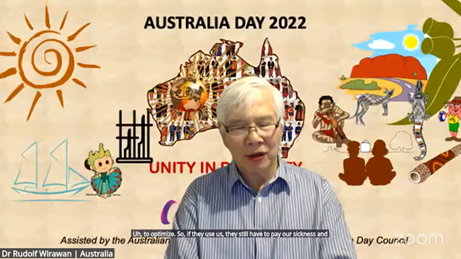
Prof. Dr. Rudolf Wirawan initiated the questioning with reflective precision, noting how standard literacy approaches often mechanically enforce grammar rules and writing structures without meaningful reflection. He contrasted this with the BIMA Framework's demands for non-linear, spiral learning requiring critical analysis, multimodal integration, and knowledge transformation. Prof. Wirawan acknowledging that while multi-sensory approaches might seem challenging initially, they represented essential evolution beyond linear paradigms. His reflection revealed deep engagement with Luqman Baehaqi, Ph.D.'s work, having observed multi-sensory CALL implementations in Australian classrooms. This scholarly exchange positioned UINSSC as an active contributor to global educational discourse, with Indonesian wisdom informing worldwide pedagogical challenges.
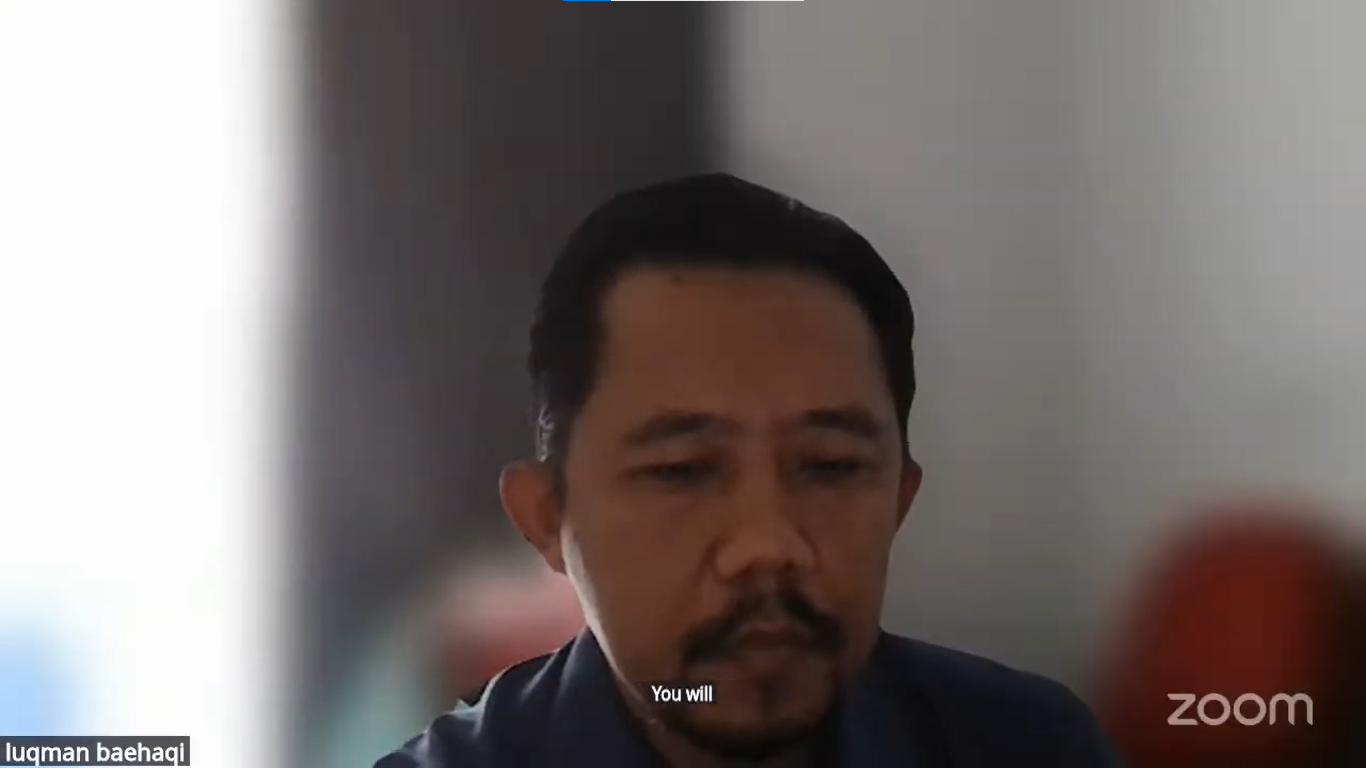
Luqman Baehaqi, Ph.D.'s response transcended technical methodology to address embodied cognition's foundational role. He explained that multi-sensory learning engages emotion, movement, body language, and vocal rhythm, elements traditional learning instruction neglects. "When we practice pronunciation with physical gestures, we're not merely teaching speaking skills," he clarified, "we're creating neurological pathways that strengthen vocabulary retention and syntactic understanding." He emphasized the pedagogical power of "reading for emotion," where students internalize linguistic structures through affective engagement rather than mechanical repetition. Luqman Baehaqi, Ph.D. illustrated how emotional resonance traps language elements in memory more effectively than conventional drilling, creating deeper conceptual understanding. His explanation transformed abstract frameworks into actionable classroom strategies, demonstrating UINSSC's commitment to practical scholarly impact rather than theoretical speculation.
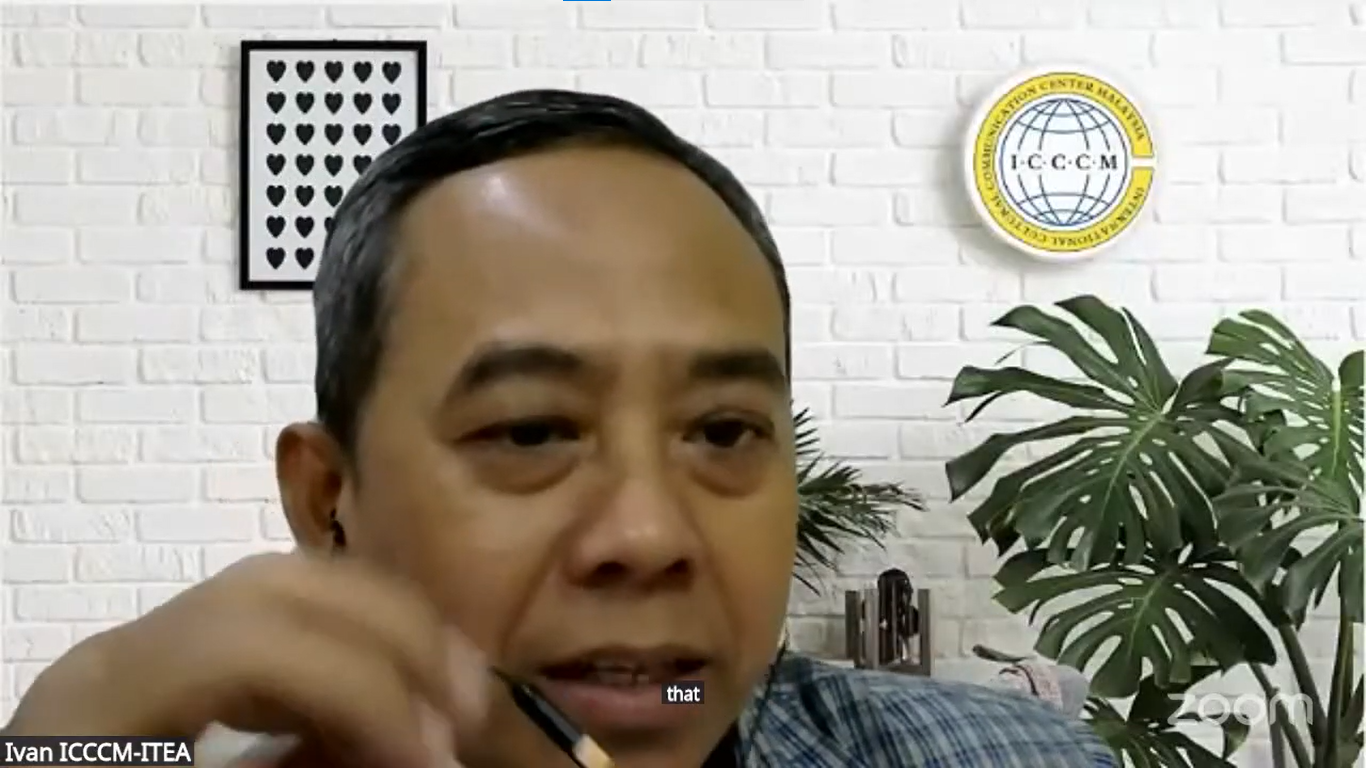
Ivan Chabibilah, S.S., M.Li. of ICCCM shifted the discussion toward implementation challenges across diverse cultural contexts. He shared insights from collaborative projects with California-based language application developer Matthew Sussman, whose Flow Speak platform revealed AI's inability to replicate rasa (emotional nuance) in language learning. "Even the most advanced AI lacks the soul that human teachers bring to pronunciation correction and emotional connection," Ivan observed, highlighting how Sundanese pedagogical principles could inform global EdTech development. He questioned how BIMA's circular approach might address Indonesia's "three dharma" academic requirements, teaching, research, and community service, when many researchers treat publications as compliance exercises rather than transformative knowledge. This institutional critique resonated with Indonesian faculty members in attendance in reconceptualizing academic productivity beyond quantitative metrics.
Indra Maulana Arfan Aziz, student staff of International Office contributed a student perspective on bridging ancestral wisdom with modern frameworks. He contrasted linear learning's mechanical grammar drills with BIMA's demands for reflection and multimodal integration, asking specifically how to implement these principles in writing classrooms. Luqman Baehaqi, Ph.D. acknowledged the natural skepticism such approaches provoke, noting, "Your curiosity about connecting pronunciation to writing improvement is precisely the spark genuine learning requires." He emphasized that aesthetic reading, where texts are engaged emotionally before analytically creates lasting neurological imprints that mechanical repetition cannot achieve. This intergenerational dialogue nurturing scholarly continuity, where student questions shape institutional direction rather than merely receiving predetermined knowledge.
The session concluded with Prof. Wirawan proposing concrete collaboration: capturing indigenous Papuan and Indonesian linguistic expressions through AI systems that preserve rasa rather than merely translating words. "We must build technology that carries soul, not just syntax," he asserted, suggesting joint research between UINSSC, ICCCM Malaysia, and Australian institutions. Luqman Baehaqi, Ph.D. affirmed this vision, noting how Sundanese oral traditions like Carita Pantun encode ecological and social intelligence through performative narrative—a model for 21st-century multimodal learning.
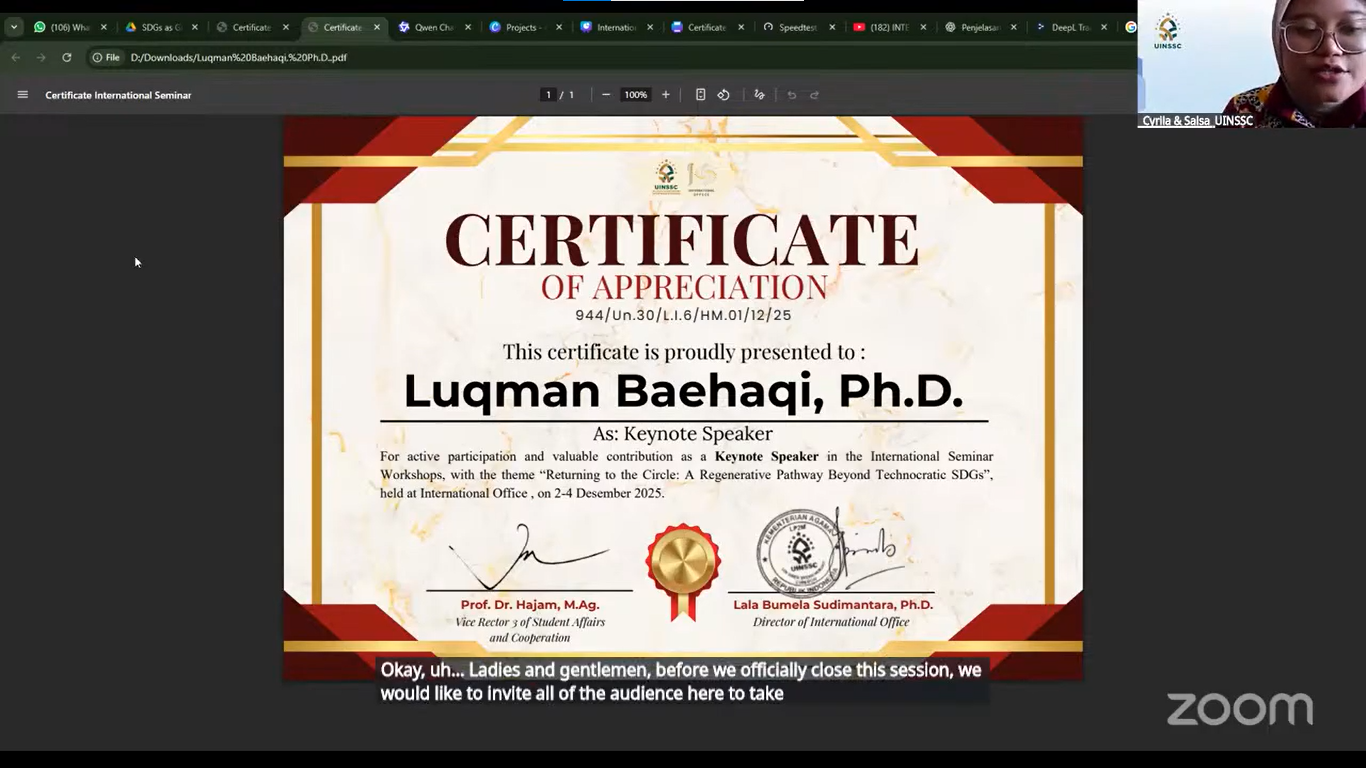
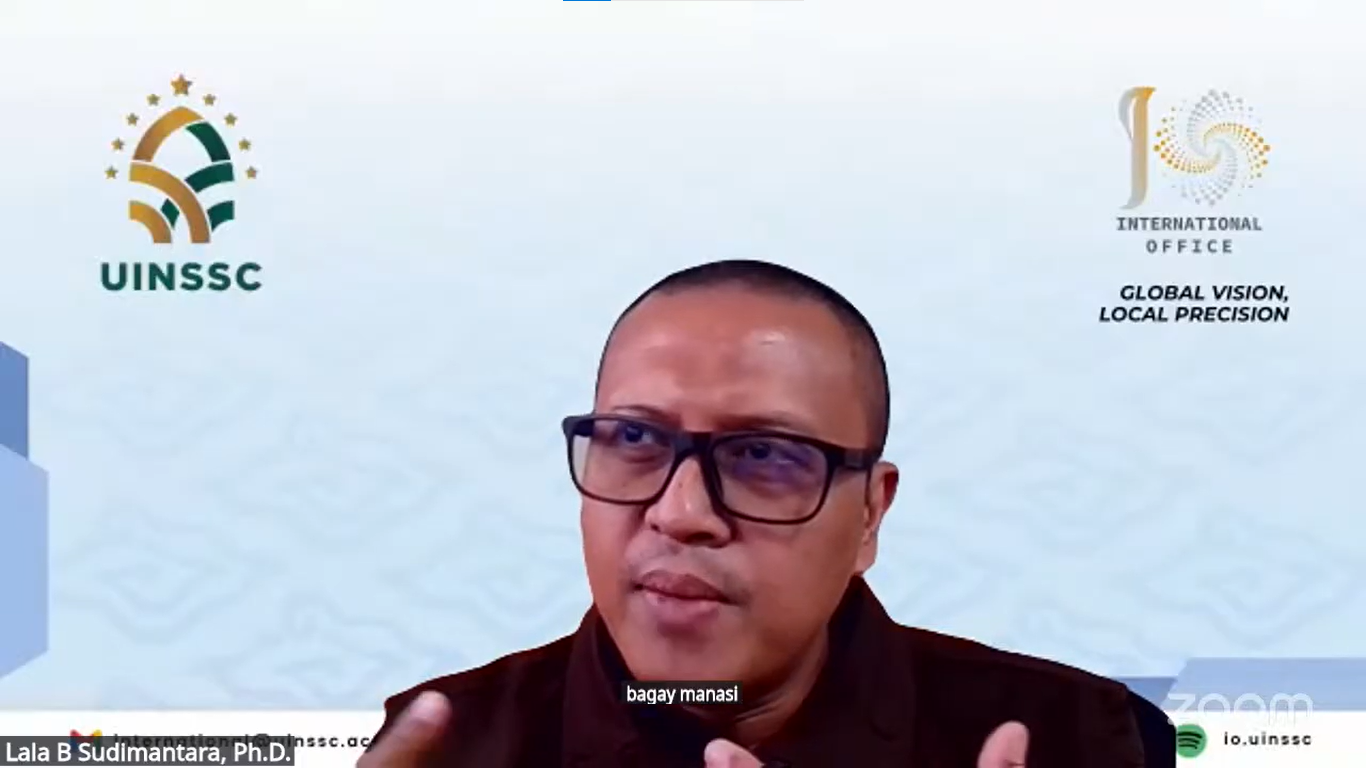
Lala Bumela Sudimantara, Ph.D., Director of the International Office, reflected on the day's significance: "When Prof. Wirawan and Ivan engage with Luqman's work not as recipients but as co-creators, they validate our mission to position Cirebon as a global knowledge hub where Sundanese wisdom informs worldwide educational innovation." This organic knowledge exchange exemplified the seminar and workshop’s success in transforming abstract frameworks into practical applications. UIN Siber Syekh Nurjati Cirebon had once again proven its capacity to convene global scholars around transformative educational visions while maintaining distinct Indonesian philosophical foundations. The session's legacy would extend beyond seminar and workshop into actual classroom transformations across multiple nations, where the true measure of academic excellence lies not in publications counted but in human capacities awakened.
Author: Resa Diah Gayatri