
The International Office of UIN Siber Syekh Nurjati Cirebon Facilitates a Critical Epistemic Dialogue: Reclaiming Carita Pantun as Living Knowledge Architecture in the Q&A Session with Mr. Didin Mishbahuddin, S.Hum
Cirebon, December 2, 2025 – Following Mr. Didin Mishbahuddin’s keynote presentation titled “Beyond Literature: Carita Pantun as a Heritage of Sundanese Knowledge Systems,” the International Office of UIN Siber Syekh Nurjati Cirebon hosted a dynamic Q&A session on the fifth floor of Gedung Siber in dialogue with Lala Bumela Sudimantara, Ph.D. (Director of International Office), Mr. Sukad (Spiritual Elder and Guardian of Saragahiang from Kuningan), Aries Endri Susanto, S.T., M.E., and Nur’aeni, S.E., M.E (representatives of Hakim Ventura International), and International Office’s student staff. The International Office’s meticulous attention to cultural context transformed standard conference protocols into meaningful ritual. This session marked a pivotal moment in the seminar “Returning to the Circle: A Regenerative Pathway Beyond Technocratic Sustainable Development Goals,” transforming abstract cultural theory into lived epistemology through rigorous scholarly exchange and personal reflection. It exemplified how institutional spaces can become vessels for civilizational dialogue when designed with intentionality and respect for indigenous epistemologies.
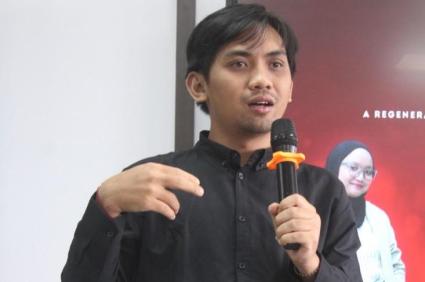
Tsamarah Bahira Alzena initiated the dialogue by questioning how Carita Pantun could integrate with traditional dance forms to strengthen women’s ecological roles in contemporary contexts. Mr. Didin responded by distinguishing between literal connections and value-based relationships within Sundanese cosmology, explaining how women occupy a unique spiritual hierarchy where Sunan Ambu, the highest entity in pantun narratives represents feminine divine principles often absent from written Sunda kuno texts that emphasize masculine deities like Dewa Siwa.
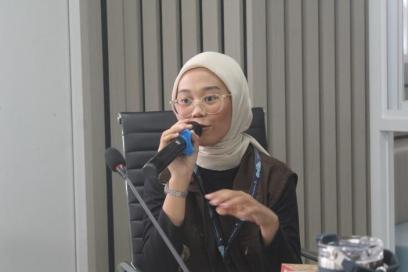
His analysis revealed how oral traditions preserve gender balance that formalized religious texts sometimes obscure, noting that pantun narratives deliberately elevate feminine spiritual authority through symbolic storytelling rather than doctrinal pronouncements. This insight illuminated pathways for reimagining women’s leadership in environmental stewardship through cultural frameworks that already exist within Sundanese wisdom. The exchange demonstrated how performance arts could reactivate dormant ecological knowledge encoded in ancestral narratives.
M. Azkiya Bahtsulkhoir then posed a profound philosophical question: whether religion itself might be understood as a cultural construct shaped by local epistemologies. Mr. Didin affirmed that Carita Pantun functions not as dogma but as rekayasa sosial, a method of social engineering through performative narrative. He illustrated this with the Baduy community, whose adherence to ancestral values persists precisely because their pantun traditions encode spiritual guidance in accessible, cyclical storytelling. Rather than framing religion as external imposition, he proposed that Sundanese pantun reveals how ethical frameworks emerge organically from place-based experience, where ritual, ecology, and cosmology are inseparable. Religion, in this view, is not imported doctrine but cultivated wisdom grown from the soil of lived practice.
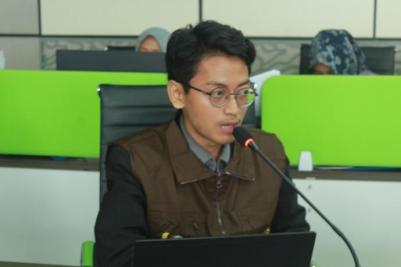
Maulida Rahma explored the practical applications of silih asih, silih asah, and silih asuh principles, Sundanese ethical frameworks emphasizing mutual care, sharpening through dialogue, and nurturing growth, within modern institutional structures. Mr. Didin elaborated that these concepts function not as abstract ideals but as operational methodologies embedded in traditional community governance, where decision-making processes inherently balance individual needs with collective wellbeing through reciprocal relationships. He contrasted this with linear bureaucratic systems that often fragment holistic knowledge into isolated competencies, explaining how pantun narratives encode these principles through performative storytelling that integrates ecological, social, and spiritual dimensions. Mr. Didin emphasized that these principles remain active in Kuningan’s mountain communities where resource management decisions still follow traditional consensus-building protocols.

Resa Diah Gayatri questioned how Carita Pantun’s educational frameworks could transition from informal community settings into formal educational institutions without losing their contextual integrity. Mr. Didin acknowledged institutional barriers but reframed the challenge as an opportunity for curriculum innovation rather than mere content transfer, proposing a phased integration model where core concepts like Ngahuma (agricultural philosophy) first appear in environmental science courses before expanding to ethical reasoning modules.
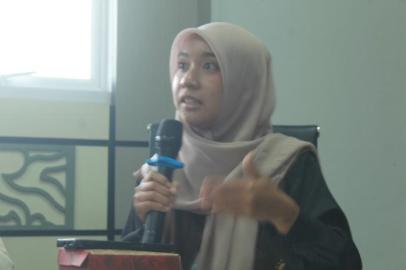
He cited successful adaptations where university educators collaborated with village elders to develop hybrid pedagogical approaches that maintain ritual contexts while meeting academic standards. Mr. Didin emphasized that formal education must evolve beyond knowledge transmission toward wisdom cultivation, where assessment measures relational understanding rather than individual performance metrics. His response validated students’ yearning for meaningful connections between classroom learning and lived experience while honoring academic rigor.
Cyrila Zahra Tsania and Farah Syifa Mutiara, student interns at the International Office, who voiced a concern shared by many young Indonesians: “If the original Carita Pantun Lutung Kasarung is considered sacred and not widely disseminated, how can those of us without direct access, especially those only exposed to viral, romanticized versions on YouTube learn its authentic ecological and spiritual teachings?” Their question cut to the heart of a growing crisis: the disconnection between ancestral knowledge and digital accessibility in an age where folklore is often stripped of its ritual and pedagogical depth. Cyrila then examined how pantun’s sacred contexts diminish when stories circulate as viral content across digital platforms, losing their ritual significance and ecological teachings.
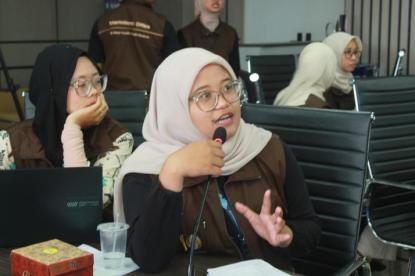
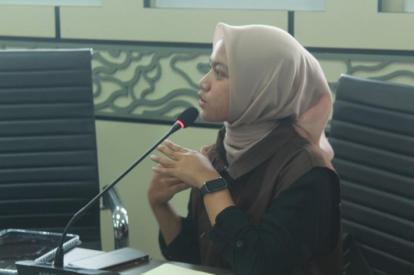
Mr. Didin responded with both clarity and urgency. He affirmed that the romance-centric adaptations dominating platforms like YouTube, constitute what he called “pelecehan” (desecration) of the original story’s sacred purpose. “Lutung Kasarung was never just a love story,” he emphasized. “It is a manual for Ngahuma, Sundanese agricultural ethics and a guide to communicating with Gunung Ceremai, managing water, and living in harmony with natural cycles.” He explained that the original 1860s transcriptions by Dutch ethnographers remain the most authentic sources, though their archaic language poses barriers.
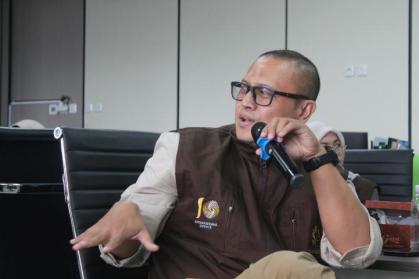
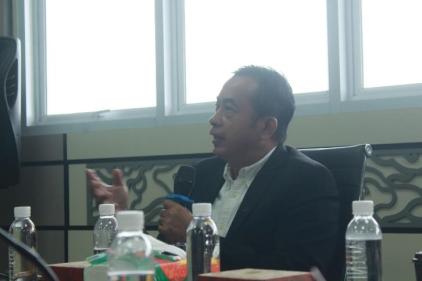
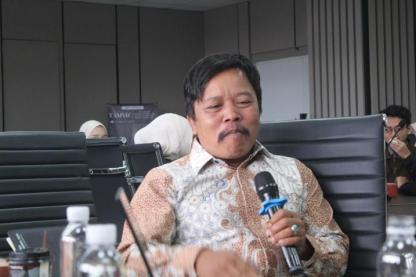
The session concluded with profound reflections from Lala Bumela Sudimantara, Ph.D., Mr. Sukad, and Aries Endri Susanto, S.T., M.E., who synthesized the day’s insights into institutional action. Lala Bumela Sudimantara, Ph.D. emphasized that “Returning to the circle challenges us to internalize ancestral intelligence, apply relational and ecological awareness, and embrace non-linear, spiral learning in every endeavor. By bridging Carita Pantun and the BIMA Framework, we can design regenerative pathways that honor the past, enrich the present, and sustain future generations.” Their collective testimony transformed theoretical discourse into institutional commitment. UIN Siber Syekh Nurjati Cirebon had reignited global scholarly kinship in the digital age, proving Cirebon’s legacy as a city of harmony provides fertile ground for reimagining humanity’s relationship with nature. This milestone certified that when preparation meets purpose, even Indonesia’s smallest city can redirect global currents of knowledge.
Author: Resa Diah Gayatri