
The International Office of UIN Siber Syekh Nurjati Cirebon Facilitates a Living Dialogue on Sacred Ecology: Ancestral Hydrological Wisdom, Gendered Cosmology, and Embodied Stewardship in the Q&A Session with Mr. Sukad, Guardian of Saragahiang
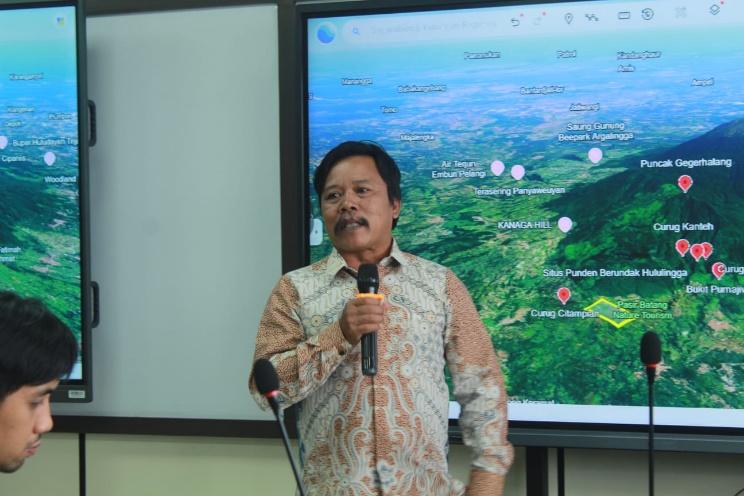
Cirebon, December 2, 2025 – The First day of Cultural-Ecological Seminar at International Office of UIN Siber Syekh Nurjati Cirebon reached its profound climax during the Q&A session with Mr. Sukad, Spiritual Elder and Guardian of the Saragahiang from Kuningan, Indonesia. Following his detailed exposition on Gunung Ciremai's (Ciremai Mountain) sacred geography, participants engaged in dialogue that revealed the living relevance of ancestral ecological frameworks.
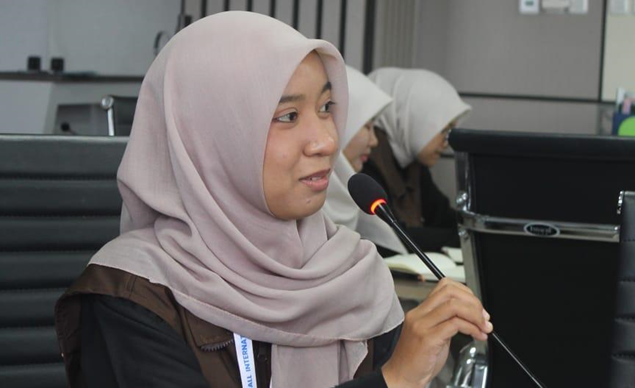
Tsamarah Bahira Alzena, Student Staff of the International Office, posed the first critical question regarding women's disproportionate vulnerability during environmental disasters and how theology and ecology might advance gender justice. Mr. Sukad's response transcended conventional environmental discourse: “In traditional Sundanese wisdom, women occupied the highest caste, respected as Sunan Ambu Ageng, the source of future generations. In my household, I've never seen my wife as subordinate but as 'ibu dari anak-anak saya' the mother of my children.” His words reframed ecological protection as inseparable from honoring feminine principles embedded in Sundanese cosmology. This perspective positioned environmental justice not as technical intervention but as spiritual reorientation toward balance between masculine and feminine energies in nature and society.
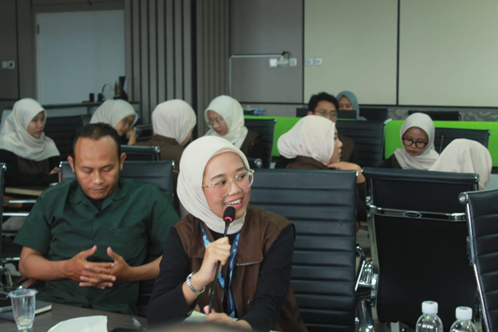
Bilqis Syifa Shoraya, Student Staff of the International Office, first inquired about sanctions for parties proven to damage water springs or illegally extract resources from protected areas. Mang Ukad acknowledged the evolution of enforcement mechanisms: "In ancient times, customary law (Undang-Undang Adat) governed such violations. Those who damaged sacred water springs faced community service penalties, typically ten days cleaning rivers and restoring watersheds. Today's legal frameworks exist, but I'm unfamiliar with specific statutes, it falls to authorities to enforce them." His response bridged ancestral governance systems with contemporary regulatory challenges, highlighting how traditional ecological knowledge once functioned as both philosophy and practical law.
Cherry Hilary Afsonias asked how to maintain Earth and prevent flash floods amid modern challenges. Mang Ukad shared ancestral wisdom: "Air mendapatkan 1 perkara, tidak marah" water teaches us to remain calm and settle sediment rather than expel impurities like humans do. Ananditamala Syalwa Heryana explored how loving nature and knowing ancestors through Lutung Kasarung connects to understanding mountains and their Creator. Mang Ukad emphasized that ecological stewardship begins with self-knowledge: "When we were created by Allah from soil and water, we will return to soil and water. While alive, we need this nature that sustains us."
Lala Bumela Sudimantara, Ph.D., Director of the International Office, interjected with a reflective inquiry about Pasir Batang Anugirang referenced in Lutung Kasarung, a realm described as "the land of joy." Lala Bumela Sudimantara, Ph.D. observed how Western narratives seldom depict joyful kingdoms, typically emphasizing wars and scandals instead. His question revealed scholarly curiosity about whether this designation reflected harmonious human-nature relationships. Mr. Sukad's response grounded myth in geography: “Pasir Batang Anugirang refers to the western edge of Kuningan's eastern region. At the foot of the mountain in Sagarahiang Village exists evidence of the Pasir Batang kingdom, while upstream at Sakasadel and Sakamenger water sources lies Citampian spring where Guru Minda Kahiyangan was first received.” This mapping of sacred narrative onto physical landscape demonstrated how Sundanese ecological knowledge operates through place-based wisdom rather than abstract theory. Lala Bumela Sudimantara, Ph.D. later reflected how this integration of geography and spirituality exemplifies the "non-linear intelligence" that modern sustainability frameworks desperately need to incorporate.
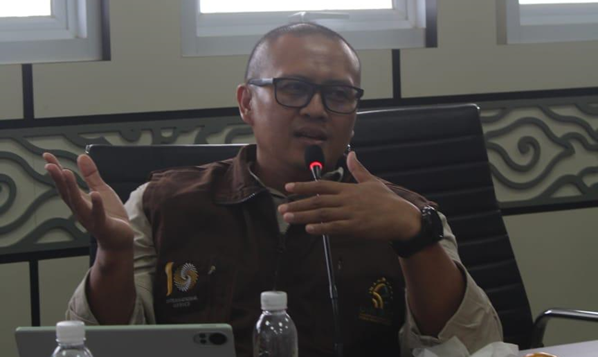
Eka Fitrianingsih, a student researcher, inquired about methodological approaches for documenting environmental degradation, specifically how to gather evidence of declining water quality and identify human versus natural causes. Mr. Sukad rejected purely technical approaches, advocating for holistic observation: “Study healthy water sources first, not just degraded ones. Measure water debit at different elevations, from Ibu Pertiwi at the summit down to Sakasadell and Sakamenger. Compare identical elevation points in forested versus deforested areas to quantify how tree cover influences water flow.” He detailed a practical research framework: track how water volume increases as it descends through forested zones, document tree species diversity along watersheds, and correlate land use patterns with water availability in communities. This methodology bridges scientific rigor with ancestral knowledge systems, teaching students to read landscapes as texts written by both nature and culture. His approach transforms environmental monitoring from bureaucratic compliance into sacred stewardship, a perspective that resonated deeply with UIN SSC's mission to merge faith and science.
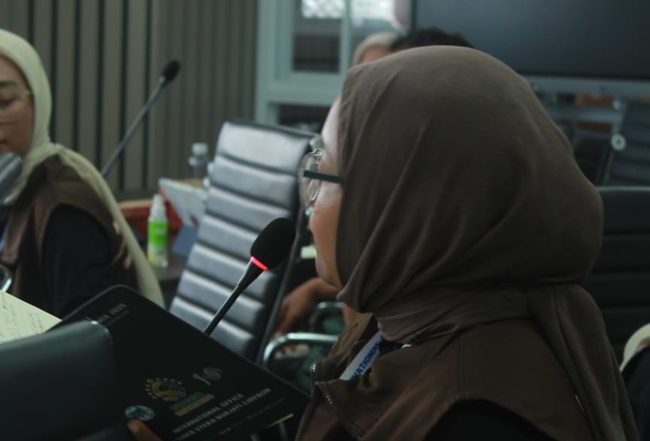
Resa Diah Gayatri from the International Office team shifted focus to knowledge transmission, asking how Mr. Sukad shares mountain wisdom with contemporary communities. His response rejected classroom-based pedagogy: “When discussing mountains, we must be on mountains, not in buildings. As our elders say, 'Jangan dibasa sebelum disaba' (Don't describe something before experiencing it).” He revealed his community initiatives through two organizations: Kelana Buana Hibar Budaya (a foundation) and Sunda Gaya (a youth group whose members wear leather jackets with sarongs, a symbolic fusion of tradition and modernity). For three years, they've practiced "tatajuran", planting trees along riverbanks where water flow has diminished. “In the field, ten saplings mean ten trees planted. In a classroom, a hundred words might yield only ten absorbed lessons,” he emphasized. This embodied pedagogy rejects the illusion that ecological wisdom can be transmitted through PowerPoint presentations alone, demanding instead that knowledge emerge from dirt-under-fingernails relationships with place.
Aris Endri Susanto, S.T., M.E., a representative of Hakim Ventura International, offered a striking reflection on his travels through Southeast Asia. Having visited Malaysia, Thailand, and Cambodia, including a pilgrimage to Angkor Wat—he observed how these nations, despite smaller territories, experienced disasters more frequently than Indonesia. He connected this to land sacredness and traditional ecological practices. His journey through Cambodia's barren landscapes led to profound realization: “Only after seeing those dry lands could I finally feel the meaning of 'Indonesia Raya' in our national anthem. When I returned and sang it, I wept.” His testimony transformed national pride into ecological gratitude, recognizing Indonesia's extraordinary fertility as both gift and responsibility. This perspective echoed Mr. Sukad's teachings about Gunung Ciremai as a water guardian where sacred geography directly enables human flourishing.
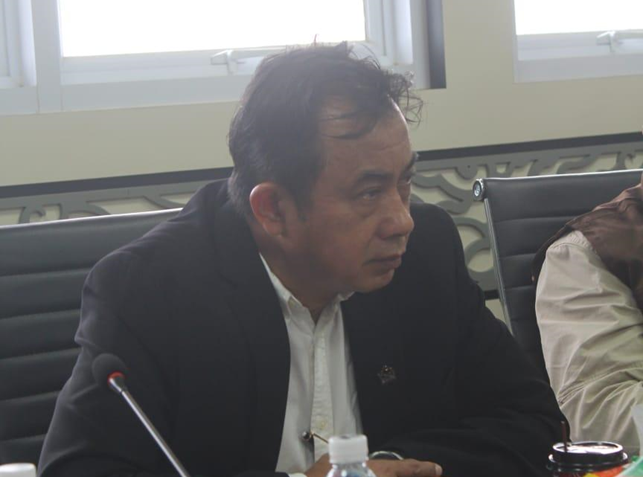
Lala Bumela Sudimantara, Ph.D. synthesized these threads during closing remarks, positioning the dialogue as a microcosm of UINSSC's institutional vision: “True internationalization begins when we move beyond counting foreign delegations and start measuring shared human impact.” He highlighted how the Q&A session embodied the BIMA Framework's core principles, integrating ancestral intelligence with contemporary challenges through relational learning. The Director emphasized that water security in Cirebon and Indramayu depends on protecting Gunung Ciremai's upper watersheds, a truth encoded in Lutung Kasarung centuries before modern hydrology. His leadership reframed the university not as a knowledge consumer but as a bridge between Sundanese wisdom keepers and global sustainability discourse.
The session's emotional conclusion saw Tsamarah Bahira Alzena expressing gratitude on behalf of International Office staff: “We wouldn't access such wisdom anywhere else except through this office. This is soul nourishment.” Her words captured how Mr. Sukad's teachings transcend academic categories to address existential questions about belonging and responsibility. As certificates were presented to Mr. Sukad and other knowledge keepers, the room resonated with collective recitation of “Alhamdulillahi rabbil ‘alamin”, transforming bureaucratic ritual into spiritual affirmation
UIN Siber Syekh Nurjati Cirebon had once again proven that Cirebon's legacy as a city of harmony provides fertile ground for reimagining humanity's relationship with nature. The university's institutional maturity lay not in hosting prestigious international guests but in creating contexts where ancestral wisdom could illuminate contemporary challenges, making water flow not just through Gunung Ciremai's valleys but through the veins of a civilization relearning how to live with the earth.
Author: Resa Diah Gayatri