
The Proceedings of AsiaCALL International Conference 2025 Reflect a Novel Infrastructure for Global Scholarship: UIN Siber Syekh Nurjati Cirebon Designed a Hybrid, Non-Hierarchical, and Systematically Accountable Model of Knowledge Dissemination
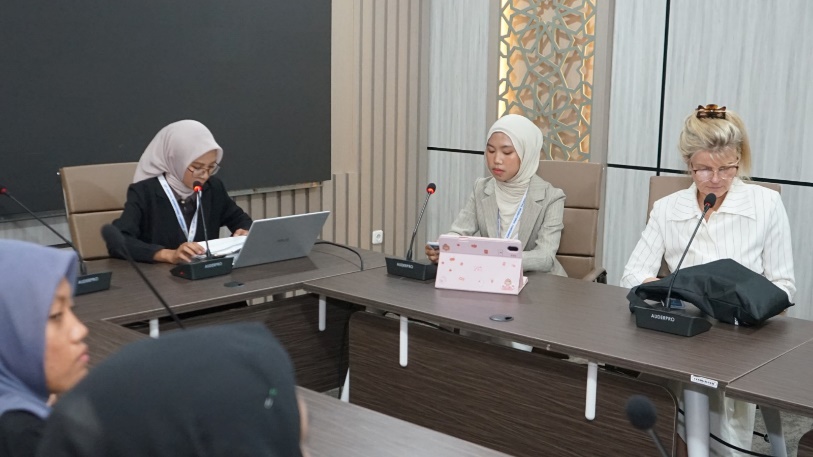
Cirebon, November 16, 2025 – The AsiaCALL International Conference 2025 at UIN Siber Syekh Nurjati Cirebon commenced its core scholarly exchange with 38 parallel paper presentations across four dedicated rooms (Room A, B, C, D) in Cyber Building, fulfilling the organization’s foundational mission to transform classroom insights into global knowledge. The hybrid event welcomed presenters from 14 nations, including scholars who traveled physically to Cirebon from the Netherlands, Saudi Arabia, and Japan alongside Indonesian academics. International Office Director Lala Bumela Sudimantara, Ph.D. opened proceedings by emphasizing that “AsiaCALL exists as a beginning where classroom whispers become global conversations through rigorous peer exchange.” Distinguished speakers included Ania Lian, Ph.D. (Vice President of AsiaCALL/Charles Darwin University, Australia), Prof. Dr. Jeremy White (Vice President for International Relations, AsiaCALL/Ritsumeikan University, Japan), Assoc. Prof. Dr. Pham Vu Phi Ho (Vice President for Administrative Affairs and Publication, AsiaCALL/Industrial University of Ho Chi Minh City, Vietnam), Assoc. Prof. Hassan Khosravi, Ph.D. (Vice President for Administrative Affairs of AsiaCALL/The University of Queensland, Australia), Prof. Shameem Rafik-Galea, Ph.D. (Professor of Applied Linguistics at SEGi University), and Made Hery Santosa, Ph.D. (Universitas Pendidikan Ganesha, Indonesia). The meticulous coordination by International Office staff and student staff (Global Engagement Team) ensured seamless transitions between physical and virtual participants. This scholarly infrastructure positioned UINSSC as both host and catalyst for democratizing language education research.
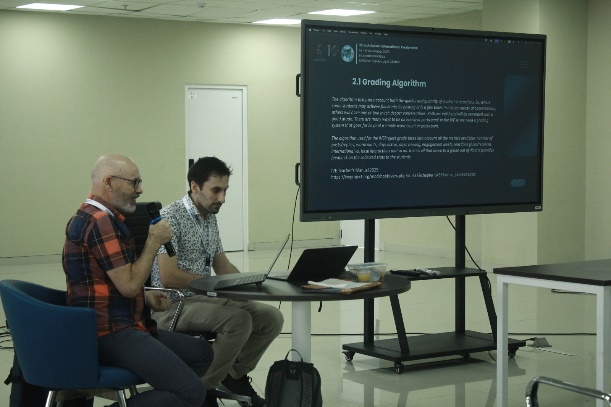
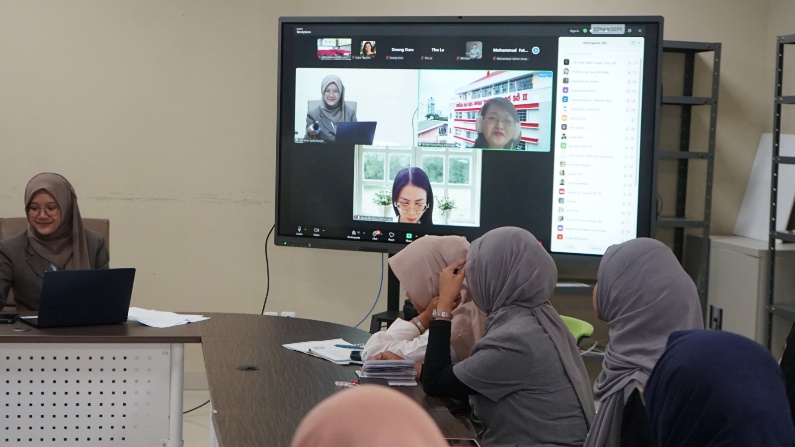
The four parallel rooms operated under AsiaCALL’s signature protocol requiring all speakers to remain present for dedicated Q&A sessions, transforming presentations into dynamic scholarly dialogues. Unlike conventional conferences where speakers depart after their slots, this structure mandated reciprocal intellectual engagement throughout each session. Presenters from Dutch, Saudi, and Japanese institutions actively participated in discussions about their work alongside Indonesian colleagues, fostering cross-border academic kinship. Each room maintained identical setups to ensure equitable presentation conditions, reflecting UINSSC’s commitment to academic fairness. This intentional design prevented hierarchical dynamics often seen in multi-room conferences, allowing junior researchers equal space alongside established scholars.
A defining feature was the rigorous publication pathway for all accepted papers. Each presentation underwent double-blind review by AsiaCALL’s editorial board prior to acceptance, with selected full papers slated for inclusion in the Conference Proceedings. Assoc. Prof. Dr. Pham Vu Phi Ho oversaw quality assurance, emphasizing that publication represents scholarly responsibility rather than reward. During Q&A sessions, presenters received detailed feedback from peers and editorial board members present in the rooms. The publication pipeline prioritized studies addressing diverse linguistic contexts, with submissions from Indonesian, Saudi, Japanese, and European institutions undergoing identical evaluation criteria. This commitment to equitable knowledge dissemination aligned with UINSSC’s institutional philosophy of Unggul Mendunia—excellence that radiates from local roots to global impact.
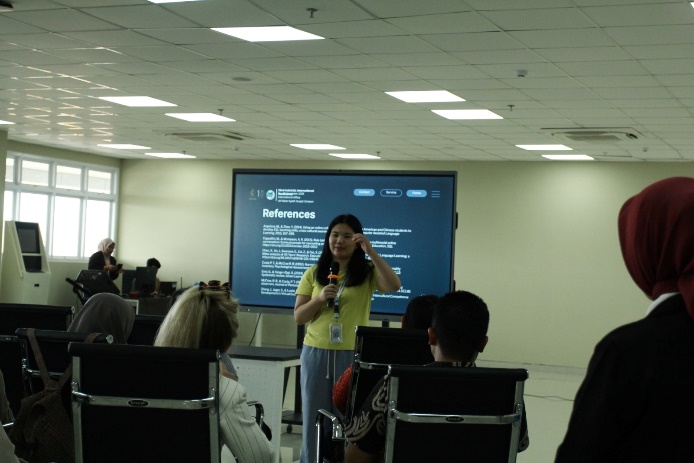
The physical convergence of international scholars in Cirebon carried profound symbolic weight, countering pandemic-era fragmentation of academic communities. Crucially, the conference design intentionally mixed geographical representation within sessions, presentations from Global North and South institutions alternated without thematic segregation. This curatorial strategy prevented academic silos, enabling unexpected synergies like joint research initiatives discussed during Q&A segments. Student volunteers from UINSSC’s Global Engagement Team facilitated seamless communication between physical and virtual participants, ensuring remote presenters received equal engagement. Their presence embodied the university’s commitment to developing next-generation scholarly diplomats who bridge technological and cultural divides.
Operational excellence underpinned the scholarly intensity, with UINSSC’s cyber-native infrastructure enabling frictionless hybrid participation. Each room featured identical tri-screen setups displaying presenter slides, and virtual participant feeds. Technical staff monitored connection stability for remote presenters, while consistent acoustic treatments and lighting maintained equitable conditions across all four spaces. Industry partners observed how this standardized design amplified scholarly engagement. Most critically, the International Office implemented a “knowledge capture” protocol where student scribes documented every Q&A insight into digital repositories. This system ensured ephemeral dialogues transformed into enduring resources, fulfilling AsiaCALL’s promise to convert conference moments into perpetual academic capital. Room transitions were managed with precision, allowing delegates to move between sessions without missing critical exchanges.
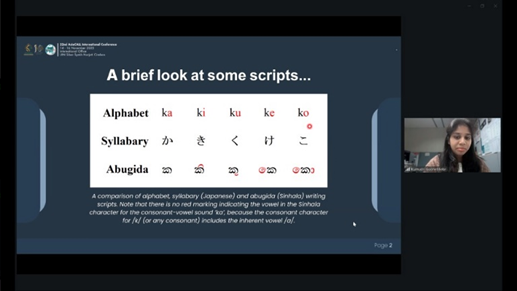
The proceedings crystallized UINSSC’s maturing role within global academic governance structures. Cirebon’s cyber-campus model demonstrated how digital-native institutions can reshape scholarly conventions. The four-room configuration intentionally avoided hierarchical staging—senior professors presented alongside doctoral candidates in identical setups, with audience members freely moving between rooms based on intellectual interest. This democratization extended to publication pathways, where early-career Indonesian researchers received equal editorial consideration alongside established international scholars. Such operational rigor positioned AsiaCALL International Conference 2025 not as a typical conference but as a prototype for post-pandemic academic collaboration where technological infrastructure serves human connection.
Reflecting on the parallel sessions’ significance, Lala Bumela Sudimantara, Ph.D., Director of the International Office and Conference President, observed: “When scholars from across the globe choose Cirebon as their physical meeting ground, they validate our belief that transformative knowledge grows where tradition and technology intertwine with intention.” His words captured how the conference transcended logistical achievement to become an epistemological statement, proving Indonesian higher education institutions can host world-class scholarship without surrendering cultural identity. As daylight faded over Cyber Building, corridors buzzed with impromptu collaborations formed during Q&A sessions. These organic connections embodied AsiaCALL’s core mission, transforming isolated insights into collective wisdom. UIN Siber Syekh Nurjati Cirebon had reignited global scholarly kinship in the digital age.
The culmination of Day 1 and Day 2 set a benchmark for scholarly integrity rarely seen in hybrid conferences. Every presentation concluded with transparent disclosure of limitations and ethical considerations, while Q&A sessions modeled intellectual generosity over competitive debate. The International Office distributed digital “knowledge seeds”, curated packets of presentation slides and contact information, to accelerate post-conference collaborations. This moment epitomized AsiaCALL International Conference 2025’s unique achievement: creating a space where Northern and Southern scholarship coexist as equals, where technology serves human connection, and where Cirebon’s legacy as a city of harmony becomes the blueprint for global academic renewal.
Author: Resa Diah Gayatri