
UIN Siber Syekh Nurjati Cirebon Holds International Seminar on AI and Indonesian Culture
Speakers, university leaders, organizers, and participants pose for a group photo following the "Artificial Intelligence and Indonesian Culture: Bridging Tradition and Digital Innovation" International Seminar at UIN Siber Syekh Nurjati Cirebon, Thursday (October 8, 2026). (Doc. IO)
CIREBON (Rafly Hensam Ramadhan) – The International Office of UIN Siber Syekh Nurjati Cirebon (UIN SSC) held an international seminar entitled "Artificial Intelligence and Indonesian Culture: Bridging Tradition and Digital Innovation" on Thursday, October 8, 2026. The event took place on the 5th Floor of the Cyber Building, UIN Siber Syekh Nurjati Cirebon. The seminar brought together university leaders, lecturers, students, and invited speakers to discuss the relationship between technological development, particularly Artificial Intelligence (AI), and the preservation and development of Indonesian culture in the digital era.
The event began with remarks from Vice Rector III for Student Affairs, Alumni, and Cooperation, Prof. Dr. Hajam, M.Ag., who highlighted the importance of strengthening students' ability to respond to technological developments while maintaining academic, social, and cultural values.The second remarks were delivered by Vice Rector I for Academic Affairs, Dr. Ayus Ahmad Yusuf, M.Si., who emphasized the importance of connecting technological innovation with academic development and the preservation of Indonesian cultural identity. The event was then continued with remarks from the Chief Executive of the seminar, Ivo Dinasta Yanuar, S.S., M.AppLing., who outlined the International Office's commitment to providing academic forums that connect contemporary global issues with the development of students' knowledge and competencies.
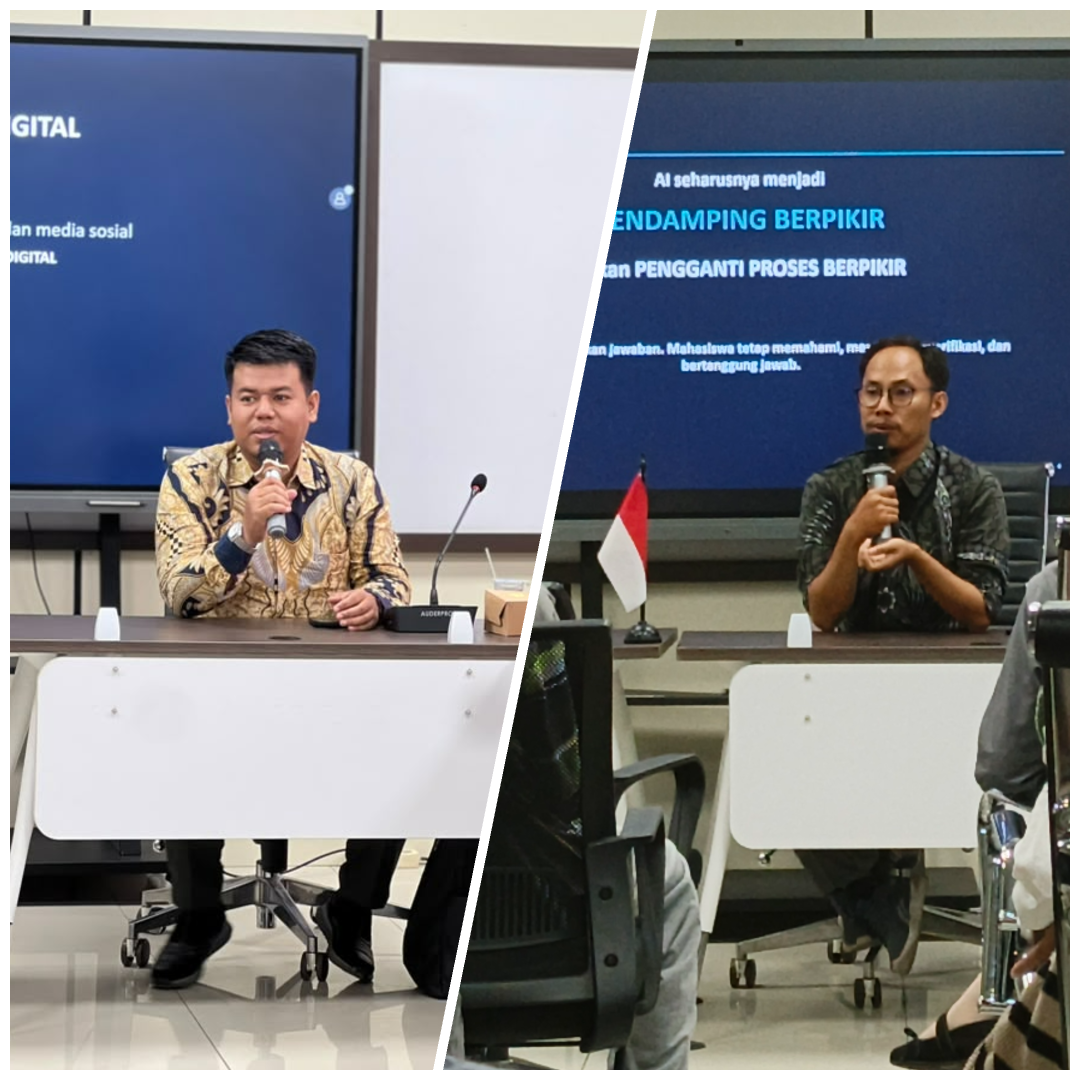
Speakers Virga Putra Darma, M.Pd. and Dr. Indra Maulana, S.Pd., M.Kom. deliver their presentations during the "Artificial Intelligence and Indonesian Culture: Bridging Tradition and Digital Innovation" International Seminar at UIN Siber Syekh Nurjati Cirebon, Thursday (October 8, 2026). (Doc. IO)
The first session featured Virga Putra Darma, M.Pd., a cultural studies expert, who presented "Budaya Asing & Budaya Indonesia: Belajar dari Akulturasi Cirebon" (Foreign and Indonesian Culture: Learning from Cirebon's Acculturation). Virga explained that Indonesian culture has developed through continuous encounters with various cultures from outside Indonesia. He introduced the concepts of diffusion, acculturation, assimilation, and globalization, emphasizing that foreign cultural influences do not necessarily have to be rejected or accepted without consideration. Using Cirebon as a case study, he highlighted the city as a meeting point of various cultural influences, including Sundanese, Javanese, Islamic and Arab, Chinese, European, and Hindu-Buddhist traditions. These influences can be seen in Cirebon's language, performing arts, architecture, traditions, cuisine, and cultural symbols.
He further emphasized three important lessons from Cirebon's cultural development: being open, selective, and creative. According to the presentation, Cirebon did not simply adopt foreign cultural elements but processed and adapted them into distinctive local forms, such as the Mega Mendung batik motif and Paksi Naga Liman.
The second session was delivered by Dr. Indra Maulana, S.Pd., M.Kom., an expert in Coding Learning and Virtual Lab Platforms from IPB, who presented "AI, Etika, dan Kewargaan Digital" (AI, Ethics, and Digital Citizenship).
Dr. Indra emphasized that the purpose of the discussion was not to prohibit students from using AI, but to encourage them to use the technology intelligently, ethically, critically, and responsibly. He stressed that AI should function as a thinking companion rather than a replacement for the thinking process, with students remaining responsible for understanding, evaluating, verifying, and taking responsibility for their work.
The presentation also addressed several risks associated with AI use, including hallucinated information, fabricated references, privacy violations, deepfakes, misinformation, bias, and manipulation. Students were encouraged to verify information and references before using AI-generated content in academic work.
Dr. Indra also introduced practical approaches to responsible AI use, including the TABAYYUN framework for verifying digital information and the STOP method for evaluating social media content. He encouraged students to check sources, examine context and evidence, seek independent confirmation, and consider the potential impact of sharing unverified information.
The seminar also highlighted the importance of protecting personal and sensitive information when using AI. Students were reminded not to upload sensitive data such as passport or identity numbers, passwords, health information, un-anonymized research data, confidential documents, or other people's personal information without proper authorization.
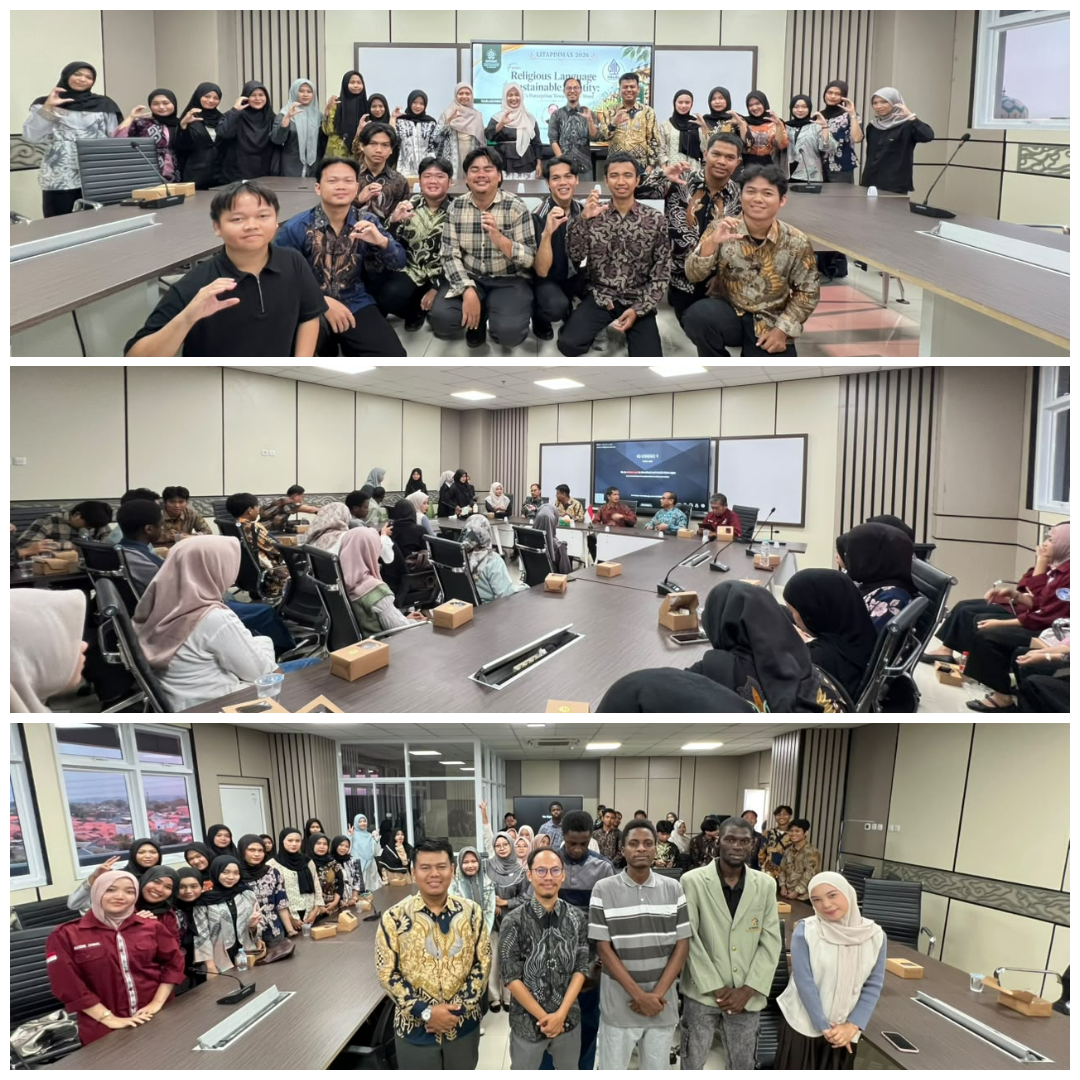
Speakers, university leaders, organizers, international students, and participants attend the "Artificial Intelligence and Indonesian Culture: Bridging Tradition and Digital Innovation" International Seminar and pose for group photos at UIN Siber Syekh Nurjati Cirebon, Thursday (October 8, 2026). The seminar brought together participants to discuss Artificial Intelligence, ethics, digital literacy, and Indonesian cultural identity. (Doc. IO)
Through the seminar, the International Office of UIN SSC sought to encourage students to embrace technological innovation while maintaining cultural awareness, academic integrity, and social responsibility. The discussions demonstrated that technological advancement and cultural preservation can complement one another when students are equipped with the ability to critically evaluate, creatively adapt, and responsibly use emerging technologies.
The seminar concluded with a message for students to use AI wisely, verify information critically, and communicate responsibly, while continuing to preserve and develop Indonesian cultural identity in the digital era.