
UIN Siber Syekh Nurjati Cirebon Leads Field Visit to Explore the Cultural and Educational Depth of Sundanese Folklore Lutung Kasarung in Pasir Batang, Kuningan
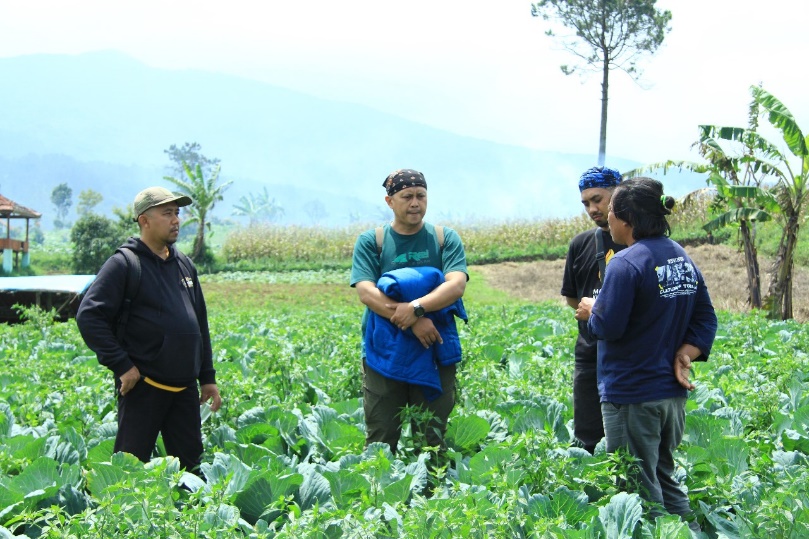
Kuningan, August 31, 2025 — a research team from UIN Siber Syekh Nurjati Cirebon in collaboration with UIN Palangka Raya conducted a meaningful field visit to Pasir Batang in Karangsari Village, Darma District, Kuningan Regency. The visit was initiated and led by Lala Bumela Sudimantara, Ph.D. who brought together colleagues and students to engage directly with local cultural heritage. The primary purpose of the trip was to deepen understanding of Sundanese oral traditions, particularly the Lutung Kasarung narrative, not as a mere folktale but as a living cultural text embedded with historical, ecological, and philosophical insights. This experiential journey reflects a growing institutional commitment to reconnect academic inquiry with local wisdom and ancestral knowledge systems. The team emphasized that such visits are essential for fostering cultural awareness and academic humility. By stepping outside the classroom, they sought to understand how knowledge is preserved and transmitted in real community contexts.
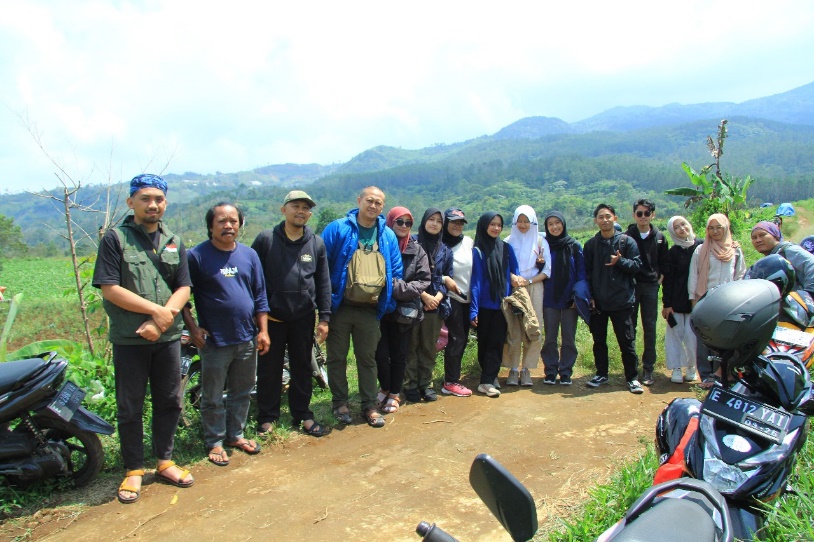
The delegation included Lala Bumela Sudimantara, Ph.D. (UIN Siber Syekh Nurjati Cirebon), Luqman Baehaqi, Ph.D. from UIN Palangka Raya and a group of enthusiastic students: Cyrila Zahra Tsania, Farah Syifa Mutiara R., Indah Fitri Nurhidayah, and Resa Diah Gayatri. They were hosted by two key local figures: Didin Mishbahuddin, S.Hum., a philology and archaeology expert from Niskala Institute, and Sukad, a respected elder from Sagarahiang Village known for preserving community memory and traditional values. The visit began with a collective prayer at the tomb of Syekh Marmagati, symbolizing respect and a spiritual request for guidance. Sukad reminded the group that engaging with sacred knowledge requires sincerity and a pure heart, principles that shaped the tone of the entire visit. This moment underscored that cultural exploration is not just intellectual but also deeply ethical and spiritual. The team approached the site not as outsiders, but as learners seeking permission and understanding.
A central theme of the discussion was the role of carita pantun, classical Sundanese narrative poetry, as a medium of cultural transmission. Didin Mishbahuddin explained that in pre-Islamic Sunda, formal education for nobility occurred in kamandalaan, while the general public received knowledge through carita pantun. These stories were not entertainment but structured forms of education that conveyed lessons in agriculture, leadership, astronomy, and cosmology. Unlike modern pantun from the Malay tradition, which are often short and lighthearted, ancient Sundanese pantun are long, layered, and circular in structure, requiring deep listening and contextual understanding. This insight challenges the common misconception that oral traditions are simplistic, highlighting instead their intellectual depth and cultural sophistication. The team recognized that these narratives functioned as a curriculum for the people, long before formal schooling existed.
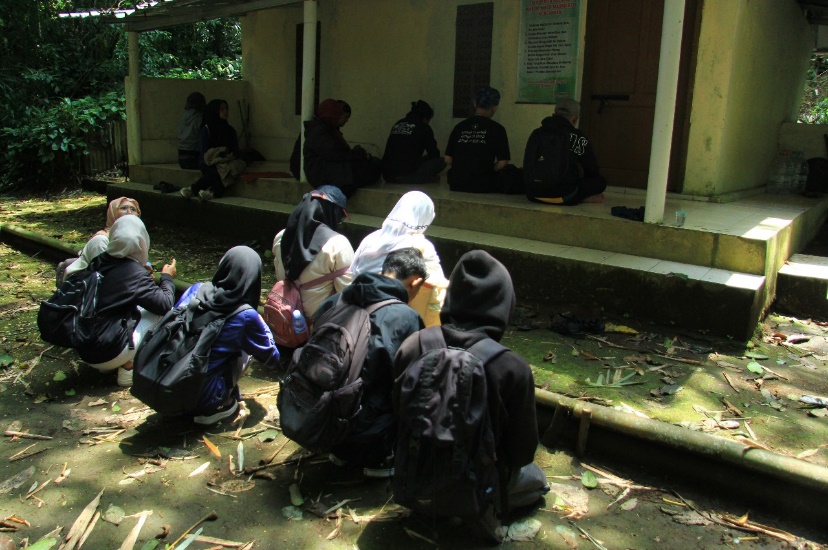
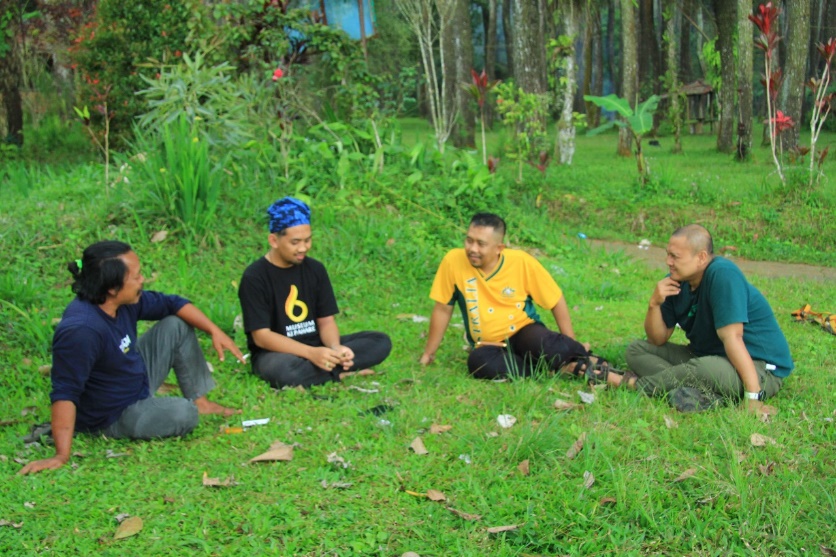
Sukad emphasized that true understanding of pantun cannot come from passive listening alone, it requires tatahar or ngalaman, a direct experiential engagement with the landscape where the stories unfold. He explained that natural features such as rivers and sacred groves are not just backdrops but active participants in the narrative, each carrying symbolic and spiritual meaning. In this worldview, mountains are seen not as geological formations but as maternal figures that nurture life. This deep ecological consciousness embedded in the stories suggests that the Sundanese worldview is inherently holistic, where nature, culture, and spirituality are inseparable. The team observed that this experiential learning model offers a powerful alternative to today’s abstract, classroom-based education. Knowledge, in this context, is not memorized but lived and felt.
The visit also revealed regional variations of Lutung Kasarung, such as the local Lutung Leutik version, which highlights agricultural knowledge and local political structures. Didin proposed that these variations can serve as tools for geonarratology—the study of how stories map onto physical and cultural landscapes—allowing researchers to reconstruct ancient territorial boundaries and social systems. The linguistic structure of pantun, with its symmetrical and recursive patterns, reflects a highly analytical and mathematical way of thinking, contradicting the stereotype of oral traditions as primitive. These observations are being documented to support future educational and cultural initiatives that value indigenous knowledge as a legitimate form of scholarship. The team sees this research as a way to honor and revitalize local wisdom.
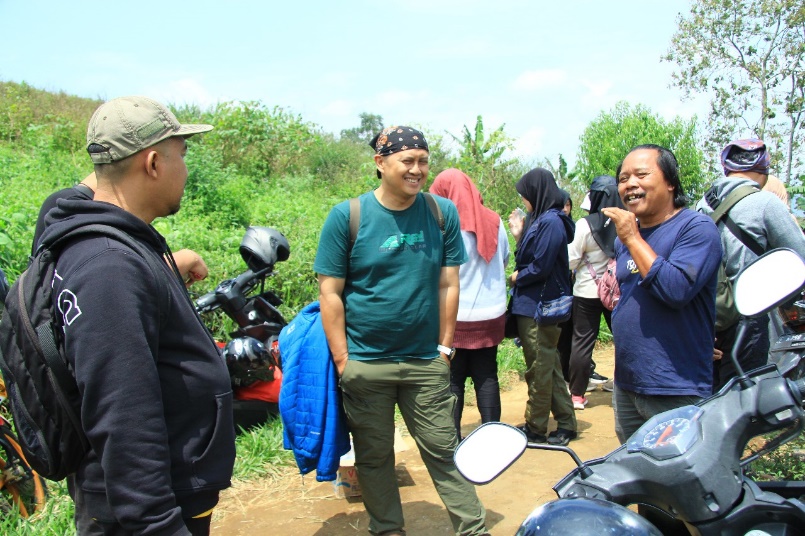
This field visit was a transformative experience that deepened the team’s appreciation for Sundanese cultural heritage. By engaging directly with local elders and sacred sites, the researchers affirmed that folklore is not a relic of the past but a living, breathing system of knowledge with profound relevance for modern education. The collaboration between university researchers and community knowledge holders exemplifies a respectful, participatory approach to cultural exploration. As UIN Siber Syekh Nurjati Cirebon continues to prioritize such engagements, it strengthens its role not only as an academic institution but also as a steward of regional wisdom in an era of rapid globalization. The team left Pasir Batang with a renewed sense of purpose and a deeper connection to the land and its stories.
Author: Resa Diah Gayatri