
UIN Siber Syekh Nurjati Cirebon Marks the First Day of AsiaCALL International Conference 2025 with an Insightful Keynote on Human–AI Collaboration Delivered by Made Hery Santosa, Ph.D.
Cirebon, November 15, 2025 – The first day of the 22nd AsiaCALL International Conference gathered distinguished participants and keynote speakers, led by Lala Bumela Sudimantara, Ph.D., Director of the International Office UIN Siber Syekh Nurjati Cirebon and President of AsiaCALL 2025, who served as a distinguished keynote speaker, followed by Made Hery Santosa, Ph.D., as one of the keynote speakers in the session, and Ivo Dinasta Yanuar, S.S, M.Appling, Secretary of the International Office, who served as the session moderator. A strong lineup of international academic leaders also enriched the event, including Prof. Dr. Andrew Lian, President of AsiaCALL; Ania Lian, Ph.D., Vice President of AsiaCALL; Assoc. Prof. Dr. Pham Vu Phi Ho, Vice President for Administrative Affairs and Publication of AsiaCALL; and Prof. Dr. Jeremy White, Vice President for International Relations of AsiaCALL, all serving as executive keynote speakers. The conference further featured distinguished keynote speakers such as Prof. Shameem Rafik-Galea, Ph.D.; Assoc. Prof. Hassan Khosravi, Ph.D., Vice President for Administrative Affairs of AsiaCALL; and Luqman Baehaqi, Ph.D. Additionally, prominent Indonesian scholars including Prof. Dr. Hj. Ria Yulia Gloria, M.Pd., representing the Rector of UIN Siber Syekh Nurjati Cirebon, and representatives from Hakim Ventura International, together with presenters from Japan, Saudi Arabia, Malaysia, Vietnam, the Netherlands, the Philippines, and universities across Indonesia, further strengthened the international atmosphere. Accompanied by Ghina Amaliyah Sholihah, S.Sos, Staff of the International Office. Hundreds of students from the English Language Teaching Department also attended as enthusiastic participants, adding vibrant academic energy to the conference. This diverse participation showcased the International Office’s strong commitment to global academic collaboration and elevated the international profile of UIN Siber Syekh Nurjati Cirebon.
Among these accomplished scholars, Made Hery Santosa, Ph.D., emerged as one of the most anticipated figures, drawing notable attention from participants across countries for his expertise in Human–AI collaboration in English language education. Serving as a distinguished keynote speaker, Made Hery Santosa, Ph.D., became a central intellectual force of the session, with attendees expressing strong interest in his innovative perspectives on the intersection of AI technology and meaningful human learning. His influential contributions to digital pedagogy and his forward-looking vision positioned his session as one of the most defining moments of the conference, prompting the audience to lean in with heightened anticipation as he prepared to share his insights.
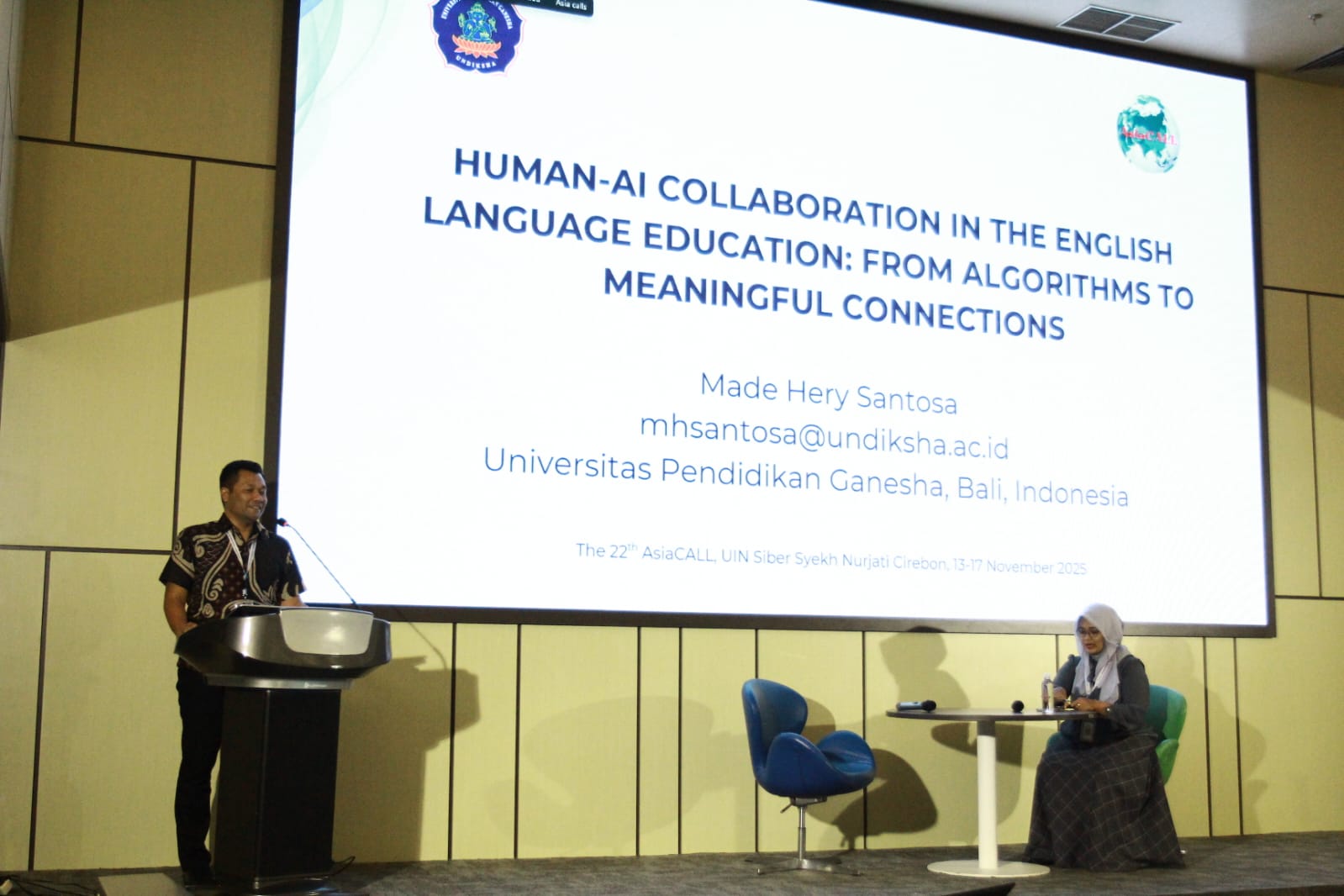
In his keynote presentation titled “Human–AI Collaboration in English Language Education: From Algorithms to Meaningful Connections,” Made Hery Santosa, Ph.D., emphasized that rapid technological advancements, particularly artificial intelligence—are fundamentally reshaping teaching and learning. He highlighted that the 21st century requires educators and students to cultivate skills that AI cannot replicate, such as empathy, creativity, and ethical judgment. These irreplaceable qualities keep professions like education, health sciences, and the creative industry resilient amid automation. Made Hery Santosa, Ph.D., reminded the audience that technology should enhance, not determine, the direction of human learning. “AI can accelerate processes, but it is human connection that gives meaning to learning,” he stated.
Made Hery Santosa, Ph.D., also explained that English language pedagogy is increasingly shifting toward contextual, learner-centered, and problem-solving–focused approaches. Methods such as inquiry-based learning, cooperative learning, and project-based learning align with the principles of particularity, practicality, and possibility. These principles require teachers to be sensitive to their students’ contexts, make reflective decisions, and empower learners to take ownership of their learning journey. He emphasized that multimodality, integrating linguistic, visual, gestural, and digital modes—has become essential in modern communication. These pedagogical developments, he argued, prepare students for a world where communication is no longer limited to text alone.
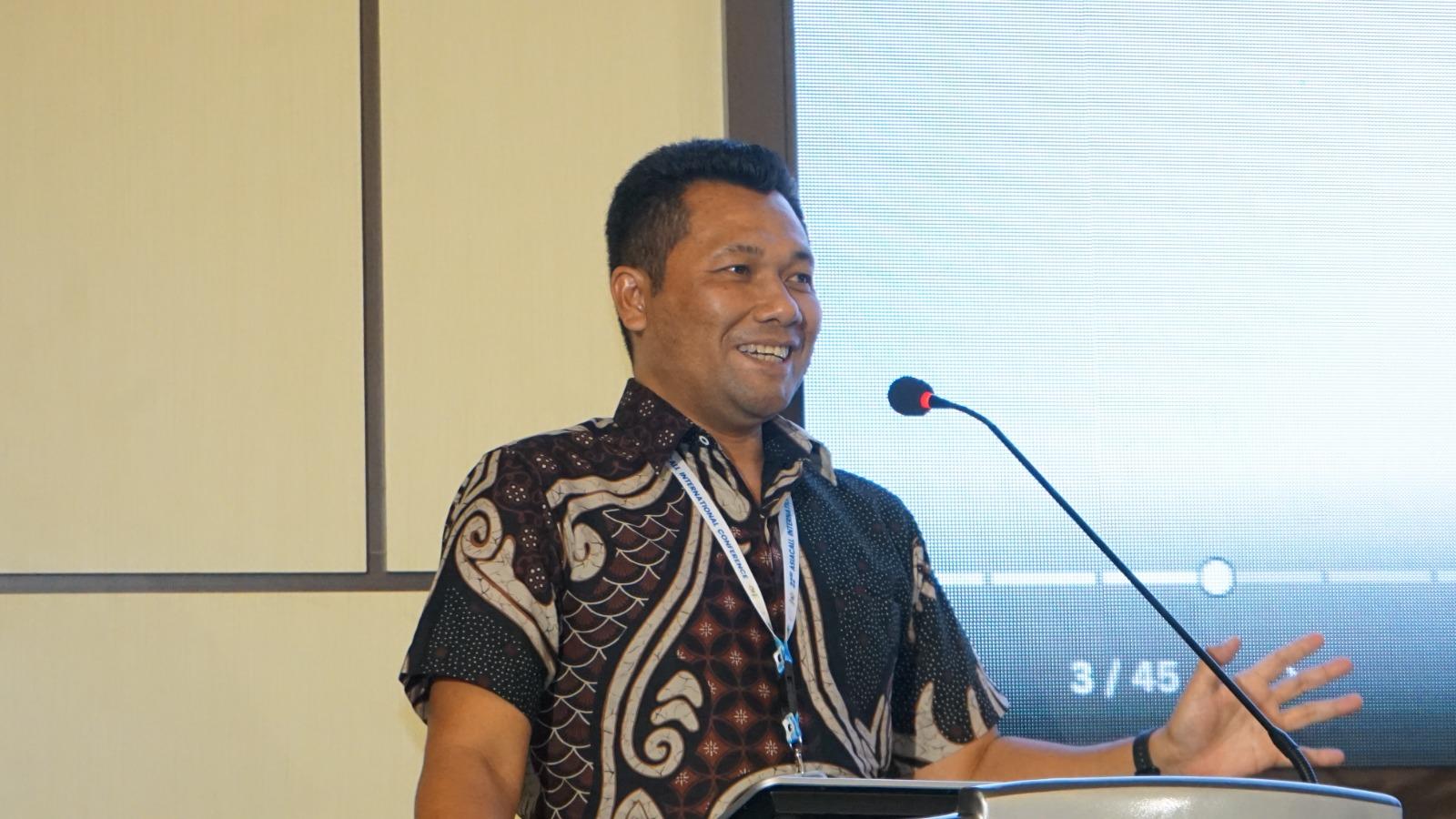
Supporting this shift, Made Hery Santosa, Ph.D., connected his ideas to developments in contemporary cognitive theory. Frameworks such as the 3P model, Bloom’s Taxonomy, the SOLO Taxonomy, and the Student Approaches to Learning model reinforce the need for higher-order thinking. Learning, therefore, should progress from merely remembering and understanding toward analyzing, evaluating, and creating. According to Made Hery Santosa, Ph.D., AI plays a crucial role in assisting these cognitive transitions, not by replacing learning but by providing tools that support deeper intellectual engagement. He emphasized that when used wisely, AI strengthens—rather than weakens—human cognitive growth.
Another major point in Made Hery Santosa, Ph.D., presentation was the historical evolution of AI in education, from early models like ELIZA to modern generative models such as ChatGPT. He also highlighted the emerging potential of augmented reality (AR), virtual reality (VR), and mixed reality (MR) in creating immersive learning environments. However, alongside these developments comes the challenge of cognitive offloading, where learners rely excessively on technology for tasks they once performed independently. While digital support tools provide convenience, Made Hery Santosa, Ph.D., warned of risks such as dependency, unequal access, and unprepared educators. These issues, he insisted, must be addressed through responsible and informed technology use.
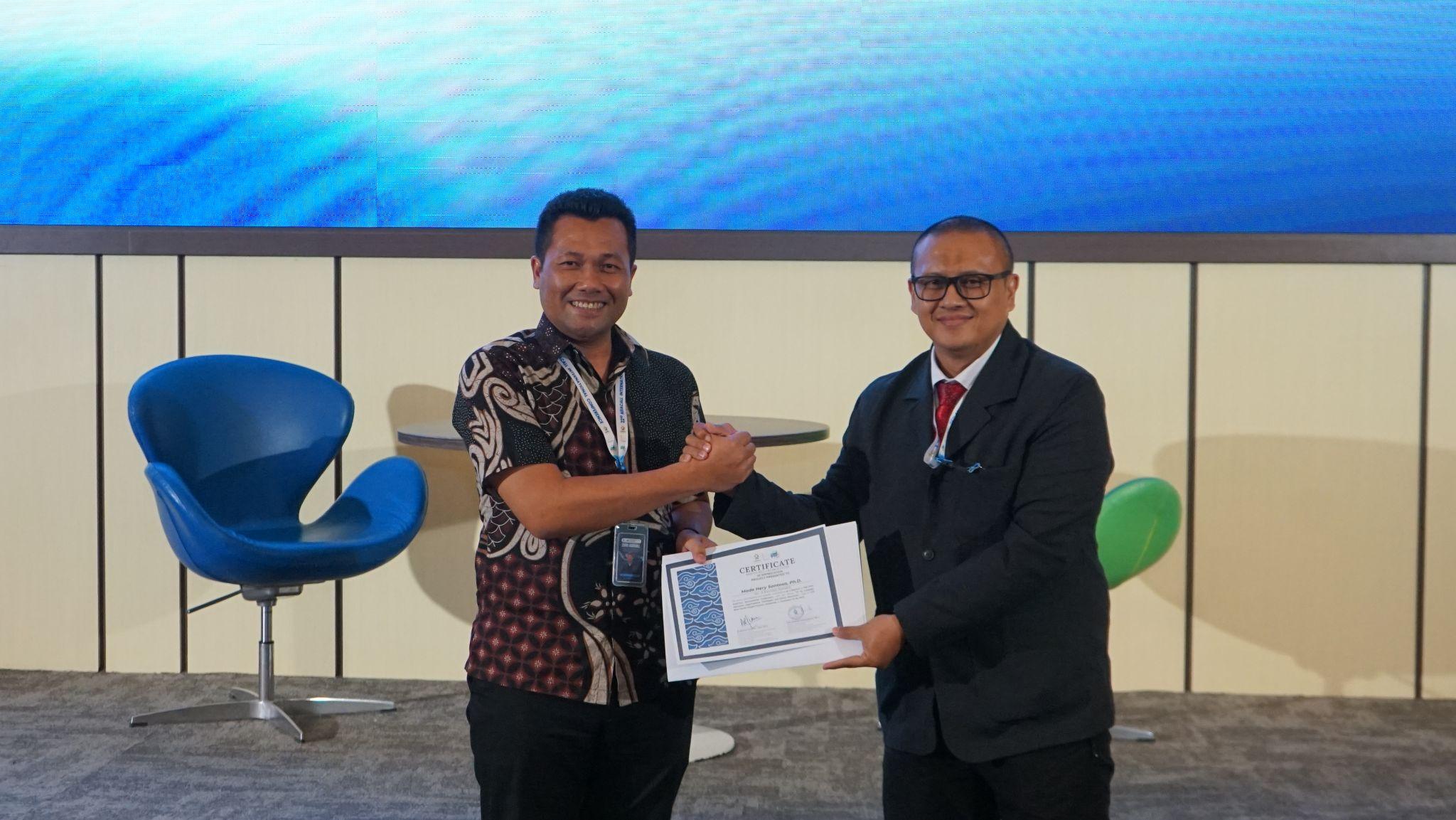
For this reason, Made Hery Santosa, Ph.D., stressed the importance of AI literacy as a fundamental skill for students and teachers. He defined AI literacy as the ability to understand, use, evaluate, and communicate about AI tools ethically and responsibly. Its four pillars—knowledge, application, ethics, and agency, ensure that learners remain active decision-makers rather than passive users. He urged educational institutions to cultivate these competencies through structured programs and teacher capacity-building. Such initiatives, he emphasized, position the International Office and UIN SSC as leaders in promoting ethical and globally informed digital education.
Finally, Made Hery Santosa, Ph.D., concluded his session by explaining why certain professions face automation faster than others. Industries with abundant data, such as finance, customer service, and software engineering—experience rapid AI transformation, while sectors with complex human judgments, like education and healthcare, evolve more gradually. This reality requires future graduates who are adaptive, critical, and capable of collaborating effectively with AI systems. Through conferences like AsiaCALL 2025, the International Office continues to strengthen UIN SSC’s global academic presence and commitment to preparing learners for an AI-driven world. Made Hery Santosa, Ph.D.,message ultimately underscored that while algorithms may enhance efficiency, human insight remains at the heart of meaningful education.
Author: Cindi Aulia