
UIN Siber Syekh Nurjati Cirebon Shines on the Global Stage as Lala Bumela Sudimantara, Ph.D. Delivers Transformative Insights at the Week of Indonesia–Netherlands Education and Research (WINNER) 2026
Cirebon, October 7, 2026 – UIN Siber Syekh Nurjati Cirebon represented by Lala Bumela Sudimantara, Ph.D., proudly participated in the Week of Indonesia-Netherlands Education and Research (WINNER) 2026, a prestigious hybrid event connecting academia, policy, and industry across two continents. The session, titled "Regenerative Human Capital: Co-Creating Science and Sundanese Ancestral Wisdom for Resilient Youth in West Java, Indonesia," aligned perfectly with the main theme of "Competitive and Resilient Societies: Human Capital, Innovation & Sustainability.
In this distinguished panel, Lala Bumela Sudimantara, Ph.D. presented his groundbreaking paper, sharing profound insights alongside Prof. Rudolf Wirawan, Annisa Triyanti, Ph.D. and Luqman Baehaqi, Ph.D. This strategic participation underscores the university's commitment to positioning local wisdom as a vital contributor to global resilience dialogues. The session successfully bridged Indonesian ancestral knowledge with international scientific frameworks, fostering a dynamic exchange between diverse academic traditions.
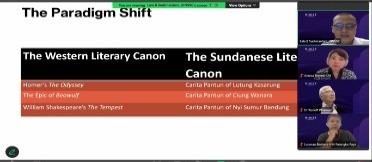
During the session, Lala Bumela Sudimantara, Ph.D. presented a compelling narrative on how Sundanese ancestral wisdom offers a robust framework for building regenerative human capital. He emphasized that the Sundanese cosmological understanding of mountains, particularly Mount Ciremai, provides a sophisticated model for ecological and social governance. He detailed the traditional tripartite zoning system of larangan, tutupan, and baladahan, explaining how these zones enforce strict ecological boundaries that modern sustainability science is only beginning to validate.
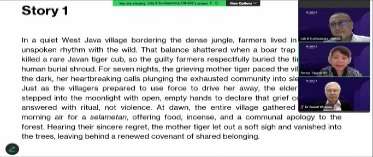
Furthermore, he positioned the epic narrative of Lutung Kasarung not merely as folklore, but as a comprehensive pedagogical blueprint for environmental stewardship and community resilience. By decoding the ecological ethics embedded in these oral traditions, he demonstrated how indigenous knowledge systems can effectively guide youth toward a more harmonious relationship with nature. This perspective challenged the audience to rethink human capital development through the lens of spiritual ecology and place-based learning.

Highlighting the profound relevance of these ancestral narratives for contemporary education, Lala Bumela Sudimantara, Ph.D. articulated the core philosophy of his research. He stated, "When we study the sacred geography of Mount Ciremai and decode the ecological ethics within Lutung Kasarung, we discover that our ancestors engineered a complete curriculum for survival and harmony." He explained that the narrative of Lutung Kasarung encodes vital lessons on agricultural cycles, water management, and social ethics, which are essential for nurturing resilient youth in West Java.
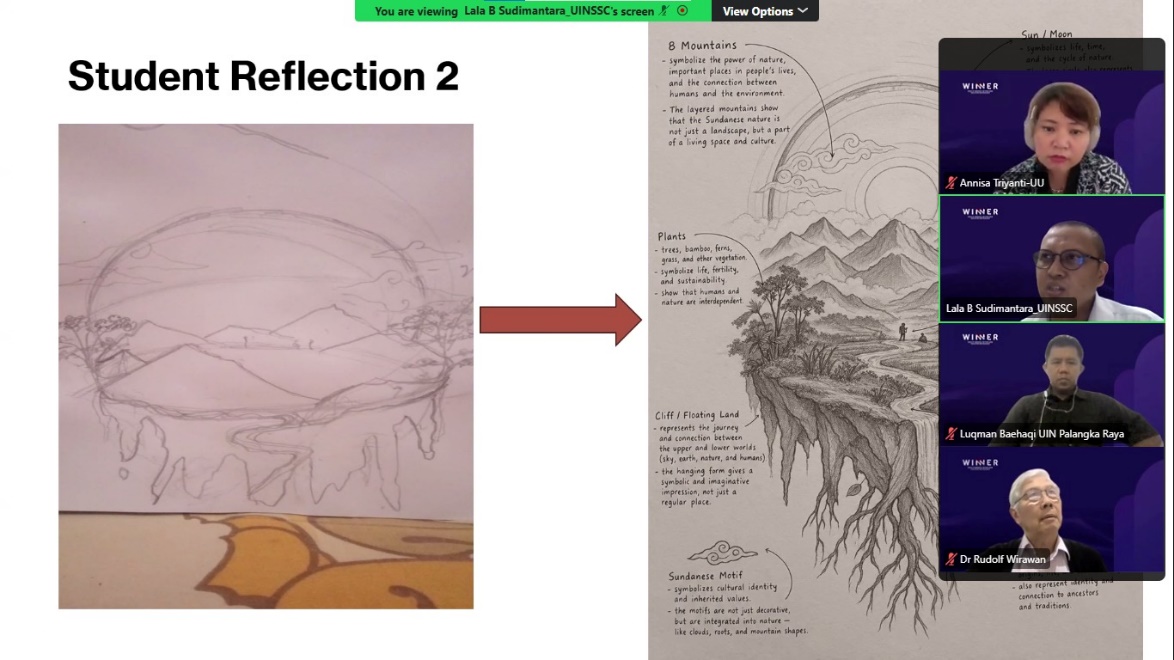
By integrating these place-based epistemologies into modern educational practices, educators can foster a generation that views environmental protection as a spiritual and cultural imperative. This approach transforms language and cultural education from a mere academic exercise into a profound act of ecological regeneration. His presentation resonated deeply with international scholars, validating the global significance of Sundanese indigenous knowledge.
Complementing this indigenous perspective, Prof. Rudolf Wirawan introduced the BIMA Framework as a bridge between ancestral wisdom and contemporary scientific paradigms. He critiqued the linear, technocratic approaches often found in modern development models, advocating instead for circular, regenerative systems. He explained how the BIMA Framework aligns seamlessly with Sundanese cosmological concepts, creating a cognitive ecology where traditional knowledge and modern science coexist.
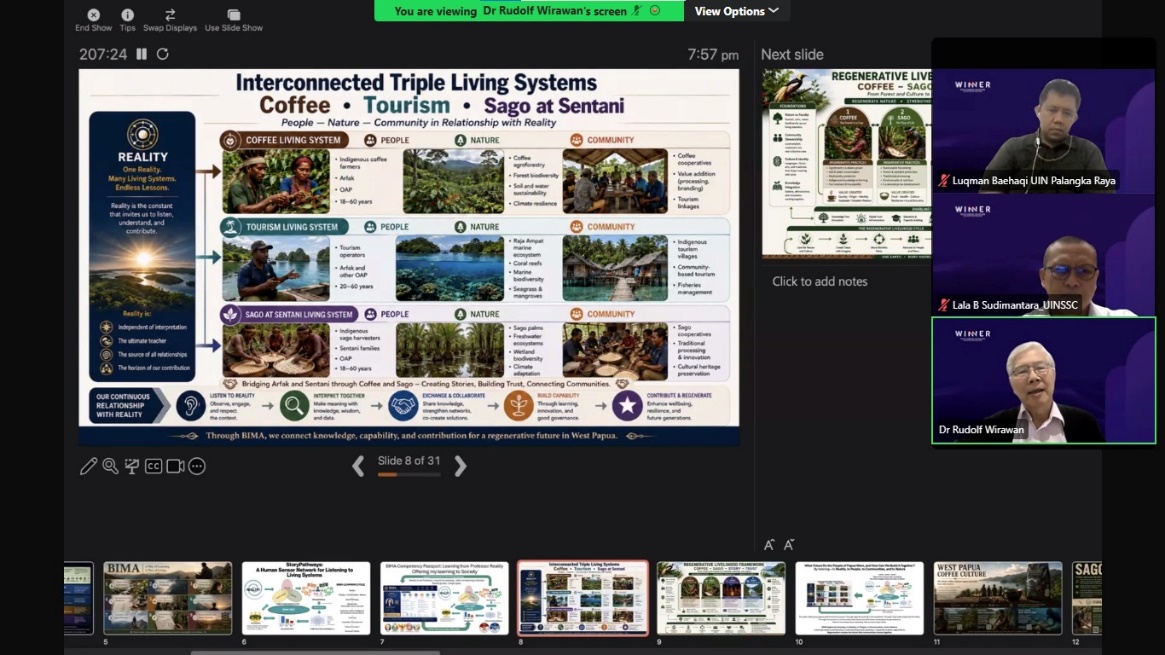
He emphasized that true resilience requires a balance between extraction and regeneration, urging policymakers to adopt holistic metrics beyond standard economic indicators. His insights provided a theoretical foundation for integrating local wisdom into broader national and international sustainability strategies. The dialogue between his framework and field-based research by Lala Bumela Sudimantara, Ph.D. illustrated the powerful synergy between global innovation and local heritage.
Adding a critical dimension to the discussion on resilience, Annisa Triyanti, Ph.D. from Utrecht University shared her expertise on disaster and climate risk governance. She highlighted the urgent need to integrate traditional ecological knowledge into formal disaster risk reduction policies. She noted that indigenous communities often possess sophisticated early-warning systems and adaptive strategies that are frequently overlooked by top-down scientific models.
She advocated for a co-creation approach where scientific data and ancestral wisdom are treated as equally valid sources of knowledge. Her presentation underscored the importance of empowering local communities, particularly youth, to become active agents in climate adaptation. This perspective reinforced the session's overarching theme of building competitive and resilient societies through inclusive, interdisciplinary collaboration.
Luqman Baehaqi, Ph.D. further enriched the dialogue by exploring how circular, multisensory approaches in English Language Teaching can foster regenerative human capital. He argued that conventional linear teaching methods often disconnect students from their cultural and environmental contexts. By implementing circular learning cycles and multisensory activities, educators can create immersive experiences that deepen students' relational intelligence and ecological awareness.
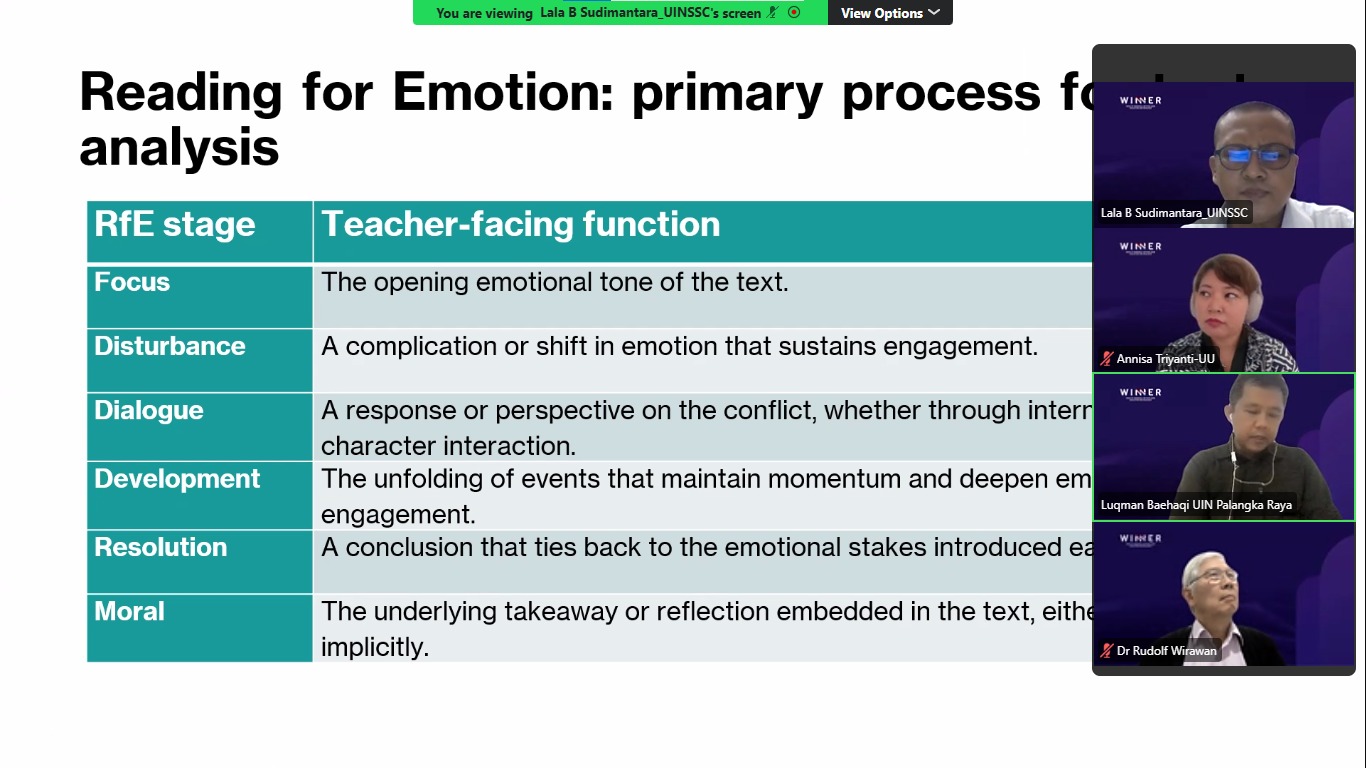
He demonstrated how language learning can be transformed into a tool for cultural preservation and environmental advocacy. His practical examples showed how students can use English to articulate local wisdom and engage in global sustainability discourses without losing their indigenous identity. This pedagogical shift aligns perfectly with the WINNER 2026 vision of innovation that serves humanity and the planet.
The collaborative spirit of the WINNER 2026 session exemplified the power of interdisciplinary and cross-cultural dialogue in addressing global challenges. UIN Siber Syekh Nurjati Cirebon successfully leveraged this platform to elevate Sundanese ancestral wisdom onto an international stage, demonstrating its relevance to global sustainability goals. By connecting with esteemed scholars from Australia, the Netherlands, and Indonesia, the university reinforced its position as a hub for regenerative knowledge production. Ultimately, the event proved that building resilient youth requires a deep return to our roots, blending the profound wisdom of our ancestors with the innovative spirit of the future.