
UINSSC Students of English Education Transform AsiaCALL 2025 into a Golden Arena for Learning, Collaboration, and Global Networking, Showcasing Talent, Dedication, and the University’s Commitment to International Excellence
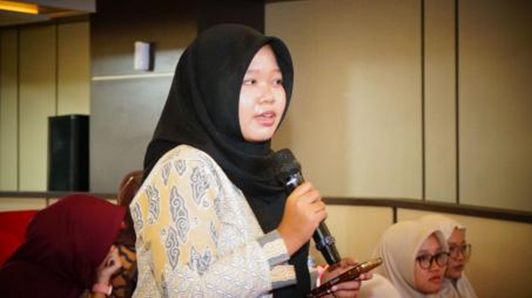
Cirebon, November, 16th 2025 — For three full days—from the pre-conference workshops to the closing of the main conference—students of the English Education Department at UIN Siber Syekh Nurjati Cirebon immersed themselves wholeheartedly in AsiaCALL 2025, transforming the event into a vibrant arena of intellectual curiosity, collaboration, and global networking. Under the guidance of Lala Bumela, Ph.D., Director of the International Office of UINSSC and President of the 22nd AsiaCALL International Conference 2025, hundreds of English Education students seized the rare opportunity to learn directly from prominent international scholars. The conference brought together world-leading experts including Prof. Dr. Andrew Lian, Ph.D. (President of AsiaCALL/Suranaree University of Technology, Thailand; University of Canberra, Australia – Online), Ania Lian, Ph.D. (Vice President of AsiaCALL/Charles Darwin University, Australia), Prof. Dr. Jeremy White (Vice President for International Relations of AsiaCALL/Ritsumeikan University, Japan), Assoc. Prof. Dr. Pham Vu Phi Ho, Ph.D. (Vice President for Administrative Affairs and Publication of AsiaCALL/Industrial University of Ho Chi Minh City, Vietnam), Assoc. Prof. Hassan Khosravi, Ph.D. (Vice President for Administrative Affairs of AsiaCALL/The University of Queensland, Australia), Prof. Shameem Rafik-Galea, Ph.D. (Professor of Applied Linguistics, SEGi University, Malaysia), and other distinguished participants and speakers from Malaysia, Japan, Vietnam, Saudi Arabia, and the Philippines. Throughout the sessions, UINSSC students demonstrated outstanding critical thinking as they bravely asked high-level questions about the role of Artificial Intelligence in English Education. Their engagement earned direct praise from Lala Bumela, Ph.D., who stated, “I am proud of our students’ courage and analytical strength. They did not merely attend the conference—they challenged ideas, questioned assumptions, and expanded the conversation about AI in education.”
Despite their enthusiasm, the students quickly realized that the rapid advancement of Artificial Intelligence brings not only innovation but also complex academic and ethical challenges. Many expressed concern over issues such as the diminishing role of human agency, the risk of over-reliance on AI tools, and the fear that the essence of learning could be overshadowed by automation. These concerns echoed throughout AsiaCALL’s keynote sessions, resurfacing in questions and discussions that revealed students’ deep anxieties about the future of education. As they navigated presentations on machine learning, data-driven pedagogy, and AI-augmented assessment, the students grappled with the unsettling possibility that technological disruption could reshape the identity of teachers, learners, and the learning process itself.
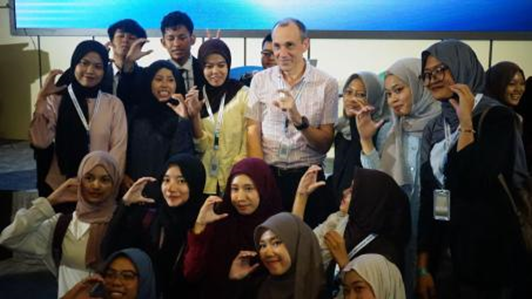
During multiple keynote discussions and breakout sessions, UINSSC students voiced their concerns directly to the international scholars. Their questions prompted meaningful dialogues, with speakers offering reassurance, caution, and inspiration. Scholars emphasized that while AI introduces challenges, it also creates unparalleled opportunities—particularly for emerging educators who understand both pedagogy and technology. One moment stood out when a student asked whether AI could truly replace teachers in language learning. The response, supported by insights from several keynote speakers, reinforced a powerful message: technology may accelerate learning, but human guidance, empathy, and creativity remain irreplaceable. This exchange strengthened students’ resolve to position themselves not as passive observers of technological change, but as active contributors shaping the future of English Education in Indonesia.
Their participation evolved into a transformative learning journey. Students gained new perspectives on CALL, explored frameworks for ethical AI integration, and engaged in scholarly discussions that sharpened their academic maturity. Workshops on AI-driven feedback, multimodal learning, and automated assessment encouraged them to analyze not only the benefits of AI but also the responsibilities that accompany its use. Observing their growth, Lala Bumela, Ph.D. expressed deep appreciation, stating, “Our students rose to the occasion. They showed that UINSSC is producing a new generation of educators—critical, reflective, technologically literate, and ready to engage at an international level.” The conference environment, enriched with multicultural interactions and global expertise, empowered the students to see themselves as future leaders in the international ELT landscape.
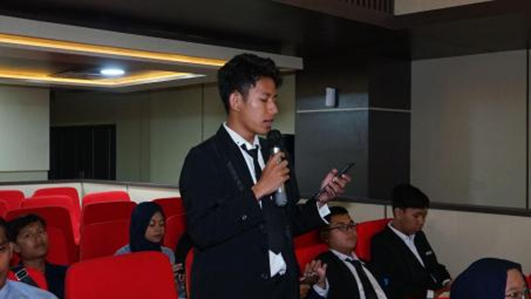
By the end of the conference, the initial uncertainties and anxieties were replaced by clarity, confidence, and renewed academic purpose. Students who once questioned the role of AI in education now recognized that technological disruption is not a threat but a catalyst for growth—if navigated with wisdom and ethical awareness. Through AsiaCALL 2025, they learned that AI should enhance human learning, not diminish it, and that educators must remain central in shaping the values, directions, and pedagogical principles of the digital era. The students returned to their academic activities with strengthened motivation, a more global perspective, and a clear commitment to becoming educators who balance innovation with humanity.
AsiaCALL 2025 offered a profound moral lesson: in an age dominated by Artificial Intelligence, human curiosity, integrity, and intellectual bravery remain the most powerful tools of all. The students’ journey showed that meaningful education is built not on technology alone, but on the willingness to question, reflect, and grow. As emphasized by Lala Bumela, Ph.D., “Our students proved that international engagement is not only about attending conferences—it is about transforming knowledge into character, competence, and contribution.” This experience reaffirmed UINSSC’s vision of becoming a globally engaged university and demonstrated that its students are ready to take part in shaping the future of CALL and AI-driven English Education with confidence, creativity, and responsibility.
Author: Muhammad Azkiya Bahtsulkhoir